
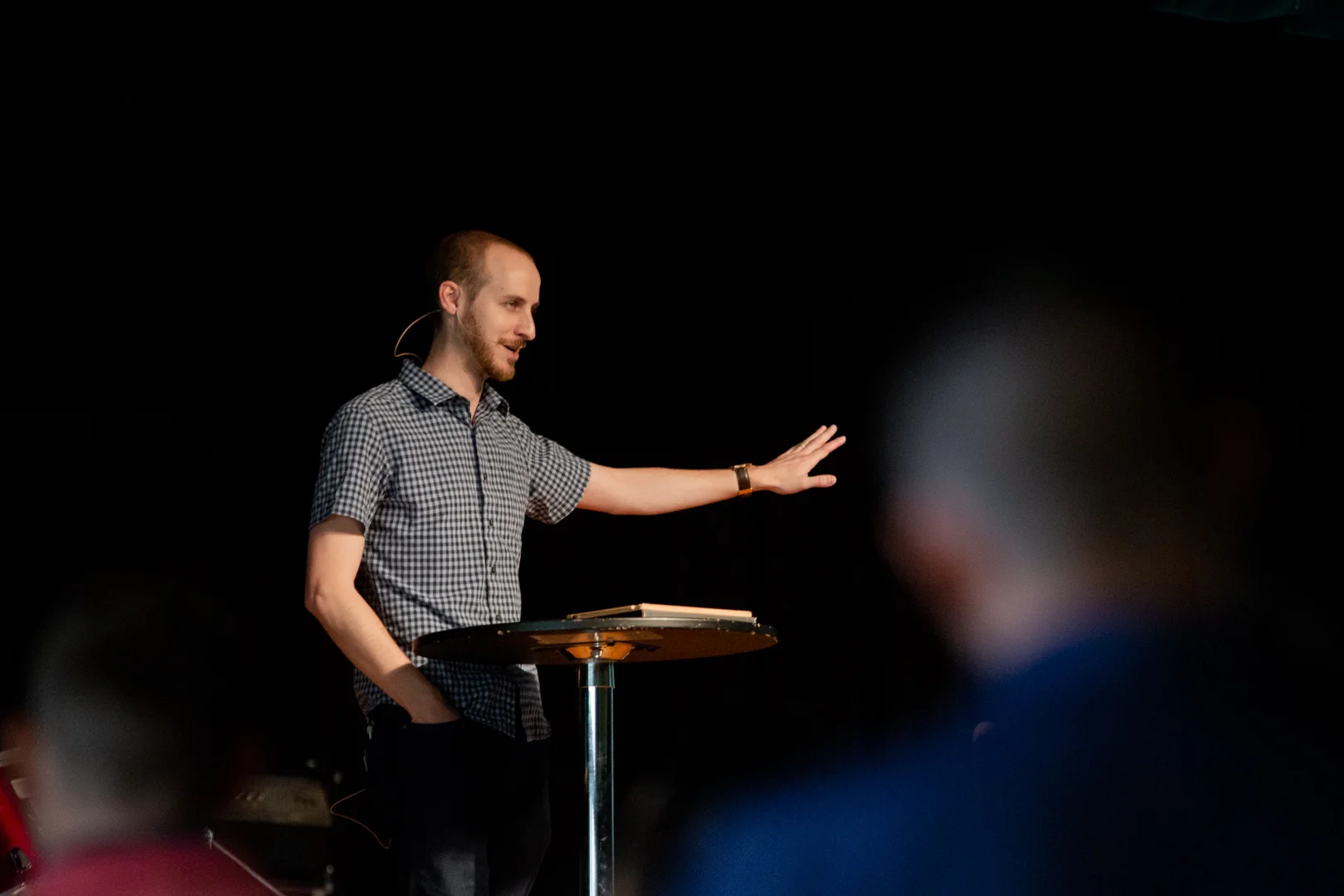

Commissioned to make Disciples
Matthew 28:18-20; Acts 2:41-47 | The pastoral priority of the Church is to make disciples of those who are being born again.
*no sermon audio
Matthew 28:18-20; Acts 2:41-47
The pastoral priority of the Church is to make disciples of those who are being born again.
Jesus' commission calls every local church/pastoral team to thoughtfully and intentionally answer at least three questions and then to thoughtfully, diligently, and consistently execute on their answers.
I. WHO do we seek to make into disciples?
Those whom the Lord adds to our church. These are brothers and sisters who are:
- Authentically reborn
- Publicly identified
- Locally aligned
II. WHAT do we want to make them into?
“Doers” of all that Jesus commanded. What we mean by this, is people whose gospel-informed faith is so infused with gospel-defined hope that their lives are characterized by gospel-inspired love. We call these people “gospel fluent,” because the gospel comes to inform and drive more and more of what they do every day.
We strive to be a community of believers who:
Find beauty in the ordinary,
Fight to show up, and
Faithfully engage in meaningful conversation
III. HOW are we going to do this?
By creating spaces and routines that promote biblical literacy and gospel fluency.
What can you do to make this happen?
The answer is found in our sermon text: And they devoted themselves to the apostles' teaching and the fellowship, to the breaking of bread and the prayers. Simply put, those people who had received the word, who were baptized, and who were added to the number adjusted their lives and routines so as to become active participants in this new thing God was doing in their lives and in their midst. Becoming a disciple of Jesus was the only thing that made sense to them and they were all in.

Adopted in Christ
Galatians 3:26-4:7 | Though we were orphans, through Christ we have been adopted as sons, guaranteed an inheritance, and given God’s Spirit.
Galatians 3:26-4:7
Adoption strikes at the heart of the questions that are fundamental to our existence: Who are we? Where are we going? What are we doing here?
Main Idea: Though we were orphans, through Christ we have been adopted as sons, guaranteed an inheritance, and given God’s Spirit.
I. A New Identity (3:26-28)
After Paul had helped plant churches throughout the region of Galatia, false teachers infiltrated these communities arguing that Gentile converts to Christ needed to become “Jewish” (circumcision + obedience to the entire Mosaic Law) to truly become the people of God.
These false teachers could appeal to the fact that the church was birthed out of Judaism. The Jews were God’s chosen people. They were the physical offspring of Abraham. They were the recipients of all the promises of the OT. Jesus himself was Jewish. So the question that looms over the early church is this: Are Jews and Gentiles really family? Are we really brothers & sisters?
The gospel clearly tells us that “in Christ Jesus you are all sons of God through faith.” The implications of this new identity means that for both Jews and Gentiles we have a shared Father and we are part of a new family.
Paul identifies 3 of the biggest barriers & points of division in the world that church is birthed into:
Racial Barriers (there is neither Jew nor Greek…)
Social Barriers (there is neither slave nor free... )
Gender Barriers (there is no male or female... )
“If we are too quick to correct the biblical language, we miss the revolutionary nature of what Paul is saying. In most ancient cultures, daughters could not inherit property. Therefore, “son” meant “legal heir,” which was a status forbidden to women. But the gospel tells us that we are all sons of God in Christ. We are all heirs. Similarly, the Bible describes all Christians together, including men, as the “bride of Christ” … Men are part of his Son’s bride; and women are His sons, His heirs. If we don’t let Paul call Christian women “sons of God,” we miss how radical and how wonderful this is.” ~ Tim Keller
Bottom line: Are we looking at & relating to others through the lens of biology or theology? Are we really treating one another in the church as brothers & sisters in Christ?
Just as there is a “family likeness” in biological families, Paul reminds the Galatians that there is a “family likeness” in the church, because all who have been “baptized into Christ have put on Christ.”
II. A New Inheritance (3:29-4:5)
Issues of inheritance deals with the past, present, and future.
1. Our Past (3:29-4:3)
Being the true “offspring” of Abraham became a key issue in Galatia. Paul makes it clear that all who have faith in Jesus are “Abraham’s offspring, heirs according to the promise.” He addresses the past of both the Jews & Gentiles:
For the Jewish people (4:1-2), though they were “heirs” of Abraham, they were essentially “slaves” because they were like a child who was under “guardians” and “managers,” unable to come to age before Christ
For the Gentiles (4:3), they were enslaved to sin & the things of this world, unable to help their situation.
Just as an adopted child becomes a part of the lineage of their new family, the same is true with the gospel. Our adoption in Christ means that our past is redefined.
2. Our Present (4:4-5)
Adoption is an incredibly sacrificial and costly process. This is also true of God’s adoption of us; in order to adopt us into the family of God, it took:
Preparation (4:4a)
Entrance into our broken world (4:4b)
Paying the cost to redeem us (4:5)
All of this is offered to us as a gift to “receive.” Our adoption in Christ should remind us of the incredible love that God has for us. Adoption is a choice, not an obligation.
“Adoption, by its very nature, is an art of free kindness to the person adopted… God adopts us out of free love, not because our character and record show us worthy to bear his name, but despite the fact that they show the very opposite. We are not fit for a place in God’s family; the idea of his loving and exalting us sinners as he loves and has exalted the Lord Jesus sounds ludicrous and wild – yet that, and nothing less than that – is what our adoption means.” ~ J.I. Packer
Our adoption in Christ means our present is redeemed.
3. Our Future (cf. Rom. 8:17)
Our status is God’s family is “co-heirs with Christ,” meaning all that belongs to Christ also belongs to us. This is the idea of ‘propitiation’: God does not only save us from our sins, he also credits us with Christ’s righteousness & his perfect record.
Ephesians 1:3: “Blessed be the God and Father of our Lord Jesus Christ, who has blessed us in Christ with every spiritual blessing in the heavenly places”
Our adoption in Christ means our future is secure.
III. A New Intimacy (4:6-7)
God not only sends his Son; he also sends his Spirit into our hearts that causes us to cry out “Abba! Father!” ‘Abba’ is a term of intimacy, like a child babbling ‘da-da.’ No Jewish person (until Jesus) dared to refer to God in this way.
But ‘Abba’ is more than this childish talk; it is a “screaming out” for help in the midst of a broken world. It is a cry that comes out of us when we feel the weight of sin & the fallenness of this world, looking for help from our Father.
We can trust that our screams of ‘Abba!’ are always heard by our Heavenly Father, because Jesus’ prayers went unanswered. Jesus, the natural born Son of God, becomes a substitute orphan for us, crying out in the garden of Gethsemane “Abba!” and on the cross “My God, my God, why have you forsaken me?”
“Because we share the Spirit with Jesus, we cry out with him to the same Father. And since what unites us to Jesus is his Spirit, not our flesh, we share a common family with all those who also have this Spirit resting upon them…. That’s adoption. We’re part of a brand-new family, a new tribe, with a new story, a new identity… The Spirit leads us to see when we are in enemy-occupied territory, and he teaches us to rage against that machine… The Spirit leads us to cry out with the rest of the universe, ‘O God, deliver us from this! This is not how it is supposed to be!” ~ Russell Moore
Caring for orphans is not merely a “special interest group” within the church; this issue is about the very gospel of Jesus Christ. Adoption lies at the center of the gospel and also is a call to mission. It is not a matter of “if” God has called us to orphan care but rather “how” he has called us to this.
Is God your Father? Are you living with brothers & sisters in Christ? How can you care for the fatherless & the motherless - whether you end up with a child in your home or not?

Called to Mission
Acts 16:6-34 | God’s mission to save a diverse people is accomplished through divine encounters and opportunities to share the gospel.
Acts 16:6-34
Christianity Today Survey:
“I believe every Christian has a responsibility to share their faith.” (64% of Christians agreed)
“I actively seek or create opportunities to share my faith.” (19% of Christians agreed)
Main Idea: God’s mission to save a diverse people is accomplished through divine encounters and opportunities to share the gospel.
I. The Mission is Directed by God (16:6-10)
How the missionaries were specifically “forbidden by the Holy Spirit” on their travel plans is unclear, but the principle is clear: God had other plans for them at this time. Strategy, rationale, and logic are important in seeking to share the gospel, but everything must be submitted to God’s sovereign plan and direction.
After shutting doors, God clearly opens one through the vision of the Macedonian man asking for help. The priority is also placed on the fact that “God has called us to preach the gospel to them.” The group understands that the greatest need for those in Macedonia is the good news about Jesus. The church can & should be doing a lot of good things on mission, but gospel proclamation must be the priority.
This is all a reminder that the mission is ultimately God’s work. This means 2 things for us:
The pressure is off. We are called & invited to participate, but ultimately God is the one who is directing and bringing about salvation.
We should be seeking to follow his leading and prompting. Visions like this are not the norm for the Christian life, though God is free to act in this way. However, God has given us his Spirit, his word, prayer, and community. Are we using these means of grace to actively engage seek his will and follow his leading?
Colossians 4:2-4: Continue steadfastly in prayer, being watchful in it with thanksgiving. At the same time, pray also for us, that God may open to us a door for the word, to declare the mystery of Christ, on account of which I am in prison— that I may make it clear, which is how I ought to speak.
II. The Mission is Driven by Divine Encounters (16:11-34)
As the missionaries land in Philippi, God orchestrates 3 divine and opportunistic encounters:
1. Lydia (16:11-15)
There does not appear to be a Jewish synagogue in Philippi, so the group finds a prayer meeting with a group of women. Luke describes Lydia as a ‘worshiper of God,’ a technical term denoting a Gentile who believed in God but had not become Jewish.
As they were having a conversation about the gospel, “The Lord opened her heart to pay attention to what was said by Paul.” Our role in the mission is always to bear witness to the gospel, while God must open the heart to believe. God is the one who saves and who changes our hearts to respond to the good news of Jesus.
Lydia’s response indicates the genuineness of her faith: She is baptized (along with her household) and then opens her home. There is a beautiful simplicity in her response that the Lord calls each of us to. “Once the heart is opened, the home is opened too.” ~ John Stott
2. A Slave Girl (16:16-18)
As Paul and his companions were continuing in Philippi, a slave girl with a “spirit of divination” starts following them around for days. The evil spirit is communicating the truth about the identity & work of the group, but was seeking to discredit their message and reputation.
After Paul rebukes the spirit and it comes out of the girl, her owners stir up trouble for the missionaries. The girl likely would have been abandoned by her owners & welcomed into the new church community in Philippi.
3. A Roman Jailor (16:25-34)
Despite their difficult situation, Paul & Silas are “praying and singing hymns to God” while imprisoned, so that all may hear them. Gospel joy in the face of sorrow & adversity will always be a powerful picture of the gospel.
God sovereignly causes an earthquake which opens all the doors of the prison and all of the bonds of the prisoners to break lose. But rather than escaping, Paul & Silas remain, seeking an opportunistic encounter with the jailor, remain in the prison and gain the opportunity to share the gospel with him.
The jailor realizes the grace of Paul and Silas (and the other prisoners) not escaping, he cries out, “What must I do to be saved?” They tell him of the good news of the gospel and he responds in the same way as Lydia: he is baptized and opens his home for them, rejoicing in his new faith in Jesus.
Application: Recognizing that God sets up divine and opportunistic encounters, we can intentionally position ourselves so that God can use us to start gospel conversations.
“God isn’t necessarily looking for us to try harder or add more ministry demands on our lives. He wants us to walk in greater awareness and dependency on him in the everyday stuff of life and engage what we we’re already doing with gospel intentionality. This isn’t additional; this is intentional. It’s not about adding more to our busy lives, it’s about engaging all of life for his glory. It’s about fully realizing we have his power because he is present in us and in all we do.” ~ Jeff Vanderstelt
III. The Mission is Defined by Unity & Diversity
The diversity of people that make up the first church in Philippi is shocking. The missionaries, Lydia, the slave girl, and the Roman jailor were all different racially, socially, and spiritually.
Despite all of these differences, they are all saved by the same gospel and welcomed into the same church. These people who had no earthly reason to be in relationship with one another are now unified by the blood of Jesus, becoming brothers and sisters in Christ.
“Ideally the church itself is not made up of natural "friends." It is made up of natural enemies. What binds us together is not common education, common race, common income levels, common politics, common nationality, common accents, common jobs, or anything of the sort. Christians come together, not because they form a natural collocation, but because they have been saved by Jesus Christ and owe him a common allegiance… In this light, they are a band of natural enemies who love one another for Jesus’ sake.” ~ D.A. Carson:
Galatians 3:28: There is neither Jew nor Greek, there is neither slave nor free, there is no male and female, for you are all one in Christ Jesus.

Created for Worship
Acts 17:16-34 | We are designed to worship with our whole being because we are created by and for God.
Acts 17:16-34
Worship works from the top down, you might say. In worship, we don’t just come to show God our devotion and give him our praise; we are called to worship because in this encounter God remakes and molds us top-down. Worship is the arena in which God recalibrates our hearts, reforms our desires, and re-habituates our loves. Worship isn’t just something we do; it is where God does something to us. Worship is the heart of discipleship because it is the gymnasium in which God retrains our hearts.” ~ James K.A. Smith
Main Idea: We are designed to worship with our whole being because we are created by and for God.
I. The Inevitability of Worship (17:16)
Athens was the cultural, philosophical, and intellectual epicenter of this region of the world, and was city was of great significance throughout history. Paul is not struck by its beauty or brilliance, however. Instead, he is bothered by the fact it is “full of idols.” He perceives everything in Athens through the lens of worship.
“There were innumerable temples, shrines, statues and altars. In the Parthenon stood a huge gold and ivory statue of Athena, ‘whose gleaming spear-point was visible forty miles away’. Elsewhere there were images of Apollo, the city’s patron, of Jupiter, Venus, Mercury, Neptune, and Diana. The whole Greek pantheon was there, all the gods of Olympus. And they were beautiful. They were made not only of stone and brass, but of gold, silver, ivory and marble, and they had been elegantly fashioned by the finest Greek sculptors” ~ John Stott
“Worship is ascribing ultimate value to an object and engaging your mind, your heart, and your will- your whole being, as you do it” ~ Tim Keller.
Worship is inevitable for humans. Everyone worships as it is fundamental to who we are. There is no “on” or “off” switch to our worship; we are constantly and naturally ascribing ultimate value to something in our lives, and our entire being is engaged in this activity (head, heart, and hands).
Application: What are we really worshipping? What has captivated our affections and our loves? Is it really God or something else?
Paul’s response to this idolatry is instructive for us as the church. He is “provoked” (conflicted, irritated, angered). This word is used in the OT to describe God’s feelings about idolatry; he viewed the city the same way that God does. God is rightly angry at idolatry, but he is also jealous for the worship of his creation.
II. The Interaction of Worship (17:17-21)
Being “provoked” drives Paul to action in Athens. As was his custom, he first goes to the synagogue (place of teaching & learning for the Jewish people). He then moves on to the marketplace (Gk. ‘agora’), which was the hub and central gathering place of city.
As he entered these spaces, he engaged in 2 things:
Meaningful Conversations (17:17-21). As he engaged with the Jews, Epicureans and Stoics, he was reasoning and conversing with them. He was listening and learning about their belief system, worldview, lifestyle, and ultimately - their worship.
Proclaiming Jesus and the resurrection (17:18a). Paul’s gospel conversations were “strange things” to the ears of those in Athens. The gospel is indeed “folly to those who are perishing” (1 Cor. 1:18), and we should both expect and embrace this “strangeness.”
Application: Do we know the idols of our neighbors, friends, coworkers, and city? Are we critically engaging with others in meaningful conversation through the lens of worship, or are we unconsciously being shaped by the worship happening around us?
III. The Inventor of Worship (17:22-31)
Having earned a hearing and the right to speak at Mars Hill, Paul bridges into their worship by observing two things that are true of all humanity: They are “religious in every way” and they are searching (an altar ‘to the unknown god’)
Having established this bridge, Paul then appeals to the Athenians to believe in the inventor of worship. His appeal is steeped in Biblical imagery as he draws their attention to 6 things about God:
1. God is Creator (17:24). He is the Lord over heaven and earth. He cannot be confined & controlled by those whom he has created, and he cannot be manipulated by worship.
2. God is Sustainer (17:25). God does not need ‘anything’ from us. He is actively involved and is upholding his creation (Heb. 1:3)
3. God is Sovereign (17:26-27a). God is sovereign over when and where we live, so that we might find him. This is God’s purpose for humanity.
“Human beings are made by and for the Creator, who is known in Jesus Christ. In other words, to be truly and fully human, we need to “find” ourselves in relationship to the One who made us and for whom we are made. The gospel is the way we learn to be human.” ~ James K.A. Smith
4. God is Near (17:27-28). He has come to seek and save the lost through the work of Christ. Paul quotes their own poets to show they have some conception & longing for this.
5. God is Personal (17:29). He is not a “statue” or an “image” that is impersonal and can be contained & controlled; he has created humanity in his image.
6. God is Judge (17:30-31). God commands all people to repent, because of the “man whom he has appointed” (Jesus), and his “raising him from the dead.” The time of ignorance is now over because of the manifestation of Jesus Christ.
IV. The Invitation of Worship (17:30, 32-34)
If these things are really true of God, then he is worthy of all of our worship. We are designed to esteem him of ultimate value, and to engage our entire being in orienting our lives around him.
There are three responses to this message at Mars Hill:
Mocking & Rejection (17:32a)
Intrigue & Curiosity (17:32b)
Repentance & Faith (17:30, 34)
“There is no such thing as not worshipping. Everybody worships... And the compelling reason for maybe choosing some sort of god or spiritual-type thing to worship is that pretty much anything else you worship will eat you alive” ~ David Foster Wallace

Waiting Witnesses
Acts 1:1-11
Jesus calls, equips, and empowers us to be faithful, spirit-filled witnesses until he returns.
Acts 1:1-11
Jesus calls, equips, and empowers us to be faithful, spirit-filled witnesses until he returns.
I. His Message (1:1-3)
Jesus’ life was marked by teaching and doing. Even after his suffering he appears to his disciples for 40 days speaking about the Kingdom.
“O foolish ones, slow of heart to believe all that the prophets have spoken! Was it not necessary that the Christ should suffer these things and enter into his glory? And beginning with Moses and the Prophets, he interpreted to them in ALL the Scriptures the things concerning himself.” Luke 24:25-27
Jesus spends these 40 days proving who he is by sharing the good news. Jesus primary proof is the scriptures. The scriptures testify about his life. They are an indisputable proof that Jesus is King.
II. His Promise (1:4-8a)
Jesus knows they really need the Holy Spirit. And tells them John’s baptism was external and what they need is internal. They need new ears to hear. They need the Helper.
“If you love me, you will keep my commandments. And I will ask the Father, and he will give you another Helper, to be with you forever, even the Spirit of truth, whole the world cannot receive, because it neither sees him nor knows him. You know him, for he dwells with you and will be IN you.” John 14:15-17
“These things I have spoken to you while I am still with you. But the Helper, the Holy Spirit, whom the father will send in my name, he will teach you all things and bring to your remembrance all that I have said to you.” John 14:25-26
“Nevertheless, I tell you the truth: it is for your advantage that I go away, for if I do not go away, the Helper will not come to you. And when he comes he will convict the world concerning sin and righteousness and judgement.” John 16:7-8
The need for a new heart isn’t new. Since the garden and the fall we’ve had a heart problem. And all through the Old Testament the temple was the place where the spirit used to tabernacle. The spirit would rest and the people would come to the tabernacle. Now Jesus is promising that same Holy Spirit would actually come and DWELL or tabernacle in his people.
“And I will give you a new heart, and new spirit I will put within you. And I will remove your heart of stone from your flesh and give you a heart of flesh. And I will put my Spirit within you, and cause you to walk in my statutes and be careful to obey my rules.” Ezekiel 36:26-27
The disciples did the math and associated the promise of the Holy Spirit with the restoration of the kingdom of Israel. They took fragments of promises and glued them together with their timing. They thought they understood where this was going and the problem was their perspectives were too small.
The disciples were still thinking local. Jesus was thinking global.
III. His Commission (1:8b-11)
Jesus didn’t solely come for the people of Israel. He came for the world.
“The church must understand it’s sentness, and how sentness flows from and out of the implications of the Great Commission. As we seek to obey and apply the work of the great commission, we find that every Christ follower is commanded in Scripture to a life of being a missionary who initiates contact with a lost world.” - Doug Logan
Jesus left. Go and make. Don’t stay and wait. He’s coming back.

The Meaning of Christmas
Luke 1:76-79
Christmas is the good news that God has come into our broken and dark world in Jesus Christ.
Christmas Eve Service
Luke 1:76-79
“The great majority of people will go on observing forms that cannot be explained; they will keep Christmas Day with Christmas gifts and Christmas benedictions; they will continue to do it; and someday suddenly wake up and discover why.” ~ G.K. Chesterton
Christmas is the good news that God has come into our broken and dark world in Jesus Christ.
I. Christmas is about God’s Coming (1:76)
John the Baptist (“the prophet of the Most High”) plays a significant role in the redemptive history of God’s people. He breaks 400 years of silence from God and is the forerunner to the ancient promise of a Savior.
Christmas is not simply about a birth. Christmas is about a coming; it is the message that God himself has come in Jesus. He does not lose his divinity, but adds on humanity. Jesus is uniquely fully God and fully man in the incarnation. This is the glorious and unique mystery where Christmas finds its meaning.
II. Christmas is about Salvation (1:77-78a)
God’s coming is good news because he has come to offer salvation to his people. This salvation is marked by 2 things in this passage:
1. The Forgiveness of Sins: Jesus warns: “Those who are well have no need of a physician, but those who are sick. I have not come to call the righteous but sinners to repentance.” (Lk. 5:31-32) All of us are infected with the sickness of sin & need the healing of forgiveness.
2. The Tender Mercy of God: This ‘tender mercy’ is the deep compassion of God toward us, evidenced most clearly at the crucifixion of Jesus.
“The crucial significance of the cradle at Bethlehem lies in its place in the sequence of steps that led the Son of God to the cross of Calvary… the Christmas message is that there is hope for a ruined humanity – hope of pardon, hope of peace with God, hope of glory – because at the Father’s will Jesus Christ became poor and was born in a stable so that thirty years later he might hang on a cross. It is the most wonderful message that the world has ever heard, or will hear.” ~ J.I. Packer
III. Christmas is about Light (1:78b-79a)
Light represents a few things in the Bible:
Light illuminates & reveals while darkness covers & conceals
Light brings life while darkness is associated with death
Christmas is the good news that the “sunrise” from on high has visited those of us who dwell in darkness and in “the shadow of death.” Christmas proclaims: “the light shines in the darkness & the darkness has not overcome it” (John 1:5). This is not merely wishful thinking, as the resurrection of Jesus from the dead powerfully proclaims that the darkness will not win. Light and life will conquer darkness and death.
IV. Christmas is about Peace (1:79b)
All of us have a longing and an aching for “peace” this time of year, but we are continually confronted with the fact that things are not the way they are supposed to be. This is an ancient longing that is as old as the Fall of man.
Christmas is the good news that Jesus has come to bring this peace we all desire. He does this in two directions: he reconciles our relationship and hostility with God himself, and then reconciles us to one another. Christmas was the beginning of this work, and we await the day when he will return and make all things new and set all things right.
“Son of Adam, Son of heaven, Given as a ransom;
Reconciling God and man, Christ, our mighty champion!
What a Savior! What a Friend! What a glorious mystery!
Once a babe in Bethlehem, Now the Lord of history.”
~ (from the hymn Joy Has Dawned)
“There has never been a gift offered that makes you swallow your pride to the depths that the gift of Jesus Christ requires us to do. Christmas means that we are so lost, so unable to save ourselves, that nothing less than the death of the Son of God himself could save us. That means you are not somebody who can pull yourself together and live a moral and good life. To accept the true Christmas gift, you have to admit you’re a sinner. You need to be saved by grace. You need to give up control of your life. That is descending lower than any of us really wants to go. Yet Jesus Christ’s greatness is seen in how far down he came to love us. Your spiritual regeneration will be achieved by going down the same path.” ~ Tim Keller

Waiting & God's Patience
2 Peter 3:1-13
Main Idea: Though it feels delayed, God is patiently bringing his Kingdom as we wait in holiness and godliness.
2 Peter 3:1-13
Main Idea: Though it feels delayed, God is patiently bringing his Kingdom as we wait in holiness and godliness.
I. A World of Transcendence (3:1-7)
Peter is not sharing anything new but is reminding his readers (and us) that all he is teaching can be found in the Word of God. The “holy prophetes” (Old Testament) and the “apostles” (New Testament) are fully trustworthy for life and faith, and everything must be evaluated and tested using Scripture.
He warns that “scoffers” are coming, derogatively asking “Where is the promise of his [Jesus’] coming?” They will make the basic secular argument that is prevalent today, claiming “all things are continuing as they were from the beginning of creation” with no divine intervention or “transcendence.”
Peter says that these “scoffers deliberately overlook” three things:
God created all things (3:5), and creation itself is “supercharged” with the glory and grandeur of God (cf. Ps. 19:1).
God sent the flood (3:6) in the past and has intervened with judgment before.
God will judge the world in the future (3:7), and he is currently “storing” (preserving and saving) creation for the day he will return (cf. Heb. 1:3).
Additionally, Christmas is another reminder that God has intervened into our world. It is a season where it is nearly impossible to ignore the feeling of “transcendence” in the air. There is something deep within our souls that this season activates with significance & worship that secularism can’t fully explain.
“Imagine [secularism] like a dome. Everything inside the dome is the realm of immanence; outside is the realm of transcendence. People whose imaginations are formed by life in a secular age bump their heads on the ceiling of the dome when they veer near ideas that involve transcendence, be they religious, moral, or aesthetic… Herein lies the curse of secularism. Ecclesiastes 3:11 says God has put eternity in the hearts of men. The immanent frame is ultimately a dissatisfying place to live because it shackles the human heart inside a world that is simply too small for it. Our longing for transcendence can’t be squelched, nor can it be satisfied.” ~ Mike Cosper
II. A God of Patience (3:8-10)
Peter indicates that the Lord’s delay is not because he has disregarded his word or his promises, but instead is a matter of perspective. He quotes Psalm 90 to contrast God’s eternality with mankind’s short life span.
What we might deem as “slow” or even a “thousand years” could be merely a drop in the ocean of time. The categories of “fast” and “slow” are all about perspective, and we are unable to have the same perspective as God does in our finite, limited existence.
The reason why the Lord has delayed his return is in order to create time for repentance. The Lord takes “no pleasure in the death of the wicked” (Ez. 33:11) but desires “all people to be saved and to come to the knowledge of the truth” (1 Tim. 2:4). There is a divine mystery behind God’s sovereign act of salvation and his desire for all of mankind to turn to him, but his delay should bring about repentance, not an argument against him.
Though it may feel like a long delay since he has promised to return, Peter reminds us that the Lord will indeed come. This passage teaches us 3 things about this return:
1. The return of Jesus will be unexpected. He will come unannounced and unexpected “like a thief” (cf. Mt. 24:43-44; 1 Thess. 5:2). Therefore, we must be vigilant, awake, and expectant.
2. The old things will pass away. Peter uses symbolic language to describe what the prophets have promised. One day, the “skies will roll up like a scroll” (Isa. 34:4) and reveal all that has been hidden. The scoffers will be put to shame and all will see what is really going on.
“And Lord, haste the day when my faith shall be sight,
The clouds be rolled back as a scroll;
The trump shall resound, and the Lord shall descend,
Even so, it is well with my soul.” ~ It Is Well (Horatio Spafford)
3. Everything and everyone on earth will be exposed. The Lord will personally come and all will be “laid bare” as he makes all things new.
III. A People of Holiness (3:11-13)
When the Bible speaks of the end times, it is meant to be used practically in our lives. Peter calls Christians to see that we ought to live in “holiness” and “godliness,” since we know how the story will end. Holiness and godliness have eternal value and will pay dividends from this life into the next.
In addition to holiness and godliness, Peter urges us to embrace the paradox of “waiting” and “hastening” for the coming day of God. “Waiting” reminds us that we are not the ones who bring about the Kingdom of God, while “hastening” invites us to participate in bearing witness to the coming Kingdom, including sharing the good news of the gospel with those in our lives who need to hear it.
“The Lord is still out in front of us. His future still approaches, his future in which all will be made new. His promise is sure: he will come. We make ready for him, this Advent season and every season, by lighting whatever little lights the Lord has put in front of us, no light too small to be used by him, action in waiting, pointing ahead, looking to Christ and for Christ. Even our smallest lights will be signs in this world, lights to show the way, beachheads to hold against the Enemy until the day when the great Conqueror lands with Michael the archangel at the head of his troops, the day that ‘shall dawn upon us from on high, to give light to those who sit in darkness and in the shadow of death, to guide our feet into the way of peace (Lk. 1:78-79)’” ~ Fleming Rutledge

Waiting in the Silence
Malachi 3:1-6, 4:1-6
When God feels silent, we must remember his character, his word, and his coming, as we await his return.
Malachi 3:1-6, 4:1-6
Main Idea: When God feels silent, we must remember his character, his word, and his coming, as we await his return.
I. Waiting & God’s Silence
Malachi, the last of the Old Testament prophets, delivered the messages in this book in the mid-5th century BC. The people of Israel have been home for around 100 years after the Edict of Cyrus allowed them to return, but things are not the same. There is a spiritual stagnancy and emptiness in Israel, and the Lord wants to prepare them for the silence that is coming.
When we are confronted with the silence, absence, or “hiddenness” of God, we can respond in two different ways. The first is to respond as the Israelites in Malachi:
They began to doubt God’s love & justice (1:2-5, 2:17-3:5)
They began to simply “go through the motions” of worship, in a half-hearted, disingenuous way (1:6-2:9)
They began to view obedience as optional (2:10-16, 3:7-12)
They began to view serving and loving God as being “in vain” (3:13-15)
The other way to respond in the face of God’s silence is to exercise faith. Part of this faith is crying out in honesty to God when we feel his silence or absence. The Biblical authors themselves wrestled with God in this way, asking him direct questions in the midst of their pain or confusion and we are invited to do the same thing (Job 30:20, Ps. 28:1-2).
This is the kind of faith described in Hebrews 11:1: “Now faith is the assurance of things hoped for, the conviction of things not seen.” How is it possible to have assurance and conviction in this way?
II. Waiting & God’s Witness (3:1, 6, 4:4-6)
Though God may seem silent, this does not mean he is absent. In this passage, God bears witness in 4 ways to why we can have this kind of assurance & conviction in faith:
1. God’s Character & Nature (3:6): God “does not change” (“immutable”) unlike everyone and everything else around us.
Numbers 23:19: God is not man, that he should lie, Or a son of man, that he should change his mind. Has he said, and will he not do it? Or has he spoken, and will he not fulfill it?
2. God’s Word (4:4): Even when God feels silent, we must remember that he has already spoken to us in his Word.
“You do not need another special revelation from God outside the Bible. You can listen to the voice of God every day. Christ still speaks, because the Spirit has already spoken. If you want to hear from God, go to the book that records only what he has said. Immerse yourself in the word of God. You will not find anything more sure.” ~ Kevin DeYoung
3. God’s Coming (3:1, 4:5): God promises to send a messenger in the spirit of Elijah to “prepare the way” for the Lord’s coming. This is precisely what happens when John the Baptist comes on the scene in the New Testament, as he clears the way for Jesus with his message of the Kingdom & repentance (cf. Matt. 3:1-3)
For those of us living this side of Christmas, we must remember that God has already come when we feel his silence. We can’t say that God does not care about us or that he is uninvolved, because he cared enough to enter into our mess in the incarnation, and he cared enough that he shed his own blood on the cross on our behalf.
4. God’s People (4:6): The result of God’s coming is captured in this promise that “hearts will be turned.” This happens first and foremost toward God and then to one another. Reconciliation within the church is meant to remind us of God’s presence, as his people are the “new temple” of God.
“In spite of God’s apparent hiddenness, the memory of what God has done in the past continues to activate hope for what he will do in the future. This is the movement of the Advent season. The God who hides himself is still the God of the covenant. He is absent and present at the same time… He may hide himself, but it can never be forgotten that he was once present in power and that he will be again. That is Advent- the time between.” ~ Fleming Rutledge
III. Waiting & God’s Return (3:2-5, 4:1-3)
When the “Lord of hosts” comes, no one can simply “stand” before the commander of the heavenly army. He is coming as “fire,” and this fire will separate the pure from the impure, and the true from the false.
For evildoers and the wicked, this is a day of judgment (3:5, 4:1), where God will put an end once and for all to all that has gone wrong in this world. John the Baptist warns: “bear fruit in keeping with repentance… even now the axe is laid to the root of the trees. Every tree therefore that does not bear good fruit is cut down and thrown into the fire.” (cf. Matt. 3:1-12)
For God’s people, this is a day of hope and healing. God will act as a “refiner” of his people, burning away all impurities from our lives. He will “purify” his people like the “fuller’s soap” that removes stains from clothing. This is the only way we can stand before the Lord of hosts who has promised to return.
At his return, Jesus will bring:
Light where there is darkness (the “sun of righteousness shall rise”)
Healing where there is sickness (with “healing” in his wings)
Freedom where there is bondage (“you shall go out leaping like calves from the stall”)
Victory where there is defeat (the wicked will be “ashes under the soles of your feet.”)

Aching While we Wait
Psalm 130
The psalmist seems to be working through three inter-related questions.
Psalm 130
The psalmist seems to be working through three inter-related questions:
Why do I ache?
Is there hope for anything better than this? Or is this as good as it gets?
Can I be certain of hope?
The ACHE is REAL and we dare not ignore it - v. 1-3
Our HOPE is REAL and we must not forsake it - v. 4, 7-8
Our LORD is COMING though we must wait for it - v. 5-6

Waiting in Exile
Isaiah 40:1-11
God promises comfort in our waiting by inviting us to prepare for the once and coming King.
Isaiah 40:1-11
“In a very real sense, the Christian community lives in Advent all the time. It can well be called the Time Between, because the people of God live in the time between the first coming of Christ, incognito in the stable in Bethlehem, and his second coming, in glory, to judge the living and the dead… Advent contains within itself the crucial balance of the now and the not-yet that our faith requires… The disappointment, brokenness, and pain that characterizes life in this present world is held in dynamic tension with the promise of future glory that is yet to come. In that Advent tension, the church lives its life.” ~ Fleming Rutledge
Main Idea: God promises comfort in our waiting by inviting us to prepare for the once and coming King.
I. Waiting & God’s Comfort (40:1-2)
Isaiah 39 ends with the horrible news that Babylon is coming to take God’s people into exile. They have failed to heed his warnings of sin and idolatry, and they are being carried away from home. But in the face of this situation, the Lord meets them with a word of comfort in Isaiah 40.
The Lord reminds the Israelites in exile that though they are far from home, they are still “my people” and his is still “your God.” In his grace and kindness, he offers them a “double” pardoning for all of their sins. He has forgiven them and restored them back to himself.
In one sense, all of humanity has been in exile since the Garden of Eden. God’s people today live in a sort of “exile” as we await our true homeland (cf. 1 Pet. 1:17, 2:11-12). Are we acknowledging this, or have we made our ‘home’ and our ‘comfort’ in something that will not last and will not satisfy?
“We learn to forget our alienation and exile by letting ourselves be taken over by the distractions and entertainments and chatter of the world. We trade one sort of self-alienation for another that gives the illusion of homey comfort. ‘You belong here’ is the lie told to us by everyone from Disney to Vegas. We try to cover up not knowing who we are by letting everyone else sell us an identity, or at least a distraction from needing one… So much of our restlessness and disappointment is the result of trying to convince ourselves that we’re already home. The alternative is not escapism; it is a refugee spirituality – unsettled yet hopeful, tenuous but searching, eager to find the hometown we’ve never been to.” ~ James K.A. Smith
II. Waiting & God’s Coming (40:3-5a)
Comfort is to be found in the promise of God’s coming. Advent is a season to remember when this first happened (Christmas) while also anticipating his second coming and arrival. In his coming God’s glory, will be revealed, which was always a dangerous and deadly encounter before Jesus (cf. John 1:14)
There is a call in this passage for us to prepare for his coming, while simultaneously recognizing God will prepare his own way:
God’s Activity (40:4): A great “leveling” and upheaval is coming; all that seemingly stands in the way of God & his agenda will amount to nothing.
Our Preparation (40:3): We are to prepare the way & clear the path in our own lives for the coming King.
The word translated “prepare” means to clear out, like spring-cleaning… Glory and clutter don’t go together. So Isaiah is saying, “The King is coming with blessing in his hands for you. So, empty your hands. Clear away the obstacles to his glory entering your world.” God is not calling us to pedal faster; he is calling us to open up. He is calling us to repentance.” ~ Ray Ortlund
John the Baptist, the voice in the wilderness before Christ, clearly tells us that “preparing” means repentance and faith. Have you prepared the way in your own soul for God’s coming?
III. Waiting & God’s Promises (40:5b-8)
When we turn and put our ultimate hope and trust in something temporal and of this world, it will not last nor satisfy. This is in God’s good design, as we are meant to find our hope, security, and comfort in him and what is eternal.
The word of God (and the good news of the gospel it contains) is meant to draw our attention to what is lasting and trustworthy in a world full of false promises and empty assurances. In the face of uncertainty, skepticism, and scoffing, God invites us to trust in his Word and to keep from despairing.
When we see how far we have fallen and how broken the world is, it explains something. It explains why disappointment pervades our experience. As we see more and more of life, we are confronted with disappointment so persistently and so convincingly, hope starts to look just plain stupid. We become disappointed in our ideals, disappointed in romance, disappointed in our careers, disappointed in the people we trust, disappointed in ourselves. When all human hopes have let us down, we might be ready for the only real salvation that exists. ~ Ray Ortlund
God is warning the Israelites & warning us today: you have already tried this your own way... What if you trusted in my word and in my promises?
IV. Waiting & God’s Kingdom (40:9-11)
God now invites his people to lift their eyes above their current situation and to proclaim from the mountaintops the good news: “Behold your God!”
The picture of God’s coming King is two-fold:
He is a mighty Warrior-King (40:10)
He is a tender Shepherd-King (40:11)
This seeming “paradox” of the coming King is fully manifested in Jesus. In his first coming, we have experienced the tender grace and mercy of the “Good Shepherd” who is also the “lamb of God” who takes away our sins. In his second coming, he will fully consummate his kingdom, coming back on the clouds as the King of all Kings to gather his exiles from across the world.
We are all waiting in exile, but we are not left without hope. Are you in his flock? Are we heralding the good news of the once and coming King while we wait?