
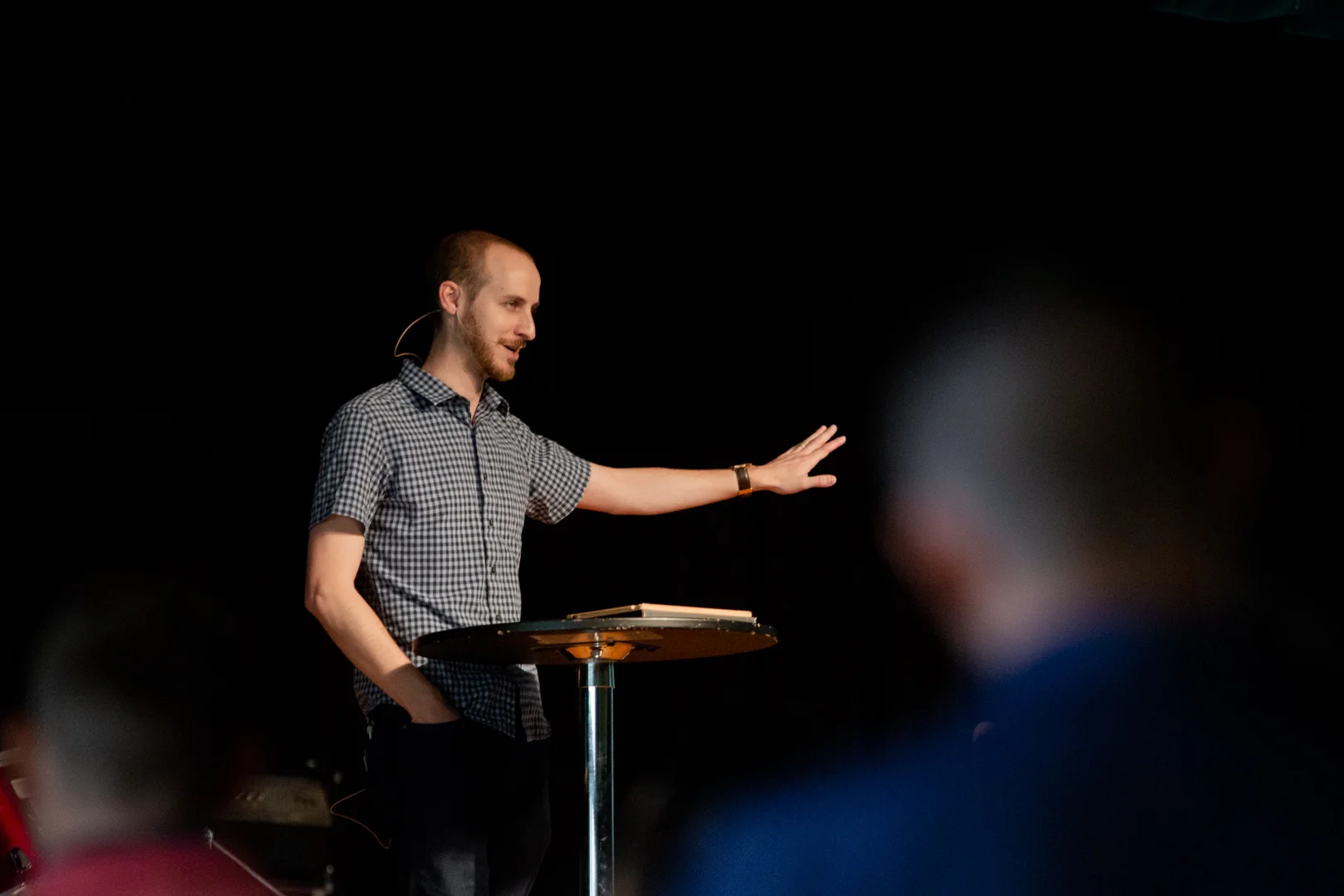

The Good and Pleasant Place
Psalms 133-134 | what, why and how?
Psalms 133-134
I. What it is that David praises as “good and pleasant”
II. Why he regard it to be “good and pleasant”
III. How we can participate in the “goodness and pleasantness” of it

Walking in Forgiveness, Waiting in Faith
Psalm 130 | The Lord graciously forgives guilty sinners and invites us to wait on him in faith
Psalm 130
The Lord graciously forgives guilty sinners and invites us to wait on him in faith
I. Walking in Forgiveness (130:1-4)
Hebrews 4:12-13: For the word of God is living and active, sharper than any two-edged sword, piercing to the division of soul and of spirit, of joints and of marrow, and discerning the thoughts and intentions of the heart. And no creature is hidden from his sight, but all are naked and exposed to the eyes of him to whom we must give account.
The good news of the gospel: although the Lord does mark sins, the record can be wiped clean. For those who are in Christ Jesus, God is not counting our trespasses against us because they’ve been credited to Jesus’ account and we’ve been given his righteousness.
II. Waiting in Faith (130:5-8)
The “waiting” of the Christian life is not an inactive, passive waiting. Instead, we are called to wait by:
Watching (130:5-6)
Hoping (130:7-8)
“The Christian’s waiting and watching is hoping – based on the conviction that God is actively involved in His creation and vigorously at work in redemption. Hoping does not mean doing nothing. It is not fatalistic resignation. It means going about our assigned tasks, confident that God will provide the meaning and the conclusion. It is not compelled to work away at keeping up appearances with a bogus spirituality. It is the opposite of desperate and panicky manipulation, of scurrying and worrying. Hoping is not dreaming. It is not spinning an illusion or fantasy to protect us from our boredom or our pain. It means a confident, alert expectation that God will do what He said He will do.” ~ Eugene Peterson

Walking in Perseverance and Endurance
Psalm 129 | Though we will face opposition, God has broken the power of the enemy and will one day end all evil.
Psalm 129
Though we will face opposition, God has broken the power of the enemy and will one day end all evil.
I. The Reality of Evil (129:1-3)
The history of God’s people (whether Israel or the Church) has always been marked by opposition, persecution, and affliction. The affliction here is described in three ways:
It was intense (“greatly… greatly”)
It was persistent (“from my youth”)
It was thorough (“they made long their furrows”)
The exact identity of the oppressors is unclear, but the “wicked” in this passage can be applied to all that stands against God, his agenda, and his people. Martin Luther described 3 categories of opposition:
The World (cf. Jn. 15:18-19)
The Flesh (cf. Rom. 8:5-8)
The Devil (cf. Eph. 6:12) “There is no busier plowman in all the world than the devil: whoever makes short furrows, he does not.” ~ Hugh Latimer
All of this speaks to the very real existence of evil. It is not an abstract thing; evil is all around us. There are 2 implications of this:
1. We should not be surprised by evil, opposition, and affliction. Are your expectations properly aligned?
2. We should feel some level of “friction” and conflict with the world. Have you felt this friction or have you settled into the way of the world?
II. The Limits of Evil (129:2b, 4)
The good news of the gospel is wrapped up in the word “yet” in verse 2: “Greatly have they afflicted me from my youth, yet they have not prevailed against me.” The story of God’s people is that they have been knocked down, but never knocked out.
The reason why the enemies have not ultimately prevailed is because the Lord “has cut the cords of the wicked.” The imagery is of God breaking the cords that would have connected the animals to the plow that was afflicting his people (129:3).
This is how God has always worked toward his people; he continually “cuts the cords” of all bondage, persecution, and oppression, setting the stage for the greatest redemption in Jesus Christ. “The death & resurrection of Jesus is the great cord-severing ‘yet’ of redemptive history.” ~ Rhett Dodson
The reason why God severs the cords of oppression is because he is “righteous.” The Lord will act in justice & uprightness toward his covenant people, and he will not let evil prevail. This is where our perseverance & endurance comes from on the road of discipleship.
“God sticks to his relationship. He established a personal relationship with us and stays with it. The central reality for Christians is the personal, unalterable, preserving commitment God makes to us. Perseverance is not the result of our determination, it is the result of God’s faithfulness. We survive in the way of faith not because we have extraordinary stamina but because God is righteous and because God sticks with us.” ~ Eugene Peterson
There are moments in our lives where it may feel like evil and oppression are winning, and where we do not feel like God is “sticking with us.” Though we may not understand why God allows evil to continue, we can’t argue that he does not care. The gospel reminds us that the only truly righteous one suffered in the place of the unrighteous; Jesus was afflicted so that we might be delivered from everlasting affliction.
The finished work of Christ reorients our relationship to evil, suffering, and oppression.
2 Corinthians 4:7–10: But we have this treasure in jars of clay, to show that the surpassing power belongs to God and not to us. We are afflicted in every way, but not crushed; perplexed, but not driven to despair; persecuted, but not forsaken; struck down, but not destroyed; always carrying in the body the death of Jesus, so that the life of Jesus may also be manifested in our bodies.
III. The End of Evil (129:5-8)
These 4 verses are an example of an “imprecatory Psalm,” which are prayers that call upon God to bring judgment or a curse upon enemies or oppressors. Imprecatory prayers have been sources of controversy, as they seem to be at odds with the ethics Jesus urges in the New Testament, specifically to “love your enemies & pray for those who persecute you” (Cf. Matt. 5:43-44).
4 Guiding Principles:
1. Imprecatory prayers are an appeal for God to bring about his righteous judgment and his own vindication, not our own selfish revenge.
2. Imprecatory prayers ask God to thwart the plans of evil and evildoers so they would fail.
The Psalmist prays that the enemies of God would have:
No Victory (129:5)
No Reaping/Spoils (129:6-7)
No Blessing (129:8)
3. Imprecatory prayers can still be prayed while loving your enemies & praying for those who persecute you
We can’t truly love our enemies unless we hate the very things that will destroy them. We can pray for their conversion and salvation while simultaneously asking that their plans be brought to nothing so they might see their need for repentance.
4. Imprecatory prayers must be prayed through the reality of the cross
“While Christians rightly conclude that, on this side of the cross, believers will respond to wrongs and persecution differently, we must not be too quick to recoil from these [imprecatory] psalms and miss what we should learn. One lesson is that God does indeed hate injustice. Most Western Christians haven’t experienced much in the way of violent mistreatment, and we should let these psalms help us feel the desperation and helplessness of those who have. We shouldn’t close our ears to the cries of the oppressed. Second, we should realize that virtually always the psalmist leaves the justice and vengeance to God, and does not personally take revenge, as the New Testament commands (Rom. 12:19). Finally, when we are wronged we should put the cross before our eyes, remembering that what our enemies deserve we deserve too, and that it fell on Jesus Christ so we can be pardoned.” ~ Tim Keller

Finding the Blessed Life in a Broken World
Psalm 127-128 | There is a way of living that aligns with the “grain” of the cosmos and that results in blessedness. The way can be found.
Psalm 127-128
There is a way of living that aligns with the “grain” of the cosmos and that results in blessedness. The way can be found.
I. What does that way of living look like?
To fear the LORD is to order the way I think, act, and feel in ALL of life under the conviction that the LORD is who He claims to be and that what He has said is true, right, and good.
We fear the LORD wrongly when we cover, run and hide. Our actions reveal that we believe Him to be arbitrary, harsh, and overbearing.
We fear the LORD rightly when we confess, trust and follow. Our actions reveal that we believe Him to be “merciful and gracious, slow to anger, and abounding in steadfast love and faithfulness,” exactly as He has revealed Himself to be. (Exodus 34:6)
Practically speaking, fearing the LORD involves walking in His ways, which includes both obedience (rule-keeping) and wisdom (righteousness).
When we keep the rules, we limit the harm we do to our neighbors.
When we live righteously, we increase the good we do to our neighbors.
II. What does the blessedness look like that results from “fearing the LORD”?
The blessedness that follows fearing the LORD cannot be found where we tend to look for it, yet, when it is found, it satisfies more deeply than we ever expected.
III. How do I align my life “with the grain” of the cosmos?
Forsake what deserves less love for what deserves more love.
Re-orient your loves to the LORD and to His words.
Re-enter your daily drama and live out your re-oriented loves.
Repeat the cycle regularly and intentionally.

Walking in Joy & Sorrow
Psalm 126 | The Christian life is full of joy and sorrow, appreciating God’s past faithfulness while anticipating his future grace.
Psalm 126 is a perfect emotional map for the Christian life. As we experience the normal ups and downs of life, we are invited not to be overly suspicious nor dominated by our feelings, but to bring them before God through prayer.
Main Idea: The Christian life is full of joy and sorrow, appreciating God’s past faithfulness while anticipating his future grace.
I. Remembering Our Joy (126:1-3)
There is evidence that this song was composed after the Babylonian exile ended for the people of Israel by the Edict of Cyrus (cf. 2 Chron. 36:22-23). For Israelite pilgrims traveling to Jerusalem, this historical backdrop would take on a deep and rich meaning as they walked the same path as the exiles who had been set free.
This Psalm teaches us 3 things about joy:
1. Joy is received, not manufactured
“Joy is not a requirement of Christian discipleship, it is a consequence. It is not what we have to acquire in order to experience life in Christ; it is what comes to us when we are walking in the way of faith and obedience… we cannot make ourselves joyful. Joy cannot be commanded, purchased, or arranged... Joy is what God gives, not what we work up.” ~ Eugene Peterson
This is simultaneously freeing and hopeful, and a reminder that even though we can’t manufacture it ourselves, we are commanded to fight for joy (cf. Phil. 4:4).
2. Joy is rooted in God’s faithfulness in the past
The people of Israel are reminding themselves of God’s redemptive activity toward his people. On this side of the work of Christ, we have even more reason to look back and be reminded of the source of our joy. Remembering God’s past redemptive work reminds us that this is not mere wishful thinking, but a sure foundation to stand upon.
“We nurture these memories of laughter, these shouts of joy. We fill our minds with the stories of God’s acts. Joy has a history. Joy is the verified, repeated experience of those involved in what God is doing. It is as real as a date in history, as solid as a stratum of rock in Palestine. Joy is nurtured by living in such a history, building on such a foundation.” ~ Eugene Peterson
Israel had a way (cf. ‘Ebenezer’) to tangibly remember the faithfulness of God toward them in the past, and we ought to find ways to do the very same thing today, being quick to bring to remembrance all that God has done.
3. Joy affects a whole community
Joy like this becomes infectious, as everything in these verses is corporate in nature. As the Israelites remember the redemptive act of God toward them, the tense suddenly switches to the present: “The Lord has done great things for us; we are glad.” This is how we are called to fight for joy.
II. Sowing Our Sorrows (126:4-6)
The tone of the passage shifts in v. 4 to a “lament.” A lament is an honest prayer to the Lord that stands in the gap between God’s promises and our pain. The Christian life is a simultaneous increase of both joy and sorrow. We often feel sorrow after turning to Christ because of an increasing awareness of our own sin, the sin in others, or when we feel the effects of living in a broken world.
126:4 is an honest confession of spiritual nostalgia. “The people could not live on yesterday’s joy any more than their ancestors could live on yesterday’s food.” ~ Daniel Estes
The imagery of asking God to send streams in the “Negeb” invokes the idea of being in the desert spiritually, in a dry and barren place. A few times a year, water would rush into the ditches of the Negeb as it rained in the distance and ran down the hills, providing a flash flood of nutrients. The Israelites are crying out for the Lord to move in this way, bringing a revival, just as he has in the past (cf. 126:1)
While waiting for the Lord to move in this way, 126:5-6 provides the roadmap for continuing to walk forward on the road of discipleship. Until the flood waters come, we are called to keep tilling the ground and sowing seeds, one day at a time. This is the heart behind our core values of fighting to show up & finding beauty in the ordinary.
Until the Lord brings a stream into the desert, we are to water the ground with our own tears. The idea of “sowing our sorrows” means:
We do not avoid our tears, acknowledging pain, sorrow, and hardships in our lives
We do not waste our tears, knowing that we will one day reap bundles of “shouts of joy.” We invest them in God and the things of God.
Sowing seeds in the desert often feels futile and foolish, but we can have confidence that the Lord brings life from death and that our sorrows and hardships are never pointless or wasted in God’s Kingdom.
Romans 5:3–5: Not only that, but we rejoice in our sufferings, knowing that suffering produces endurance, and endurance produces character, and character produces hope, and hope does not put us to shame, because God’s love has been poured into our hearts through the Holy Spirit who has been given to us.
“Our momentary weeping, while we let fall the precious seed, is scarcely to be thought of in comparison with the mighty sheaves of the exceeding glory in the land where tears are divinely and finally wiped from every eye… There is not a single drop of gall which will not turn to honey. There is not this day one drop of sweat upon your aching brow but shall crystallize into a pearl for your everlasting crown; not one pang of anguish or disappointment but shall be transmuted into celestial glory, to increase your joy, world without end” ~ Charles Spurgeon
1 Corinthians 15:58: Therefore… be steadfast, immovable, always abounding in the work of the Lord, knowing that in the Lord your labor is not in vain.

The Object of Worship
Psalm 122 | As a redeemed people, we should gladly gather together often to worship God through remembering, giving thanks, and seek the good of the redeemed community.
Psalm 122
As a redeemed people, we should gladly gather together often to worship God through remembering, giving thanks, and seek the good of the redeemed community.
I. The Call to Gather Corporately (122:1-2)
Hebrews 10:24-25
And let us consider how to stir up one another to love and good works, not neglecting to meet together, as is the habit of some, but encouraging one another, and all the more as you see the Day drawing near.
II. The Command to Give Thanks (122:3-5)
Deuteronomy 8:11-19
“Take care lest you forget the Lord your God by not keeping his commandments and his rules and his statutes, which I command you today, lest, when you have eaten and are full and have built good houses and live in them, and when your herds and flocks multiply and your silver and gold is multiplied and all that you have is multiplied, then your heart be lifted up, and you forget the Lord your God, who brought you out of the land of Egypt, out of the house of slavery, who led you through the great and terrifying wilderness, with its fiery serpents and scorpions and thirsty ground where there was no water, who brought you water out of the flinty rock, who fed you in the wilderness with manna that your fathers did not know, that he might humble you and test you, to do you good in the end. Beware lest you say in your heart, ‘My power and the might of my hand have gotten me this wealth.’ You shall remember the Lord your God, for it is he who gives you power to get wealth, that he may confirm his covenant that he swore to your fathers, as it is this day. And if you forget the Lord your God and go after other gods and serve them and worship them, I solemnly warn you today that you shall surely perish.”
Feasts
1. Unleavened Bread (Passover)
2. Weeks (Pentecost)
3. Booths (Tabernacles)
Acts 2:44-47
And all who believed were together and had all things in common. And they were selling their possessions and belongings and distributing the proceeds to all, as any had need. And day by day, attending the temple together and breaking bread in their homes, they received their food with glad and generous hearts, praising God and having favor with all the people. And the Lord added to their number day by day those who were being saved.
“But very often we don’t feel like [going to church], and so we say, ‘It would be dishonest for me to go to a place of worship and praise God when I don’t feel like it. I would be a hypocrite.’ The psalm says, ‘I don’t care whether you feel like it or not: as was decreed, give thanks to the name of God’… Feelings are great liars. If Christians worshiped only when they felt like it, there would be precious little worship. Feelings are important in many areas but completely unreliable in matters of faith.”
-Eugene Peterson
“We think that if we don’t feel something there can be no authenticity in doing it. But the wisdom of God says something different: that we can act ourselves into a new way of feeling much quicker than we can feel ourselves into a new way of acting. Worship in an act that develops feelings for God, not a feeling for God that is expressed in an act of worship. When we obey the command to praise God in worship, our deep, essential need to be in relationship with God is nurtured.”
-Eugene Peterson
III. The Concern of the Redeemed Community (122:6-9)
Hebrews 10:19-25
“Therefore, brothers, since we have confidence to enter the holy places by the blood of Jesus, by the new and living way that he opened for us through the curtain, that is, through his flesh, and since we have a great priest over the house of God, let us draw near with a true heart in full assurance of faith, with our hearts sprinkled clean from an evil conscience and our bodies washed with pure water. Let us hold fast the confession of our hope without wavering, for he who promised is faithful. And let us consider how to stir up one another to love and good works, not neglecting to meet together, as is the habit of some, but encouraging one another, and all the more as you see the Day drawing near.”

Walking as Sojourners in Faith
Psalms 120-121 | In the midst of our distress, we are invited to call out in faith to God who helps us.
Psalms 120—121
The Psalms of Ascents were sung by the Israelites on their annual pilgrimages to Jerusalem for feasts and festivals. Jerusalem was the highest city in the region, so no matter where you were coming from, travelers were always “ascending” on their journey.
The same is true in our walk with Christ today; the road of discipleship with Jesus often feels ‘uphill,’ as we sojourn toward our true home, but it is on this road that we see & celebrate the faithfulness of God toward his people.
Main Idea: In the midst of our distress, we are invited to call out in faith to God who helps us.
I. Where Is Our Home? (120:1-7)
Psalm 120 is not a glamorous beginning to a journey, but it is a realistic and necessary starting point. The road of discipleship begins by crying out to God in distress, dissatisfied with the way things are in our lives & in the world.
“A person has to be thoroughly disgusted with the way things are to find the motivation to set out on the Christian way. As long as we think the next election might eliminate crime and establish justice or another scientific breakthrough might save the environment or another pay raise might push us over the edge of anxiety into a life of tranquility, we are not likely to risk the arduous uncertainties of a life of faith. A person has to get fed up with the ways of the world before he or she acquires an appetite for the world of grace.” ~ Eugene Peterson
The specifics of the distress are common to our human experience:
1. Dishonesty & Deceit (120:2-4)
The world we live in is full of “lies” ever since the Garden of Eden. We are prone to exaggeration & half-truths, with the world always over-promising & under-delivering. We feel this individually when we are lied to (or about), slandered, or misrepresented.
The Psalmist asks the Lord to bring about his judgment (120:3-4) rather than pursuing vengeance himself. We must remember that Jesus has walked this path before us, entrusting himself to his heavenly Father in the face of false witness & slander. “Silence to man and prayer to God are the best cures for the evil of slander.” ~ Charles Spurgeon
2. Homesickness & Hostility (120:5-7)
The Psalmist laments that he is (metaphorically) in ‘Meshech’ & ‘Kedar,’ known enemies of Israel. He has a keen sense that he is not at home, but is a sojourner (cf. 1 Pet. 2:11-12).
He is not only a stranger who is far from home, but he finds himself in hostile territory. Though he wants peace, he finds himself dwelling in the midst of the enemy who desires war. The history of humanity is one that is full of hostility and warfare.
James 4:1–4: What causes quarrels and what causes fights among you? Is it not this, that your passions are at war within you? You desire and do not have, so you murder. You covet and cannot obtain, so you fight and quarrel. You do not have, because you do not ask. You ask and do not receive, because you ask wrongly, to spend it on your passions. You adulterous people! Do you not know that friendship with the world is enmity with God? Therefore whoever wishes to be a friend of the world makes himself an enemy of God.
As the Psalmist surveys his situation, it finally hits him that he has been here “too long” (120:6). This ‘holy discontentment’ with the status quo of this world is the beginning of the road of discipleship. We cry out ‘too long’ when we get to the end of ourselves & the end of what this world offers. This ought to create a yearning and longing for our true home (cf. Heb. 11:10)
Have we had this experience of ‘too long?’ Or have we mistakenly made our home and our ultimate comfort here on earth?
“If you read history you will find that the Christians who did most for the present world were precisely those who thought most of the next. It is since Christians have largely ceased to think of the other world that they have become so ineffective in this.” ~ C.S. Lewis:
II. Where Is Our Help? (121:1-8)
As the Israelites would make their pilgrimage & ascent to Jerusalem, they would be looking at the hills & the mountains before them. The mountains were not the source of help, however; instead, the hills were the location of pagan worship temples/altars, and they represented the danger of this kind of journey.
The Psalmist lifts his eyes from the mountains even higher to the source of his true help: the Lord himself! As he does this, he draws our attention to 3 aspects of God’s character & nature that help us on our road:
1. God is the Creator (121:2)
Help comes from the Creator, not the creation. If God has created everything in heaven and earth, then he can control them all, which means we do not need to fear.
The Psalmist invokes the covenantal name of God (‘Yahweh’ - the LORD), which means he is personable & accessible to his people despite his transcendence.
2. God is Our Protector (121:3-6)
The Psalmist draws attention to the possible harms that await travelers on their way:
They could stumble & fall, resulting in an injury (121:3)
The sun could ‘strike you by day,’ resulting in physical exhaustion or sunstroke (121:5)
The moon at night was thought to produce emotional illness (‘lunacy’) (121:6)
In all of these dangers, the Psalmist is confident that the Lord will not let their foot be moved and that he will be their shade against these risks. He is the God who never slumbers or sleeps (121:3-4), so that we can sleep without fear.
“The promise of the Psalm is not that we shall never stub our toes but that no injury, no illness, no accident, no distress will ever have evil power over us, that is, nothing will be able to separate us from God’s purposes in us…. None of the things that happen to you, none of the trouble you encounter, have any power to get between you and God, dilute His grace in you, divert his will from you.” ~ Eugene Peterson
3. God is our Preserver (121:7-8)
The Psalmist reminds us that the Lord will ‘keep you from all evil’ and ‘keep your life’ (lit. ‘soul’ or ‘being’). This doesn’t mean that we will be kept from encountering evil in general, but instead a promise that God will not let the evil overtake you or get into you. Even on the day when we ‘go out’ for the last time, God will preserve our souls and bring us into the glory of heaven.
The road of discipleship is ultimately a road of faith. But the only way we can have assurance that these things will be ultimately true of our life is because Jesus got the inversion of these promises.
“Jesus, the ultimate Pilgrim, had his feet kept by the Father. God kept his feet in the wilderness, when they walked the shores of the Sea of Galilee, when they climbed the Mount of Transfiguration, when Mary bathed them with her tears, and when they were nailed to the cross. God kept his feet in the paths of righteousness so that when he went to the cross, those pierced feet crushed the devil’s head (Gen. 3:15). Because the Lord kept the feet of Jesus, you and I can be saved through his death. One day, those feet will step again on this earth and the last pilgrim will be home.” ~ Rhett Dodson
God our Father is beckoning us home, while Jesus our brother walks the path before us & beside us, while the Spirit our helper has been sent into our hearts, stamping & sealing our passports for the new heavens & the new earth. This is where our help comes from.