
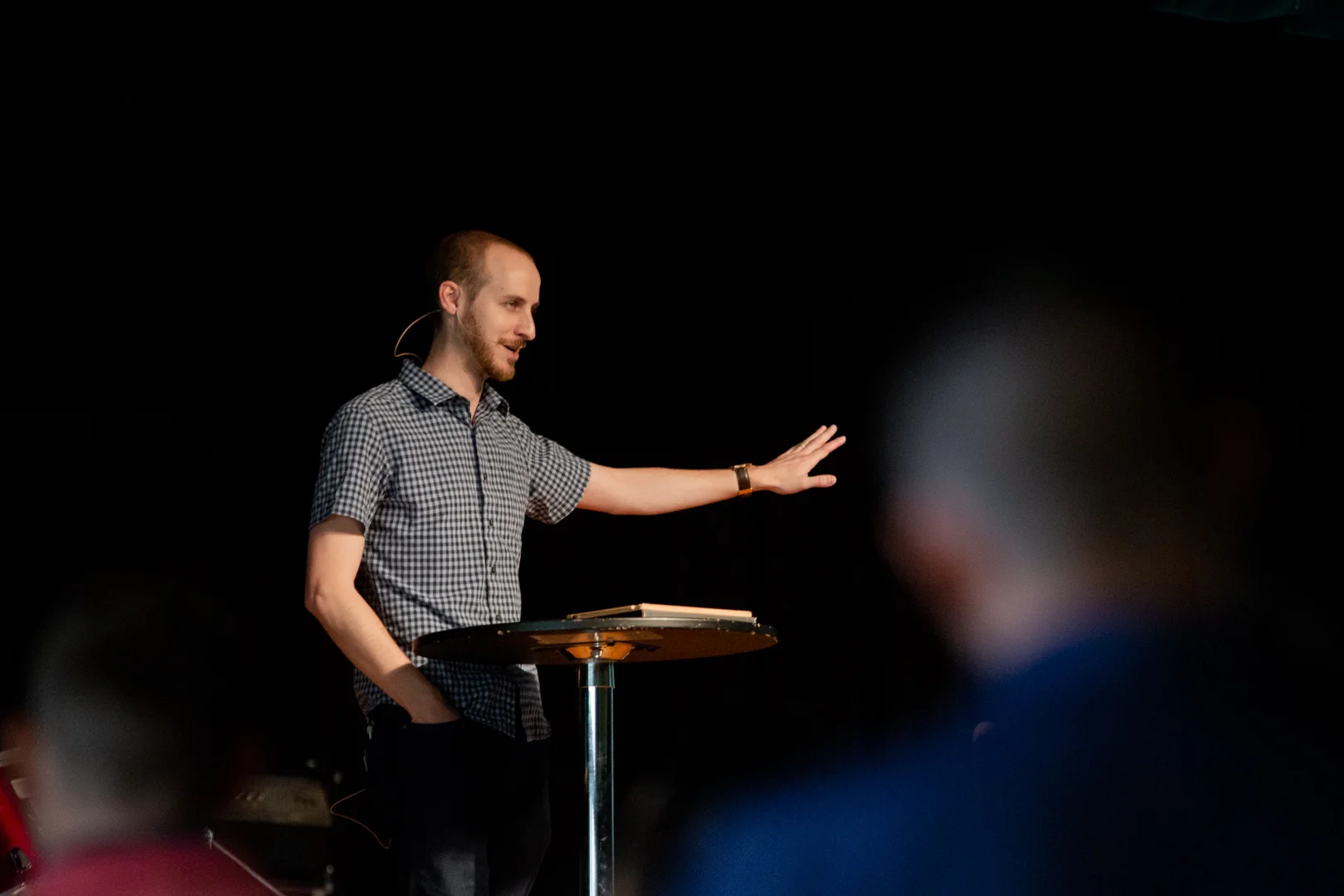

Pastoral Ministry | Pastoral Appointments
1 Peter 5:1-4
Pastoral Ministry
1 Peter 5:1-4
Main Idea: Faithful pastors are a gift to the church & a picture of the Chief Shepherd.
6 observations on Pastoral Ministry:
Pastors serve in a plurality. 5:1a: “So I exhort the elders among you, as a fellow elder…”
Pastors serve in the context of suffering. 5:1b: “... and a witness of the sufferings of Christ, as well as a partaker in the glory that is going to be revealed”
Pastors shepherd the flock. 5:2a:“... shepherd the flock of God that is among you, exercising oversight”
Pastors are called men. 5:2b: “... not under compulsion, but willingly, as God would have you; not for shameful gain, but eagerly”
Pastors are examples. 5:3: “... not domineering over those in your charge, but being examples to the flock.”
Pastors are under-shepherds to the Chief Shepherd. 5:4: “And when the chief Shepherd appears, you will receive the unfading crown of glory.”
*For more on our conviction regarding leadership in the church, you can see more information by clicking here including a full sermon we preached back on January 10, 2021 titled “The Church & Her Leaders.”

A Better Way Forward
1 Peter 1:1-2, 2:9-17, 3:8-17 | Christ has commissioned us as his ambassadors, bearing witness to the Kingdom of God in a hyper-politicized world.
A Better Way Forward
1 Peter 1:1-2, 2:9-17, 3:8-17
Joshua 5:13: “Are you for us or for our adversaries?”
Main Idea: Christ has commissioned us as his ambassadors, bearing witness to the Kingdom of God in a hyper-politicized world.
I. Remembering Our Identity
Peter reminds these scattered Gentile Christians of their identity as:
Elect Exiles
A Chosen Race
A Holy Nation
A Royal Priesthood
A people for God’s own possession
God’s people who have received mercy
Sojourners
Citizens of heaven (Phil. 3:20)
Ambassadors for Christ (2 Cor. 5:20)
In a world where politics has become a religion (or at least demands a religious-type commitment), Christians need a reminder of our true home and that our highest allegiance & citizenship is to King Jesus in heaven.
“Most people, if they had really learned to look into their own hearts, would know that what they do want, and want acutely, is something that cannot be had in this world. There are all sorts of things in this world that offer to give it to you, but they never quite keep their promise… if I find in myself a desire which no experience in this world can satisfy, the most probable explanation is that I was made for another world… I must keep alive in myself the desire for my true country, which I shall not find till after death; I must never let it get snowed under or turned aside; I must make it the main object of life to press on to that other country & to help others to do the same.” ~ C.S. Lewis
If we lived faithfully toward this end, we would not allow political parties to set the agenda for our civic engagement, but rather King Jesus & the ethics of the Kingdom of God. Christians won’t fit perfectly into any earthly political party and we will always feel a bit out of place amongst the tribes of this world.
“Consistent faithfulness to Scripture will never square with total alignment with any political party. A gospel agenda is not set by partisan think tanks in Washington, D.C. It’s set by Scripture. A gospel agenda may align with some aspects of one political party and some of another—and should spur us to engage in those areas—but it also decidedly rejects some aspects of both. God’s agenda is better, bigger, and more glorious than any one party, nation, culture, or time. The mission of Jesus will outlast every White House tenure. It will outlast America itself.” ~ Brett McCracken
II. Remembering Our Mission
Embracing our identity as sojourners, exiles, and ambassadors does not mean that we disengage from the affairs of this world, however.
Jeremiah 29:4-7: “Thus says the Lord of hosts, the God of Israel, to all the exiles whom I have sent into exile from Jerusalem to Babylon: Build houses and live in them; plant gardens and eat their produce. Take wives and have sons and daughters; take wives for your sons, and give your daughters in marriage, that they may bear sons and daughters; multiply there, and do not decrease. But seek the welfare of the city where I have sent you into exile, and pray to the Lord on its behalf, for in its welfare you will find your welfare.
Two dangers the Israelite exiles in Babylon needed to avoid:
1. Don’t hate the Babylonians
“For Christians, one inescapable conclusion of this extraordinary command is that we are obliged to work for the benefit and the flourishing of all people, whether or not they see the world as we do or agree with us in any way. Christians’ obligation is not to their “tribe” but to their God – a God who cares deeply for all people.” ~ Michael Wear
2. Don’t become the Babylonians
As we seek to be faithful where God has placed us, Chrsitians can’t engage in the same way that the world engages. We must stay focused on Jesus, seeking to “proclaim the excellencies of him who called you out of darkness into his marvelous light.” (1 Pet. 2:9).
III. Remembering Our Distinctiveness
Peter reminds us that Christians are to live with a distinct, compelling witness to the Kingdom of God. This includes:
Distinct Behavior (2:11-12)
Distinct Honor (2:13-17)
Galatians 5:13–14: For you were called to freedom, brothers. Only do not use your freedom as an opportunity for the flesh, but through love serve one another. For the whole law is fulfilled in one word: “You shall love your neighbor as yourself.”
Jesus’ 12 disciples had political diversity; Simon was a zealot, actively working against Rome, while Matthew was a tax collector, supporting Rome. We have to allow for political diversity within the church, since we will always have more in common with a brother or sister in Christ than a fellow Democrat or Republican.
Distinct Humility (3:8-9)
Distinct Speech (3:10-12)
Colossians 4:5-6: “Walk in wisdom toward outsiders, making the best use of the time. Let your speech always be gracious, seasoned with salt, so that you may know how you ought to answer each person.”
Distinct Hope (3:13-16)
Shepherds, Sheep and Standing Firm
1 Peter 5:1-14
Elders are to pastor the church of God toward humility and faithfulness to stand firm against all opposition.

1 Peter 5:1-14
November 25th, 2018
Main Idea: Elders are to pastor the church of God toward humility and faithfulness to stand firm against all opposition.
I. SHEPHERDING THE FLOCK OF GOD (5:1-5A)
The normative and primary term for leaders of the church throughout the New Testament is “Elder”, a word that seems to be synonymous with “overseer” or “pastor.”
Peter makes 6 observations about elders in this passage:
1. Elders serve in a plurality (5:1)
2. Elders pastor the church (5:2a)
3. Elders lead the church (5:2b)
4. Elders are called (5:2c)
5. Elders are examples (5:3)
6. Elders are under-shepherds (5:4)
Elders who serve faithfully in this way will point their flock to the “Good Shepherd” (cf. John 10) who is the true “shepherd and overseer of your souls” (2:25).
Peter calls both shepherds and sheep to humility, as pastors recognize their role as “under-shepherds” and as sheep are “subject to” the shepherds who lead them to the Good Shepherd.
II. STANDING FIRM IN THE GRACE OF GOD (5:5B-14)
The theme of this section is “standing firm” in the face of opposition. Peter points these churches to 3 necessary components of this standing firm:
1. Humility (5:5b-7)
Peter urges the church to “clothe” themselves with humility so that they might be exalted at the proper time (when Christ returns). This practically looks like “casting all your anxieties on him,” recognizing that he is in control and is ruling and reigning over all.
Worry is a form of pride because when believers are filled with anxiety, they are convinced that they must solve all the problems in their lives in their own strength. The only god they trust in is themselves. When believers throw their worries upon God, they express their trust in his mighty hand, acknowledging that he is Lord and Sovereign over all of life - Thomas Schreiner
2. Faith (5:8-11)
There are two equal and opposite errors into which our race can fall about the devils. One is to disbelieve in their existence. The other is to believe, and to feel an excessive and unhealthy interest in them. They themselves are equally pleased by both errors and hail a materialist or a magician with the same delight - C.S Lewis
Satan tends to use two things against us: our own sin and suffering.
We resist him together by drawing our attention to the one who is truly in control, who has restored, confirmed, strengthened, and established us, and the one who rules and reigns over all things, including our adversaries.
3. Community (5:12-14)
We must stand firm in the grace of God together; Peter draws our attention to the solidarity of being a part of a suffering community bigger than ourselves, identifies key co-workers in the gospel (Silas & John Mark), and encourages us to stir up brotherly and sisterly affection toward one another.
Peter’s words here serve as a fitting conclusion for what it looks like to live as “Citizens as Strangers:” “I have written briefly to you, exhorting and declaring that this is the true grace of God. Stand firm in it.”
Living Together in light of the End
1 Peter 4:7-19
With the end in mind, we are called to live as a family and endure through suffering, to the glory of God .
1 Peter 4:7-19
November 18th, 2018
Main Idea: With the end in mind, we are called to live as a family and endure through suffering, to the glory of God .
I. THE END-TIME FAMILY OF GOD (4:7-11)
In light of the end that is coming, there are 4 things that ought to mark the family of God:
Clear Thinking (4:7)
Love (4:8)
Hospitality (4:9)
“Once the heart is opened, the home is opened too” ~ John Stott.
4. Service (4:10-12)
“Jesus shows us the way to life. His invitation is to lose our life- to renounce our obsessive concern with ourselves & make the glory of God our consuming desire… When we, like Jesus, love what is most lovely, and value supremely what is supremely valuable, and glorify most what is most glorious, we will begin to experience freedom” ~ J.R. Vassar
II. ENDURANCE IN FIERY TRIALS (4:12-19)
As we go through these fiery trials and think about endurance, Peter draws our attention to 3 things.
Rejoice (4:13-14)
Obey (4:15-18)
"An ounce of sin will hurt you far more than 10 million tons of suffering." ~ Charles Spurgeon
3. Entrust (4:19)
The Cosmic Reign of King Jesus
1 Peter 3:18-4:6
Jesus has conquered over all through his suffering, death, and resurrection, arming us with power for faithful living.
1 Peter 3:18-4:6
November 11th, 2018
A wonderful text is this, and a more obscure passage perhaps than any other in the New Testament, so that I do not know for a certainty just what Peter means - Martin Luther
Main Idea: Jesus has conquered over all through his suffering, death, and resurrection, arming us with power for faithful living.
2 keys to approaching difficult passages:
1. Context is king
2. Always use more-clear passages to interpret less-clear passages (Scripture interprets Scripture)
I. THE PREEMINENCE OF THE EXALTED CHRIST (3:18-22)
1. The downward movement of Christ (3:18-20)
2. The upward movement of Christ (3:22)
3. Baptism as the bridge (3:21)
Three views on the “spirits in prison”:
1. The Apostle’s Creed: “he descended into hell”
2. Christ pre-figured in the preaching of Noah
3. Proclaiming victory over evil and fallen angels in the place of the dead
The context pushes us to interpretation #3
Cf. 2 Peter 2:4-5 & Luke 16:19-31 (The Rich Man & Lazarus)
The Jewish understanding of the afterlife was a single place of the dead ("Sheol") with compartments for the righteous ("Abraham's bosom" or "paradise") and the unrighteous ("Hades")
Jesus here declares victory over the evil angels who contributed to the flood and whose mindset is seen in the enemies of Christ. Though the crucifixion would lead them to believe they won, Jesus comes and proclaims victory over them.
They were also sojourners and exiles on earth, a small community beset by opponents who mistreated them. They should not be discouraged by the smallness of their numbers but must remember that God now extends his patience to all, but the day of judgment is coming in which their opponents will be ashamed and they will be vindicated. Hence, the appeal to Noah and God’s patience reminds them to persevere. If God preserved Noah when he stood in opposition to the whole world, he will also save his people, even though they are now being persecuted - Thomas Schreiner
Christ conquered on the cross, Christ conquered at the cemetery, and Christ is conquering in the clouds right now. - Charlie Dates
How does baptism bridge the downward and the upward movement of Christ?
Just as the chaotic waters of the flood were the agent of destruction, so too the waters of baptism are waters of destruction. In New Testament theology, however, believers survive the death-dealing baptismal waters because they are baptized with Christ. They are rescued from death through his resurrection. Hence, we are not surprised to read in this verse that baptism saves “through the resurrection of Jesus Christ.” The waters of baptism, like the waters of the flood, demonstrate that destruction is at hand, but believers are rescued from these waters in that they are baptized with Christ, who has also emerged from the waters of death through his resurrection. Just as Noah was delivered through the stormy waters of the flood, believers have been saved through the stormy waters of baptism by virtue of Christ’s triumph over death - Thomas Schreiner
II. THE POWER FOR EVERYDAY LIVING (4:1-6)
Peter urges to “arm yourselves” (military term) with the mindset of Christ. This means to be prepared for suffering, as suffering is the only way to glory, as evidenced by the downward and upward movement of Jesus himself.
The one who suffers on behalf of Christ has “ceased from sin” in the sense that sin no longer has dominion and power over their lives.
Oftentimes, obedience to Jesus will feel like suffering. However, embracing this form of “suffering” reminds us of reality and leads us to true freedom.
Peter reminds us that our present circumstances are not the last word. The “delayed gratification” of the Christian life calls us to remember our true King and our true Kingdom, and that there is life even after death (4:6).
Marriages in Exile
1 Peter 3:1-7
The gospel brings hope to marriages by fixing our focus beyond marriage
1 Peter 3:1-7
October 28th, 2018
Main Idea: The gospel brings hope to marriages by fixing our focus beyond marriage
I. THE GOSPEL & WIVES (3:1-6)
In every culture, everywhere in this fallen world, the relative physical strength of men and the biological demands of childbearing and nurturing, have meant that when men are not intentionally self-sacrificial, women and children will be the hardest hit. - Russell Moore
Peter’s paradigm of a Christian wife with an unbelieving husband would have been culturally offensive to the Greco-Roman world:
“A woman ought not to make friends of her own, but to enjoy her husband’s friends in common with him. The gods are the first and most important friends. Hence, it is becoming for a wife to worship and to know only the gods that her husband believes in, and to shut the door tight upon all strange rituals and outlandish superstitions. For with no god do stealthy and secret rites performed by a woman find any favor.” ~ Plutarch (Greek & Roman Biographer)
Peter exhorts Christian wives to be “subject to your own husbands.”
1. This is not based on the traditional values of society, but is consistently affirmed as God’s good design for husbands and wives (Cf. Eph. 5:22-33, Col. 3:18-19)
2. This is voluntary and not under compulsion.
3. This is a posture but not an absolute.
4. This does not mean that women (generally) are to be subject to men (generally).
5. This is not because women are inferior to men
Peter’s expectation here is that unbelieving husbands “may be won” to salvation through their wives beautiful conduct, continuing his argument from 2:11-12. This is exactly what happened historically in the spread of the gospel in the early church.
Peter urges wives to focus on the imperishable (cf. 1:4, 1:23) beauty of a character formed by the gospel. This kind of beauty can’t be taken away by gravity, time, age, or constantly shifting cultural standards.
A “gentle and quiet” spirit is a spirit that is settled and unshaken by circumstances. This is only found by rooting your sense of self and your hope in the Lord.
Peter points to the example of Sarah (cf. Gen. 18:11-12), whose hope in the Lord in the face of a difficult marriage with Abraham prompts her to respect her husband, even in the private spaces of her head.
Christian wives can find purpose in the midst of an impossible marriage by hoping in God. As they do so, they model the covenant of grace shown to us through Jesus Christ to their husbands and to the watching world
II. THE GOSPEL & HUSBANDS (3:7)
Husbands are to exercise “headship” in 2 ways:
1. “Live with your wives in an understanding way”
2. “Show honor to the woman as the weaker vessel since they are heirs with you of the grace of life”
Weakness is not a negative characteristic in a cross-shaped perspective. Vulnerability is not inferiority but is instead right at the heart of the most powerful reality in the universe: the crucified Christ who triumphs through vulnerability and leads us to find strength in our weakness - Russell Moore
Headship is about crucifying power and privilege in order to love one’s wife… Headship is not about having one’s laundry washed or one’s meals cooked or one’s sexual drive met, but rather about constantly evaluating how to step up first to lay one’s life down for one’s family. Headship will not seem often to the outside world to be “being the head of your house” at all. In many cases, headship will look like weakness. So does the cross. - Russell Moore
God takes the responsibility of headship so seriously that he will not listen to the prayers of husbands who are neglecting this. Husbands: Are you taking your cues from the head of the household of God?

The Good Life among the Gentiles
1 Peter 2:11-25
The good life among the Gentiles.
1 Peter 2:11-25
October 21st, 2018

An Enduring Church
1 Peter 1:22-2:8
The Word of God is both the source and the strength to our growth together as the church.
1 Peter 1:22-2:8
October 7th, 2018
Main Idea: The Word of God is both the source and the strength to our growth together as the church.
I. THE SOURCE OF THE CHURCH (1:22-25)
Christians are called to love all people, but they are especially called to love their brothers and sisters in the church. Jesus indicates (John 13:34-35) that our love for one another will bear witness to him.
It is only possible to love one another earnestly from a pure heart because we have been born again by the imperishable seed of the gospel as contained in the Word of God. We draw from the same source of the Word of God to cultivate this love.
We cannot drive a wedge between God and His Word; they share the characteristics of being imperishable, living, and active. It reminds us that we love because God first loved us (cf. 1 John 4:19)
II. THE STRENGTH OF THE CHURCH (2:1-3)
We are called in the church to “put away” (like taking off clothes) sinful attitudes and desires that will poison our community.
The metaphor of longing for milk speaks to both our dependance and our enjoyment of the Word of God.
The Word of God is our strength as we “grow up into salvation,” as we continually taste and see the goodness of the Lord to us in Christ.
Visit many good books, but live in the Bible - Charles Spurgeon
III. THE IDENTITY OF THE CHURCH (2:4-8)
The Church is rejected by the world but chosen by God, following the pattern of Jesus Christ, who is the cornerstone of the body of Christ.
Jesus Christ is the “living stone” because of his resurrection; we too are made into “living stones” in the new spiritual temple of God.
The church is not only built up as a spiritual house, but we are also a holy priesthood, offering spiritual sacrifices through Jesus Christ, our great high priest (cf. Heb. 4:14-16).
Peter emphasizes God’s sovereignty over the enemy in order to encourage these persecuted Christians. God is sovereign and in control over all things, even over those who oppose his people.

Hope and Holiness
1 Peter 1:10-21
In response to being recipients of salvation promised in the Scriptures, we are called to live in holiness through Christ.
1 Peter 1:10-21
September 30th, 2018
Main Idea: In response to being recipients of salvation promised in the Scriptures, we are called to live in holiness through Christ.
I. A CALL TO BEHOLD (1:10-12)
1. The Bible is one unified story
2. The Bible is centered on Jesus Christ
3. The Bible is illuminated by the Holy Spirit
4. The Bible is for us
The cosmic sweep of God’s redemption is all centered in Christ, whom we know and love. The petty dreams of earth’s little tyrants shrivel before the majesty of the kingdom of God, ministered by prophets and apostles, but now realized for those who know Jesus Christ - Ed Clowney
The angels are literally “obsessed” and “stooping down” or “straining” to see this story of redemption. Are we doing the same? Are we reading our Bible this way?
II. A CALL TO HOLINESS (1:13-16)
“Therefore” reminds us that the indicatives of the gospel always come before the imperatives. What God has done for us in and through Christ always precedes what we are called to do for him in response.
“Being “holy” includes the sense of belonging to God, a people marked off and separate from the world by their way of life.” ~ I. Howard Marshall
Our motivation for holiness is the very holiness of God himself, which we have experienced through the work of Christ.
In Leviticus, the holiness of God is dangerous, because the people of Israel are unholy and sinful. Jesus comes as the fulfillment of the message of Leviticus by transferring his holiness and his purity to us.
III. A CALL TO FEAR (1:17-21)
Peter sees the “fear of God” and the “Fatherhood of God” as being completely compatible. The “Fear of God” is a reverent awe and respect for God who is omnipotent and omniscient.
But God is also our Father- the one who loves us and whom we must give an account. This is all meant to be an incentive toward holiness in our lives.
“Ransomed” literally means that we are “bought-back.” This is not by silver and gold, but by the precious blood of Christ. His blood is our redemption.
When we are tempted to return to “the passions of our former ignorance,” we are commanded to remember our ransom; we have been bought with a price, which means we are not our own. We belong to God, our Father, who through Jesus Christ has made us believers and given us faith and hope.

A Living Hope
1 Peter 1:1-9
God has caused us through Christ to be born again to an inheritance that provides unshakeable hope and joy.
1 Peter 1:1-9
September 23rd, 2018
Main Idea: God has caused us through Christ to be born again to an inheritance that provides unshakeable hope and joy.
I. A TRIUNE INTRODUCTION (1:1-2)
Redemption is ultimately a Triune activity.
1. The Source: The foreknowledge of God the Father
2. The Seal: The sanctification of the Holy Spirit
3. The Purpose: Obedience to Christ, because he has shed his blood for us.
Living as elect exiles (or as citizens who are strangers) should produce a hopeful realism in the life of a Christian.
A Christianity that is without friction in the culture is a Christianity that dies… a Christianity that is walled off from the culture around it is a Christianity that dies… Our call is to an engaged alienation, a Christianity that preserves the distinctness of our gospel while not retreating from our calling as neighbors, friends, and citizens - Russell Moore
II. A HOPEFUL INHERITANCE (1:3-5)
What does it mean to have a “living hope”? It is a conviction that something will happen in the future. But there has to be some kind of basis to assume that something will come true.
The inheritance of our salvation is “imperishable” (durability), “undefiled” (purity), and “unfading” (quality), because it is kept in heaven for us and is being guarded by God’s power.
Not only is our inheritance kept for us; we are kept for our inheritance.
III. UNSHAKEABLE JOY IN SUFFERING (1:6-9)
Peter notes three ways that we can have an unshakeable joy in the face of suffering and trials:
1. Suffering strengthens our faith
2. Suffering gives us a proper perspective
3. Suffering leads us to joy and glory.
God whispers to us in our pleasures, speaks in our conscience, but shouts in our pain: it is His megaphone to rouse a deaf world - C.S Lewis