
His Name Shall Be
Isaiah 9:1-7
His Name Shall Be
Isaiah 9:1-7
“[We should] pay attention to the fact that Isaiah’s vision is not a sentimental picture of cherubic babies in whom everything is pure and innocent. The child does not remain a baby. These four names are a full-frontal attack on all that keeps us from God and an all-out assault on what is wrong with the world.”
~ Eugene Peterson, As Kingfishers Catch Fire
Main Idea: Christmas is good news of God’s unstoppable kingdom of grace for those who humbly receive him.
I. Wonderful Counselor
We need the “Wonderful Counselor” because we dwell in darkness and need light
Isaiah 9:2: The people who walked in darkness
have seen a great light;
those who dwelt in a land of deep darkness,
on them has light shone.
II. Mighty God
We need the “Mighty God” because we are in bondage and need saving
Isaiah 9:4–5: For the yoke of his burden,
and the staff for his shoulder,
the rod of his oppressor,
you have broken as on the day of Midian.
For every boot of the tramping warrior in battle tumult
and every garment rolled in blood
will be burned as fuel for the fire.
Matthew 1:21: “She will bear a son, and you shall call his name Jesus, for he will save his people from their sins.”
III. Everlasting Father
We need the “Everlasting Father” because we are gloomy and need joy
Isaiah 8:22-9:1: “And they will look to the earth, but behold, distress and darkness, the gloom of anguish. And they will be thrust into thick darkness. But there will be no gloom for her who was in anguish…”
Isaiah 9:3: You have multiplied the nation;
you have increased its joy;
they rejoice before you
as with joy at the harvest,
as they are glad when they divide the spoil.
IV. Prince of Peace
We need the “Prince of Peace” because we are weary and need rest
Isaiah 9:7: Of the increase of his government and of peace
there will be no end,
on the throne of David and over his kingdom,
to establish it and to uphold it
with justice and with righteousness
from this time forth and forevermore.
The zeal of the Lord of hosts will do this.
“The empire of his grace will forever expand. If we will live by faith in him now, accepting his weakness as our strength and his folly as our wisdom, we will be there to enjoy his triumph, forever ascending, forever enlarging, forever accelerating, forever intensifying. There will never come one moment when we will say, ‘This is the limit. He can’t think of anything new. We’ve seen it all.’ No. The finite will experience ever more wonderfully the infinite, and every new moment will be better than the last. The zeal of the Lord of hosts will do this.”
~ Ray Ortlund, Isaiah: God Saves Sinners
Acts 4:12: “There is salvation in no one else, for there is no other name under heaven given among men by which we must be saved.”
Do You See What I See?
Luke 2:29-32
Do You See What I See?
Luke 2:29-32
Main Idea: Comfort comes to those who see Jesus as their salvation, light, and glory before they see death.
I. The Life and Context of Simeon
Luke 2:25: Now there was a man in Jerusalem, whose name was Simeon, and this man was righteous and devout, waiting for the consolation of Israel, and the Holy Spirit was upon him.
A. He was righteous
B. He was devout
“That he was just and devout, just towards men and devout towards God; these two must always go together, and each will befriend the other, but neither will atone for the defect of the other.”
~Matthew Henry
C. He was waiting for the Consolation of Israel
II. The Song of Simeon
A. Jesus is Salvation
Luke 2:30-31: ... for my eyes have seen your salvation that you have prepared in the presence of all peoples…
Sin is a multi-faceted problem and needs a multi-faceted salvation
B. Jesus is Light
Luke 2:32: … a light for revelation to the Gentiles
Isaiah 42:6-7: A light for the nations, to open the eyes that are blind, to bring out the prisoners from the dungeon, from the prison those who sit in darkness…
We need a revelation for 2 reasons:
1. We need a revelation of ourselves
Luke 2:34-35: Behold, this child is appointed for the fall and rising of many in Israel, and for a sign that is opposed… so that thoughts from many hearts may be revealed.
John 3:19-20: And this is the judgment: the light has come into the world, and people loved the darkness rather than the light because their works were evil. For everyone who does wicked things hates the light and does not come to the light, lest his works should be exposed.
2. We need a revelation of God
“The Divine Light is the dawning of grace in a dark heart.”
~ Richard Sibbes
2 Corinthians 4:6: For God, who said, “Let light shine out of darkness,” has shone in our hearts to give the light of the knowledge of the glory of God in the face of Jesus Christ.
C. Jesus is the Glory of His People
Luke 2:32: ... and for glory to your people Israel…
“O what a fair Pearl, what a Ruby of beauty, what a weight of glory is Jesus!...I would not exchange one smile of His lovely face with kingdoms.”
~ Samuel Rutherford
Jesus, Jesus, all-sufficient,
beyond telling is your worth,
in your name lie greater treasures
than the richest found on earth.
Such abundance
is my portion with my God.In your gracious face there’s beauty
far surpassing every thing
found in all the earth’s great wonders
mortal eye has ever seen.
Rose of Sharon,
you yourself are heaven’s delight.~ William Williams
“If you want to know what heaven is, you can spell it in five letters, and when you put the five letters together they sound like this, Jesus. That is heaven. It is all the heaven the angels round the throne desire to know. They need nothing better than this, to see His face, to behold His glory, and to dwell in it world without end.”
~ Charles Spurgeon
“Simeon speaks like one for whom the grave has lost its terrors and the world its charms.”
~ J.C. Ryle
Nunc Dimittis
Luke 2:22-40
Nunc Dimittis
Luke 2:22-40
Main Idea: Receive Christ with joy. Reveal Christ to the world. Rest in the peace only Christ gives.
Luke 2:22–24: And when the time came for their purification according to the Law of Moses, they brought him up to Jerusalem to present him to the Lord (as it is written in the Law of the Lord, “Every male who first opens the womb shall be called holy to the Lord”) and to offer a sacrifice according to what is said in the Law of the Lord, “a pair of turtledoves, or two young pigeons.”
I. Receive Christ with Joy (2:25-30, 33-35)
Luke 2:25-26: Now there was a man in Jerusalem, whose name was Simeon, and this man was righteous and devout, waiting for the consolation of Israel, and the Holy Spirit was upon him. And it had been revealed to him by the Holy Spirit that he would not see death before he had seen the Lord’s Christ.
Luke 2:27: And he came in the Spirit into the temple, and when the parents brought in the child Jesus, to do for him according to the custom of the Law.
In verse 28, Simeon does something astonishing: “He took Him up in his arms…”
Galatians 4:4: “When the fullness of time had come, God sent forth his Son, born of woman.”
Luke 2:28–30: ...he took him up in his arms and blessed God and said, “Lord, now you are letting your servant depart in peace,
according to your word;
for my eyes have seen your salvation…
A. Receiving Christ means recognizing Him
John 1:12: But to all who did receive him, who believed in his name, he gave the right to become children of God.
Matthew 16:16–17: You are the Christ, the Son of the living God… flesh and blood has not revealed this to you, but my Father.
B. Receiving Christ means surrendering control
Galatians 2:20: I have been crucified with Christ. It is no longer I who live, but Christ who lives in me.
II. Reveal Christ to the World (2:30-35, 36-38)
A. Simeon proclaims Christ to the nations
Luke 2:29-32: Lord, now you are letting your servant depart in peace,
according to your word;
for my eyes have seen your salvation
that you have prepared in the presence of all peoples,
a light for revelation to the Gentiles,
and for glory to your people Israel.
Simeon’s song is not a private whisper; it is a global announcement.
Luke 2:33–35: And his father and his mother marveled at what was said about him. And Simeon blessed them and said to Mary his mother, “Behold, this child is appointed for the fall and rising of many in Israel, and for a sign that is opposed (and a sword will pierce through your own soul also), so that thoughts from many hearts may be revealed.”
B. Anna proclaims Christ to the faithful remnant (2:36-38)
Luke 2:36–38: And there was a prophetess, Anna, the daughter of Phanuel, of the tribe of Asher. She was advanced in years, having lived with her husband seven years from when she was a virgin, and then as a widow until she was eighty-four. She did not depart from the temple, worshiping with fasting and prayer night and day. And coming up at that very hour she began to give thanks to God and to speak of him to all who were waiting for the redemption of Jerusalem.
C. Revealing Christ flows out of worship
Both Simeon and Anna worship saw a greater worship first, then witnessed second.
Simeon: “was righteous and devout, waiting for the consolation of Israel…and he came in the Spirit into the temple,
Anna: She did not depart from the temple, worshiping with fasting and prayer night and day.
III. Rest in the Peace Only Christ Gives (2:29-30)
Simeon’s song begins with nunc dimittis:
Luke 2:29-30: Lord, now you are letting your servant depart in peace,
according to your word;
for my eyes have seen your salvation…
A. Peace Rests on the Word of God
B. Peace in Life and Death flows from Peace with God
C. Christ himself is Our Peace
Simeon can die in peace because he has received the Prince of Peace.
The Heavenly Anthem
Luke 2:8-20
The Heavenly Anthem
Luke 2:8-20
Main Idea: Christmas is good news of great joy and an invitation to join heaven’s song.
I. A Humble Audience (1:8-12)
As the shepherds are keeping their flock by night, suddenly an angel of the Lord appears and the “glory of the Lord shone around them” (cf. Isa. 40:3-5) God’s radiant beauty and perfection produces a great (mega) fear within them, as they feel the weight of God’s holiness. At the bottom of all of our fears is the reality of our sin and guilt and their consequences (cf. Gen. 3:10; Isa. 6:1-5).
“It is our guilty consciences that make God terrifying. Santa Claus we can handle. We line up to take pictures with him at the mall. But God? If he were to make an appearance at the mall? No line would form. We would scatter. God is terrifying to guilty sinners, even though he is in himself gloriously beautiful.”
~ Ray Ortlund, “Good News of Great Joy”
In the midst of their fear, the angel assures them: “Fear not, for behold I bring you good news (‘gospel’) of great (‘mega’) joy.” Each word in this ‘gospel’ is loaded with significance:
Unto you: this good news was specifically for the shepherds, the outcasts and ceremonially unclean of society
Is born this day in the city of David: in the city of Bethlehem, God was raising up the promised royal King of David’s line to rule over God’s people forever
A Savior: one who will deliver us from our fears and our sins
Christ: he is the Messiah,’ the long-promised anointed one of God
The Lord: this baby is God himself, the eternal Word made flesh (cf. Isa. 9:6-7; Jn. 1:14)
This glorious good news comes with a surprising and ridiculous “sign:” the shepherds will find this baby not born in a setting fit for royalty, but in a manger (a feeding trough). The humility of this announcement and scene points to the greater realities to come in Jesus’ life, mission, and ministry.
“In the poignant music of his birth, we hear the sad melody of his death. And by that weak death he will defeat all the powers of evil, will be crowned as Messiah and Lord, and will be the strong Savior of all who will trust in him. This sign is precisely right. It is by his weakness that he is strong, by his vulnerability that he is the conqueror, and by his suffering that he will be the Savior. Marvel with the shepherds at this conquering baby, this meek Messiah, this despised Lord.”
~ Christopher Ash, Repeat the Sounding Joy
II. A Heavenly Anthem (1:13-14)
Suddenly, a multitude of the ‘heavenly host’ appears with the angel, proclaiming a battle-cry: “Glory to God in the highest, and on earth peace among those with whom he is pleased.”
Glory to God in the highest: of all the things this heavenly host had seen God do before, this moment of the incarnation of Christ evokes the response of glory “in the highest”
“If angels shouted before and when the world was made, their hallelujahs were more full, more strong, more magnificent, if not more hearty, when they saw Jesus Christ born of the Virgin Mary to be man’s redeemer—“Glory to God in the highest… Though creation may be a majestic organ of praise, it cannot reach the compass of the golden song of the incarnation! There is more in that than in creation, more melody in Jesus in the manger, than there is in worlds on worlds rolling their grandeur round the throne of the Most High. The whole of God is glorified in Christ; and though some part of the name of God is written in the universe, it is here best read—in Him who was the Son of Man, and, yet, the Son of God.”
~ Charles Spurgeon, “The First Christmas Carol”
Peace on earth: the coming of Christ brings peace and joy to those who have been stuck in the bondage of sin and fear. This peace is first and foremost with God and then it moves outward toward other people, as Jesus is “making peace by the blood of the cross” (Col. 1:20).
III. A Holy Adoration (1:15-20)
The Shepherds “with haste” went to both investigate and bear witness to this incredible good news (cf. Isa. 55:6). Though they were disqualified from serving as legal witnesses in Jerusalem, they were commissioned by God to spread the gospel.
We see three responses to this good news:
Wonder and Amazement (2:18)
Treasuring and Pondering (2:19)
Glorifying and Praising (2:20)
“The shepherds could not have known that this boy had come into the world in the same way he would leave it: out in the open, among the outcast, poor, and despised, but driven by one purpose – to ransom captive Israel that mourns in lonely exile until the Son of God appears. When the shepherds arrived that night, looking to Mary and Joseph like men who had just encountered the angel of the Lord, they wanted to do more than see the baby. They wanted to behold the Lamb of God who takes away the sins of the world… what they couldn’t have known at the time was that though he was rich, for their sake, he became poor, so that by his poverty they might become rich.”
~ Russ Ramsey, The Advent of the Lamb of God
The Benedictus
Luke 1:67-79
The Benedictus
Luke 1:67-79
Main Idea: We sing because the Lord keeps his promises through Christ’s mighty and merciful salvation.
I. The Lord’s Redemption (1:67-69a)
After nine months of silence due to unbelief (1:20), Zechariah’s “mouth was opened and his tongue was loosed” at the naming of his son, John (1:64). As Zechariah is “filled with the Spirit” (1:67), he bursts forth in a song of blessing (Latin ‘Benedictus’) to the Lord, overflowing with the Word of God.
“The first words out of his mouth were “Blessed be the Lord!” This showed the true condition of Zechariah’s heart. His suffering had done him spiritual good. Before he did anything else, he wanted to give praise to God. What came out was an exuberant eruption of praise. All of the joy that had been pent up inside the priest during the long months of Elizabeth’s pregnancy now came pouring out in a cascade of exultation. Once he believed, he had to worship, because whenever we know what God has done for our salvation, we are compelled to praise him for it. Genuine faith always expresses itself in jubilant praise, and where there is no real worship, we may wonder if there is any true faith at all.”
~ Philip Ryken, The Incarnation in the Gospels
He blesses and sings to the Lord because…
He has “visited” his people (cf. Ex. 4:31; Ruth 1:6); the promise of the birth of Jesus was nothing less than the visitation of God himself to our broken and fallen world.
He has “redeemed” his people (cf. Ex. 6:6), releasing them from bondage and slavery.
He has “raised up a horn of salvation” for his people (cf. Ps. 18:2; 148:14; 2 Sam. 22:3).
II. The Lord’s Remembrance (1:69b-74a)
Zechariah’s song recognizes that the coming of Christ is the fulfillment of all the covenant promises of God made to his people (2 Cor. 1:20). Before the ministry of John the Baptist, God’s people had experienced 400 years of silence, but now all “that he spoke by the mouth of his holy prophets of old” (1:70) was coming true.
Zechariah identifies two primary covenant fulfillments in Jesus:
1. Jesus is the promised King of David’s line who will rule over God’s people forever (cf. 2 Sam. 7:12-13; Ps. 132:17; Isaiah 9:6-7)
Matthew 3:1-3: In those days John the Baptist came preaching in the wilderness of Judea, “Repent, for the kingdom of heaven is at hand.” For this is he who was spoken of by the prophet Isaiah when he said,
“The voice of one crying in the wilderness:
‘Prepare the way of the Lord;
make his paths straight.’”
2. Jesus is the promised offspring of Abraham, through whom all the nations of the earth will be blessed (Gen. 17:4-7; 22:18; Gal. 3:16)
Part of the fulfillment of all of these covenant promises is the good news that we will be “saved from our enemies, and the hand of all who hate us” (1:71, 74). These ‘enemies’ are not only earthly opposition but the greater powers of sin (Heb. 9:26), death (Heb. 2:14-15), and the devil (1 Jn. 3:8).
III. The Lord’s Radiance (1:76-79)
John’s ministry was to be a prophetic forerunner of the coming of God himself in order “to make ready for the Lord a people prepared” (1:17). This ministry is necessary because of the glorious realities of the gospel of Jesus Christ and the “knowledge of salvation” (1:77).
This salvation is marked by:
The forgiveness of our sins (1:77b)
The tender mercy of God (1:78a)
The “sunrise from on high” (1:78b-79) that drives out darkness and death’s shadow
Malachi 4:1-2: For behold, the day is coming, burning like an oven, when all the arrogant and all evildoers will be stubble. The day that is coming shall set them ablaze, says the Lord of hosts, so that it will leave them neither root nor branch. But for you who fear my name, the sun of righteousness shall rise with healing in its wings. You shall go out leaping like calves from the stall.
The good news of the gospel contained in Zechariah’s Benedictus ought to produce:
Repentance
Service (1:74b-75)
Singing
“The Christian church stands at the juncture of two ages: the old age of approaching winter where God’s own people along with the world at large are frozen in sin, separation, and death – and the age to come where the glow in the eastern sky announces the coming of the rising sun… Those who serve God still stand in a dark place, but we strain forward with expectation and an unconquerable hope toward the horizon where the Sun of Righteousness will appear someday with healing in his wings.”
~ Fleming Rutledge, Advent: The Once & Future Coming of Jesus Christ
Magnify the Lord with Me
Luke 1:39–56
Magnify the Lord with Me
Luke 1:46–56
Main Idea: Our greatest joy is found when we magnify God through our satisfaction in Christ
Luke 1:26-45: In the sixth month the angel Gabriel was sent from God to a city of Galilee named Nazareth, to a virgin betrothed to a man whose name was Joseph, of the house of David. And the virgin’s name was Mary. And he came to her and said, “Greetings, O favored one, the Lord is with you!” But she was greatly troubled at the saying, and tried to discern what sort of greeting this might be. And the angel said to her, “Do not be afraid, Mary, for you have found favor with God. And behold, you will conceive in your womb and bear a son, and you shall call his name Jesus. He will be great and will be called the Son of the Most High. And the Lord God will give to him the throne of his father David, and he will reign over the house of Jacob forever, and of his kingdom there will be no end.” And Mary said to the angel, “How will this be, since I am a virgin?” And the angel answered her, “The Holy Spirit will come upon you, and the power of the Most High will overshadow you; therefore the child to be born will be called holy—the Son of God. And behold, your relative Elizabeth in her old age has also conceived a son, and this is the sixth month with her who was called barren. For nothing will be impossible with God.” And Mary said, “Behold, I am the servant of the Lord; let it be to me according to your word.” And the angel departed from her. In those days Mary arose and went with haste into the hill country, to a town in Judah, and she entered the house of Zechariah and greeted Elizabeth. And when Elizabeth heard the greeting of Mary, the baby leaped in her womb. And Elizabeth was filled with the Holy Spirit, and she exclaimed with a loud cry, “Blessed are you among women, and blessed is the fruit of your womb! And why is this granted to me that the mother of my Lord should come to me? For behold, when the sound of your greeting came to my ears, the baby in my womb leaped for joy. And blessed is she who believed that there would be a fulfillment of what was spoken to her from the Lord.”
“Luke included these lyrics because he understood that the gospel is and must be a musical. What God has done in Christ demands to be praised. It is not enough simply to say what God has done to save us—what he has done needs to be celebrated in song … This is exactly what the Magnificat does. It is written in the form of a poem; since poetry is a heightened form of expression, it forces us to slow down. And when we slow down, we are able to savor and celebrate the salvation we have in Christ. Mary’s poem is a psalm that leads us into praise.”
~ Philip Ryken, The Incarnation in the Gospels
I. God’s Grace Satisfies (1:46-50)
Luke 1:46-50: And Mary said, “My soul magnifies the Lord, and my spirit rejoices in God my Savior, for he has looked on the humble estate of his servant. For behold, from now on all generations will call me blessed; for he who is mighty has done great things for me, and holy is his name. And his mercy is for those who fear him from generation to generation.
Mary’s song is:
Bible Saturated: Every line in the Magnificat either quotes or alludes to verses from Genesis, Deuteronomy, 1 & 2 Samuel, Job, Psalms, Isaiah, Ezekiel, Micah, Habakkuk, and Zephaniah.
Whole-Hearted: The phrase “my soul and my spirit” in verses 46 and 47 indicates a whole person down to their inner being.
Personal: She refers to God as “my savior,” meaning this was not mere information about God but personal.
God-Centered: The song is remarkably God centered, focusing on He has, or He is (11x). Even when Mary refers to herself as being called blessed, it is in relation to what God has done for her.
Colossians 3:15-17: And let the peace of Christ rule in your hearts, to which indeed you were called in one body. And be thankful. Let the word of Christ dwell in you richly, teaching and admonishing one another in all wisdom, singing psalms and hymns and spiritual songs, with thankfulness in your hearts to God. And whatever you do, in word or deed, do everything in the name of the Lord Jesus, giving thanks to God the Father through him.
II. God’s Ways Satisfy (1:51-53)
Luke 1:51-53: He has shown strength with his arm; he has scattered the proud in the thoughts of their hearts; he has brought down the mighty from their thrones and exalted those of humble estate; he has filled the hungry with good things, and the rich he has sent away empty.
“When the King of Kings and the Lord of Lords came into this world, he came into a stable. If you do not feel a sense of holy laughter within you, I do not see that you have a right to think that you are a Christian. Thank God, this is gospel, this is salvation. God turning upside down, reversing everything we have ever thought, everything we have taken pride in. The mighty? Why, he will pull them down from their seats. He has been doing so. He is still doing so. Let any man arise and say he is going to govern, to be the god of the whole world; you need not be afraid —he will be put down. Every dictator has gone down; they all do. Finally, the devil and all that belong to him will go down to the lake of fire and will be destroyed forever. The Son of God has come into the world to do that."
~ Martyn Lloyd-Jones, “Bringing Down the Mighty”
III. God’s Promise Satisfies (1:54-56)
Luke 1:54-56: He has helped his servant Israel, in remembrance of his mercy, as he spoke to our fathers, to Abraham and to his offspring forever.”
For each of us, there is only one way to God: it is faith in Jesus Christ, and him crucified. Jesus said: John 14:6 “I am the way, and the truth, and the life. No one comes to the Father except through me.” Therefore, Hebrews 10:19 would tell us that the only confidence we have to approach God is in and through the blood of Jesus, which our sins required. In this little song, Mary is expressing all of that.
2 Corinthians 5:17: Therefore, if anyone is in Christ, he is a new creation. The old has passed away; behold, the new has come.
Magnifying God, Multiplying Joy
Luke 1:39–56
*Unfortunately, we were unable to record the sermon from the 9:00am and 11:00am services on Sunday, November 30th. We apologize for any inconvenience.
Magnifying God, Multiplying Joy
Luke 1:39–56
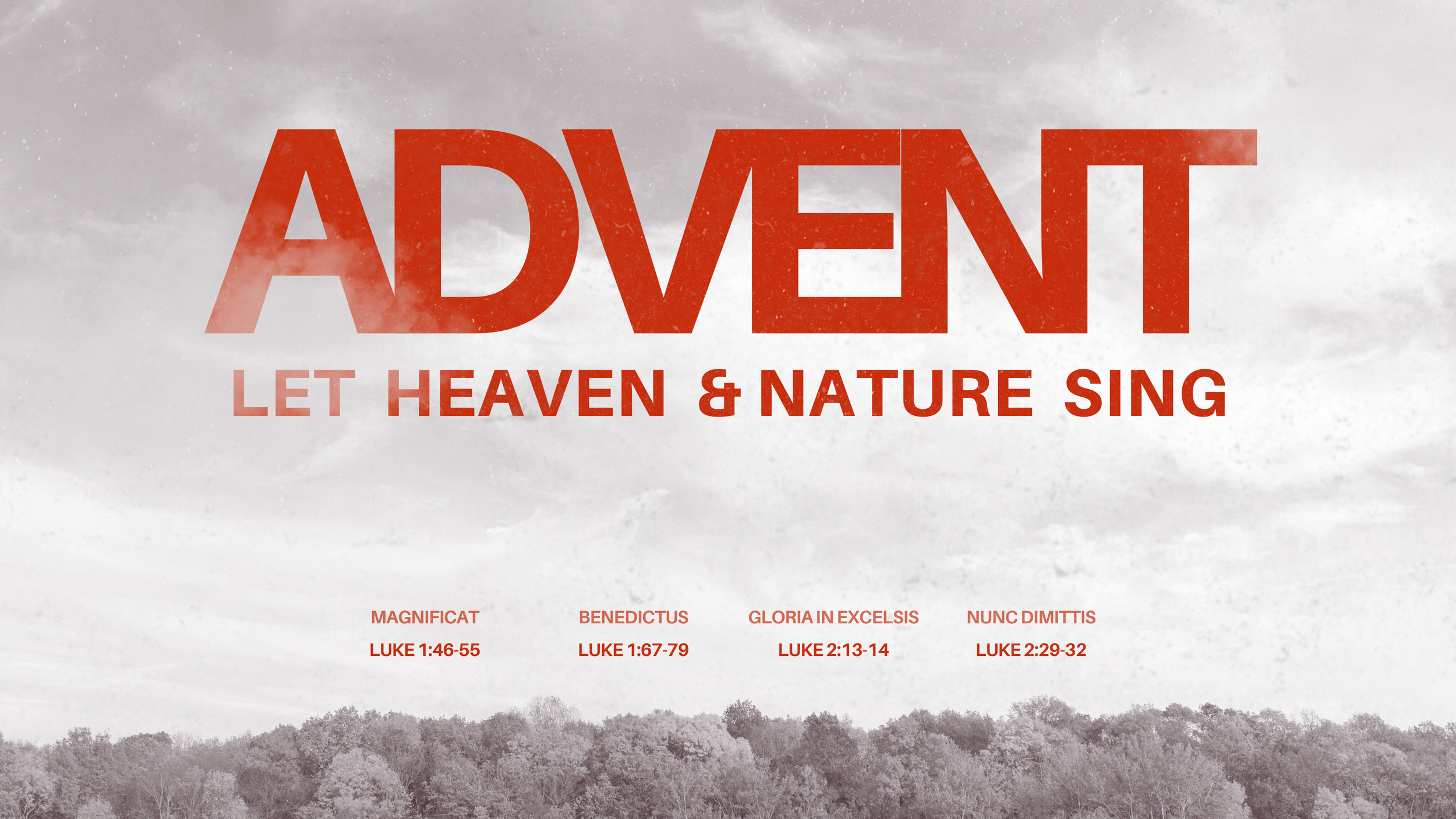
Luke 1–2 opens with an explosion of song — joy and worship saturate the coming of Jesus.
Mary’s Magnificat (1:46–55)
Zechariah’s Benedictus (1:68–79)
The angels’ Gloria (2:13–14)
Simeon’s Nunc Dimittis (2:29–32)
Main Idea: To maximize joy, you must magnify God.
I. The Need for Fellowship (1:39–40)
Luke 1:39–40: In those days Mary arose and went with haste into the hill country, to a town in Judah, and she entered the house of Zechariah and greeted Elizabeth.
II. The Joy of Redemption (1:41–45)
Luke 1:41–45: And when Elizabeth heard the greeting of Mary, the baby leaped in her womb. And Elizabeth was filled with the Holy Spirit, and she exclaimed with a loud cry, “Blessed are you among women, and blessed is the fruit of your womb! And why is this granted to me that the mother of my Lord should come to me? For behold, when the sound of your greeting came to my ears, the baby in my womb leaped for joy. And blessed is she who believed that there would be a fulfillment of what was spoken to her from the Lord.”
The gospel arrives with joy — it’s good news that makes us sing.
III. The Song of Worship (1:46–55)
Luke 1:46-55: And Mary said, “My soul magnifies the Lord,
and my spirit rejoices in God my Savior,
for he has looked on the humble estate of his servant.
For behold, from now on all generations will call me blessed;
for he who is mighty has done great things for me,
and holy is his name.
And his mercy is for those who fear him
from generation to generation.
He has shown strength with his arm;
he has scattered the proud in the thoughts of their hearts;
he has brought down the mighty from their thrones
and exalted those of humble estate;
he has filled the hungry with good things,
and the rich he has sent away empty.
He has helped his servant Israel,
in remembrance of his mercy,
as he spoke to our fathers,
to Abraham and to his offspring forever.”
A. The Character of Her Worship
Wholehearted — “My soul magnifies… my spirit rejoices.” (1:46-47)
Personal — “My soul… my spirit… my Savior.” (1:46-47)
God-centered — “He has… He is…” dominates the song. (1:48-55)
Bible-saturated — Echoes of Scripture
B. The Themes of Mary’s Song
1. God’s Grace (1:46–49)
“My spirit rejoices in God my Savior…He who is mighty has done great things for me, and holy is His name.”
2. God’s Ways (1:50–53)
“His mercy is for those who fear Him.”
“He has brought down the mighty.”
“He has exalted those of humble estate.”
“He has filled the hungry with good things.”
“He has sent the rich away empty.”
God’s kingdom is full of reversals:
The proud scattered → the humble exalted
The rich sent away → the hungry filled
Earthly thrones fall → heaven’s kingdom rises
“For those who would learn God’s ways, humility is the first thing, the second thing, and the third thing.”
~ Augustine
God dwells “in the high and holy place” and “with the contrite and lowly spirit.” (Isa. 57:15)
3. God’s Promises (1:54–55)
“He has helped His servant Israel, in remembrance of His mercy as He spoke to our fathers, to Abraham and to his offspring forever.”
Nine months after Mary sang this song, Jesus Christ was born to live and born to die. Every promise of God finds its “yes and amen” in Him.
The world says: “Minimize God to maximize joy.”
Scripture says: “Magnify God to maximize joy.”

The Greatest Gift
John 3:16
The Greatest Gift
John 3:16
“For God so loved the world, that he gave his only Son, that whoever believes in him should not perish but have eternal life.” John 3:16
Why does God give?
What does God give?
How do we receive God’s gift?
What are the results of God’s gift?
The Humble People
Luke 2:8-20
The Humble People
Luke 2:8-20
Main Idea: Christmas is good news of great joy and an invitation to worship.
I. The Content of Christmas (2:8-12)
As the shepherds are keeping their flock by night, suddenly an angel of the Lord appears and the “glory of the Lord shone around them.” This ‘glory’ (God’s radiant beauty and perfection) produces a great (mega) fear within them, as they feel the weight of God’s holiness. At the bottom of all of our fears is the reality of our sin and guilt.
In the midst of their fear, the angel assures them: “Fear not, for behold I bring you good news (‘gospel’) of great (‘mega’) joy.” Each word in this ‘gospel’ tells us about the meaning of Christmas:
Unto you (and for all the people)
Is born this day in the city of David (the promise of a royal son from the Davidic line)
A Savior
Christ (‘Messiah;’ the long-promised anointed one of God)
The Lord (God himself; cf. Isa. 9:6-7)
“The crucial significance of the cradle at Bethlehem lies in its place in the sequence of steps that led the Son of God to the cross of Calvary… the Christmas message is that there is hope for a ruined humanity – hope of pardon, hope of peace with God, hope of glory – because at the Father’s will Jesus Christ became poor and was born in a stable so that thirty years later he might hang on a cross. It is the most wonderful message that the world has ever heard or will hear.”
~ J.I. Packer, Knowing God
II. The Chorus of Christmas (2:13-14)
Suddenly a multitude of the ‘heavenly host’ appears with the angel. This language indicates the angelic army (cf. Josh 5:13-15). They are proclaiming a battle-cry:
Glory to God in the highest: of all the things this heavenly host had seen God do before, this moment of the incarnation of Christ spurs this response
Peace on earth: the coming of Christ brings peace and joy to those who have been stuck in the bondage of sin and fear, knowing that Jesus has come to accomplish peace through the hostility of the cross.
III. The Call of Christmas (2:15-20)
Christmas is an invitation to go and investigate further the claim of a Savior who has been born unto us. “Christianity, if false, is of no importance, and if true, of infinite importance, the only thing it cannot be is moderately important.” ~ C.S. Lewis
We see three exemplary responses in this passage:
Wonder & Amazement (2:18)
Treasuring & Pondering (2:19)
“The more we look at [the incarnation], the more we are astonished; the more we become accustomed to it, the more have we a sense of its surpassing splendor of love and grace. There is more of God’s glory and majesty to be seen in the manger and the cross, than in the sparkling stars above, the rolling deep below, the towering mountain, the teeming valleys, the abodes of life, or the abyss of death. Let us then give ourselves up to holy wonder, such as will produce gratitude, worship, love, and confidence, as we think of that great “mystery of godliness, God manifest in the flesh.”
~ Charles SpurgeonGlorifying & Praising (2:20)
The Humble Place
Micah 5:1-5a
The Humble Place
Micah 5:1-5a
Main Idea: Jesus is the promised King, born in humility, who will shepherd us into security and peace.
I. The Promise of A Ruler (5:1-2)
Micah’s prophetic ministry coincides with Isaiah, with the Assyrians having conquered the Northern Kingdom and now closing in on Jerusalem. Micah warns that things will be worse before they improve; they should “muster their troops” for warfare, as their city is on the brink of destruction and their “judge” (king) is publicly humiliated.
In contrast, God promises a ruler to come in verse 2. We learn 3 things about this promised king:
He is “from old, from ancient days”
He will serve God faithfully
He will be born in Bethlehem
1 Corinthians 1:27–29: But God chose what is foolish in the world to shame the wise; God chose what is weak in the world to shame the strong; God chose what is low and despised in the world, even things that are not, to bring to nothing things that are, so that no human being might boast in the presence of God.
II. A Tale of Two Kings (5:3-4a, cf. Matt. 2:1-18)
This prophecy related to Bethlehem creates a collision in the NT between:
King Herod. The (self-proclaimed) “King of the Jews” channeled all the world’s power and strategies to promote his own glory, willing to use violence and any means necessary to make a name for himself.
King Jesus. Micah promises that Jesus will gather God’s people back together after a period of exile, and that he will rule as a “shepherd” over his flock in toughness and in tenderness, showcasing the strength of God over and against the strength of mankind.
“Christ then rules not in his Church as a dreaded tyrant, who distresses his subjects with fear; but he is a Shepherd who gently deals with his flock. Nothing therefore can exceed the kindness and gentleness of Christ towards the faithful, as he performs the office of a Shepherd.”
~ John Calvin
While Herod was willing to sacrifice others in order to benefit himself, Jesus sacrifices himself to benefit others (cf. Jn. 10:11, Mk. 10:45). Bethlehem is the perfect birthplace for Jesus, as it sets the trajectory for a life and ministry marked by humility. The cradle in Bethlehem ultimately leads to the cross of Christ.
III. The Results of His Reign (5:4b-5a)
While Christ is lowborn in obscurity and killed in scandal, he is the King who has been resurrected in glory and promises to return to make all things new, establishing his earthly throne forever. The promises here in Micah draw our attention beyond the first advent of Christ to his second coming.
There are two results for those in the Kingdom of Christ:
Security: Those in his flock will “dwell secure” as a result of his greatness that will extend to the ends of the earth. Those who take up the humble place before his greatness, embracing their own obscurity and smallness, will experience this promise (cf. Jn. 3:30, Ps. 131)
Peace: The peace that we all long for is not found in better circumstances or in the next best thing that the world has to offer, but only in Christ.
“Christ is always born in Bethlehem among the little ones. Big hearts never get Christ inside of them; Christ lives not in great hearts, but in little ones. Mighty and proud spirits never have Jesus Christ, for he comes in at low doors, but he will not come in at high ones. He who has a broken heart, and a low spirit, shall have the Savior, but none else… He is the Christ of the little ones.”
~ Charles Spurgeon