
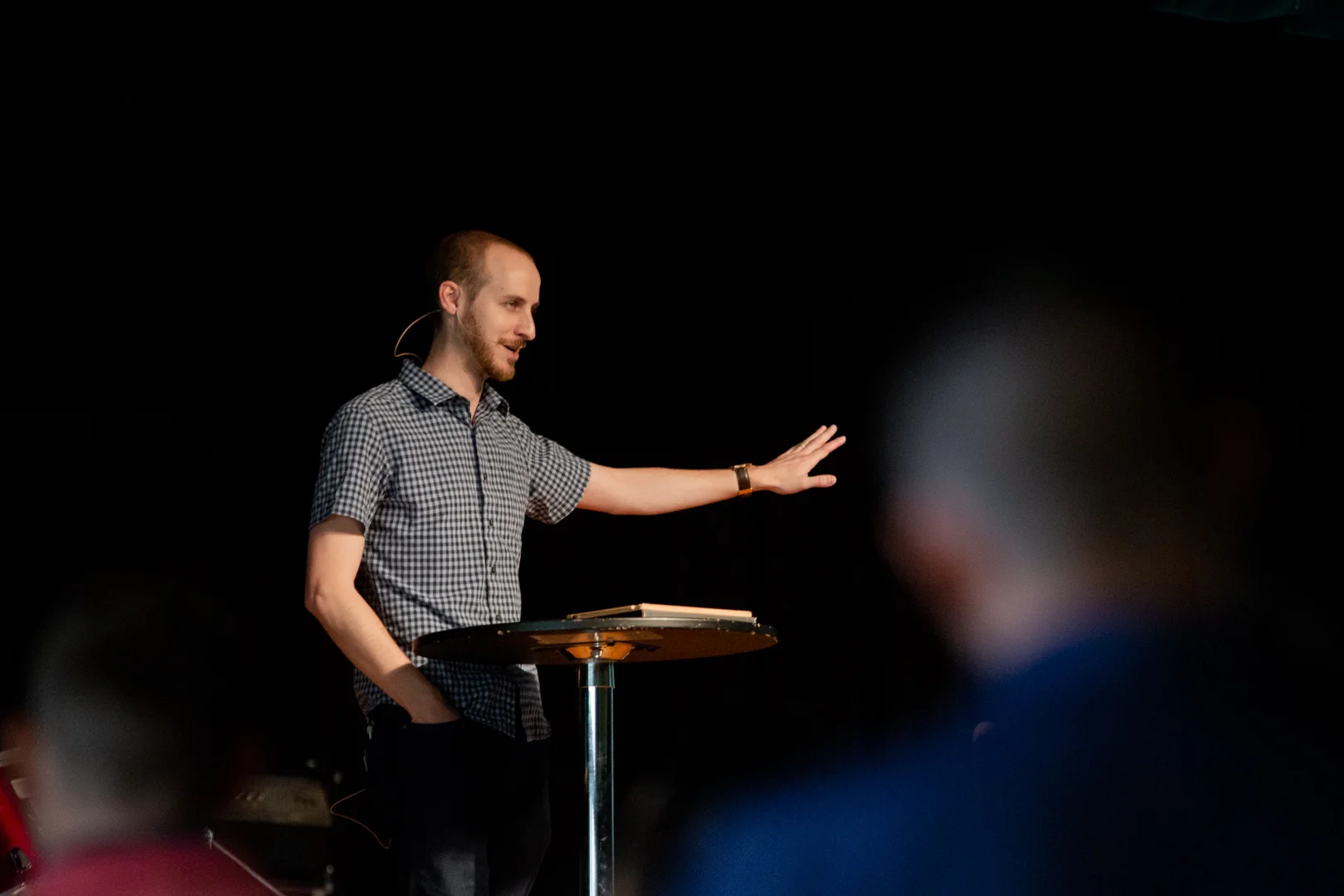

Ash Wednesday 2023 | He Knows Our Frame
Psalm 103:6-19
He Knows Our Frame
Psalm 103:6-19
Genesis 3:19:
By the sweat of your face
you shall eat bread,
till you return to the ground,
for out of it you were taken;
for you are dust,
and to dust you shall return.
Ash Wednesday invites us to remember 3 realities:
I. The Certainty of Death
II. The Cause of our Pain
“Lent is not a general sadness about the inevitability of death but an explicitly Christian diagnosis of the cause of death. We sin and die because humanity rebelled against God. There is nothing natural at all about death. It is an alien intrusion into the good world God created… Through the imposition of the ashes, Ash Wednesday reminds us that death and sin cannot be completely separated. This does not mean a particular form of death is punishment for specific sins, but sin and death are partners.”
~ Esau McCaulley
III. The Cross of Christ
“Instead of becoming a source of despair, our sin becomes the arena of God’s glory. He doesn’t have barely enough grace to forgive us. He is rich in this stuff; it overflows from his very nature. Ash Wednesday invites an introspection that leads to an acknowledgement of our sin that collides with an explosion of God’s grace. No step in this process can be skipped.”
~ Esau McCaulley

The Refuge for the Restless
Psalm 46
The Refuge for the Restless
Psalm 46
Main Idea: As we live in a restless world, we can find true rest in the Lord.
We will see how we can rest by observing how the Lord secures His people, the Lord lives with His people, and how the Lord leads His people in prevailing peace.
I The Lord Secures His People (1-3)
“What troubles you today? What is it about which you think, “If I can just get that sorted out, life will become manageable. What worries your heart as you lie awake in bed? God says I, not any circumstantial solution am the refuge amidst your adversities. I am the very present help in trouble. I am God. Be still.” - Dane Ortlund
II. The Lord lives among His people (4-7)
III The Lord leads His people in prevailing peace (8-11)

A Greater Worship
Psalm 103
A Greater Worship
Psalm 103
“In the day-to-day trenches of adult life, there is actually no such thing as atheism. There is no such thing as not worshipping. Everybody worships... And the compelling reason for maybe choosing some sort of god or spiritual-type thing to worship is that pretty much anything else you worship will eat you alive.” David Foster Wallace
Main Idea: We are all called to worship God for who he is and what he has done in Christ.
I. What is Worship? (103:1-2)
The Psalmist (David) begins by talking to himself, urging his soul and “all that is within me” to bless the Lord. This posture gets to the very heart of worship. “Worship is ascribing ultimate value to an object and engaging your mind, your heart, and your will - your whole being, as you do it.” ~ Tim Keller
In response to the worship “drift” that we all experience, Psalm 103 is instructive for us. David is fighting for proper worship by remembering the “benefits” of the Lord. “Worship is the strategy by which we interrupt our preoccupation with ourselves and attend to the presence of God.” ~ Eugene Peterson
David is preaching the gospel to himself and urging his entire being to re-center on God as the object of his worship. Worship is an act of proactively remembering what is true about God so that our mind, heart, and will are re-engaged with the Lord, especially when we are being drawn elsewhere.
II. Why Should We Worship? (103:3-18)
We “forget not” the benefits of God by meditating on two categories:
We remember the works of the Lord (103:3-5)
The Lord forgives, heals, redeems, crowns, satisfies, and renews us. He has dealt with the barrier of our sin and given us meaning in our suffering, inviting us to see his glorious work toward the undeserving. “You have made us for yourself, O Lord, and our heart is restless until it rests in you.” ~ Augustine
We remember the character of the Lord (103:6-18)
David here quotes from Exodus 34, when Moses asks to see the glory of God on Mt. Sinai. The Lord responds not by showing his greatness but his goodness (Ex. 33:19), which we are constantly tempted to doubt. When he passes in front of Moses (Ex. 34:6-7) he emphasizes that his glory is seen through his mercy and his grace.
“God does not reveal his glory as ‘The Lord, the Lord, exacting and precise,’ or, ‘the Lord, the Lord, disappointed and frustrated.’ His highest priority and deepest delight and first reaction – his heart – is merciful and gracious. He gently accommodates himself to our terms rather than overwhelming us with his.” ~ Dane Ortlund
As an extension of this, God “does not deal with us according to our sins” but removes them from us an infinite distance (‘as far as the east is from the west’). As a gracious Father, he shows compassion on us in our weakness, patience with our besetting sins, and invites us to humbly fear him.
We have even more reason to worship God than David because we know the substance of Jesus Christ, which he could only see from afar as a shadow. When we remember the benefits of the Lord, we are specifically remembering Christ, who “from his fullness we have all received grace upon grace” (Jn. 1:16)
III. Who Should Worship? (103:19-22)
The Psalmist now realizes that the worship in his own soul has joined a greater song; he is joining with the chorus of the angels, mighty ones, the heavenly hosts, ministers, and all of creation in worship of God. Jesus declared that even the “stones would cry out” (Lk. 19:40) in worship, and Isaiah (55:12) envisions a day where the hills, mountains, and trees sing & clap to the Lord.
Since the Lord has established his throne and his kingdom rules over all, nothing short of the worship of all of creation and all that is within us will suffice. Everytime we worship Jesus through declaring and displaying the gospel, we are turning up the music for others to join in.

The Church
Romans 12:1-16
The Church
Romans 12:1-16
“We are often eager to see extraordinary events – growth in numbers or financial abundance or credibility in the larger community – that we fail to delight in the ordinary breath and heartbeat of the body. When people in the church encourage one another, teach one another, serve one another, and pray for one another in dozens of small and large ways, we ought to rejoice.” ~ Megan Hill
Main Idea: The church is a worshipping people, a serving body, and a welcoming family because of God’s mercies.
I. A Worshipping People (12:1-2)
Because of the mercies (plural) of God, we are to present our bodies as a living sacrifice, which is our ‘spiritual worship.’ In every age, season, and location, the church is a worshipping people. We have no greater incentive or power to worship than the mercies of God toward us in Jesus Christ.
This worship is not just inward or abstract; it is an offering of our entire being. This includes:
Head: ‘spiritual’ worship = rational or logical. We are invited to fill our minds with the pure, lovely, commendable, and excellent things of God (Phil. 4:8)
Heart: ‘All that is within us’ (Ps. 103:1) is summoned to worship God
Hands: we are to offer our very bodies as a “living sacrifice”
As we engage in worship, we are resisting being “conformed” (lit. molded) by the world, and are rather transformed into the image of Christ. This occurs both individually (2 Cor. 3:18) and corporately (Eph. 4:15-16) in the church.
II. A Serving Body (12:3-8)
The imagery of the “body” of Christ (cf. 1 Cor. 12, Eph. 4:12-16) signifies:
Unity: Just as the members of our physical body must be unified and work together, so too must the members of the body of Christ. We operate from unity, not toward unity (Eph. 4:3).
Diversity: The members do not all have the same function; there is unity but not uniformity in the body of Christ. There are no unimportant parts and we are dependent upon one another for the health of the body.
This imagery primarily implies in the Scriptures a humble service (12:3) that builds up the body of Christ. Whatever gifts we have been given by the Spirit, we are to employ them in the body of Christ as servants and contributors, not spectators or consumers.
“This truth should give you confidence: your particular gifts have a valuable, God-appointed place. It should also humble you: your particular gifts are simply one part of the body, and you desperately need other people with their particular gifts… this truth should increase your love for the local church: the gifts in the body are exactly what God knows your congregation needs. Because of God’s sovereign choosing, no part is missing, and every part is valuable.” ~ Megan Hill
The various “lists” of spiritual gifts in the NT can be categorized broadly into Speaking Gifts, Leading Gifts, and Serving Gifts. Regardless of gifts or categories, the exhortation is “having gifts that differ according to the grace given to us, let us use them” (12:6). We are called to joyfully & sacrificially invest our time, treasure, and talents as an act of worship out of love for God and love for one another.
III. A Welcoming Family (12:9-16)
The church is primarily described in the NT as the family of God or the “household of faith” (Gal. 6:10; 1 Tim. 3:15); the early church was subversive to the Greco-Roman world around because they related to one another as brothers and sisters in Christ, united not by the blood of biology but the blood of the cross.
The church as a family ought to be marked by hospitality. Hospitality is not “entertaining” but instead a powerful picture of the invitation of the gospel itself. Romans 15:7: Therefore welcome one another as Christ has welcomed you, for the glory of God. As we love one another in this way, we are to welcome the outsider and the stranger in the very same way each of us have been welcomed into God’s family.
“Churches are not Victorian parlors where everything is always picked up and ready for guests. They are messy family rooms… Things are out of order, to be sure, but that is what happens to churches that are lived in. They are not show rooms. They are living rooms, and if the persons living in them are sinners, they are going to be clothes scattered about, handprints on the woodwork, and mud on the carpet. For as long as Jesus insists on calling sinners and not the righteous to repentance – and there is no indication as yet that he has changed his policy in this regard – churches are going to be an embarrassment to the fastidious and an affront to the upright.” ~ Eugene Peterson
Our experience & the world’s view of the church is often unremarkable, but God has willed that “through the church the manifold wisdom of God might now be made known to the rulers & authorities in the heavenly places” (Eph. 3:10). The church is God’s “Plan A” to make known the glories of Jesus Christ to the cosmos.

Rage & Refuge
Psalm 2
Rage & Refuge
Psalm 2
Main Idea: The gospel invites us to turn from our rage against God and take refuge in Him.
I. Our sin is great (v.1-3)
All nations and people are naturally bent away from God (v. 1)
Our own actions follow and we disobey and actively work against the Lord (v. 2)
We foolishly think this is good (v. 3)
James 1:13-15 tells us “Let no one say when he is tempted, “I am being tempted by God,” for God cannot be tempted with evil, and he himself tempts no one. But each person is tempted when he is lured and enticed by his own desire. Then desire when it has conceived gives birth to sin, and sin when it is fully grown brings forth death.”
“It is not just the political powers of this world which have no desire to be ruled by him. There is scarcely a commercial or intellectual or cultural interest anywhere on earth which would not resent his claims on it.” ~ Michael Wilcock
II. The Lord is greater (v. 4-6)
The Lord is infinitely more powerful than us (v. 4)
He has authority (v. 5)
He has ability (v. 6)
He is both YAHWEH which we see with all capitals in the translated word for LORD and Adonai which we see with only a capital L (Lord). These names point to his reality. He is the Creator or all powerful One and personal Master or King.
III. He has a plan (v. 7-9)
His plan was Jesus (v. 6-7)
His plan is at work (v. 8)
His plan is just (v. 9)
Hebrews 5:5 “So also Christ did not exalt himself to be made a high priest, but was appointed by him who said to him, “You are my Son, today I have begotten you”;”
Acts 13:33 “this he has fulfilled to us their children by raising Jesus, as also it is written in the second Psalm, “‘You are my Son, today I have begotten you.’”
Romans 1:4 “concerning his Son, who was descended from David according to the flesh and was declared to be the Son of God in power according to the Spirit of holiness by his resurrection from the dead, Jesus Christ our Lord, through whom we have received grace and apostleship to bring about the obedience of faith for the sake of his name among all the nations, including you who are called to belong to Jesus Christ,”
Romans 9:21-24 “But who are you, O man, to answer back to God? Will what is molded say to its molder, “Why have you made me like this?” Has the potter no right over the clay, to make out of the same lump one vessel for honorable use and another for dishonorable use? What if God, desiring to show his wrath and to make known his power, has endured with much patience vessels of wrath prepared for destruction, in order to make known the riches of his glory for vessels of mercy, which he has prepared beforehand for glory— even us whom he has called, not from the Jews only but also from the Gentiles?”
IV. He is inviting us in (v. 10-12)
Through our actions (v. 10)
Through our understanding (v. 11)
Through our identity (v. 12)
Distinct Christian Identity
Distinct Christian Community
Distinct Christian Lifestyle
Phil 2:12-13 “Therefore, my beloved, as you have always obeyed, so now, not only as in my presence but much more in my absence, work out your own salvation with fear and trembling, for it is God who works in you, both to will and to work for his good pleasure.”
Phil 4:4 “Rejoice in the Lord always; again I will say, rejoice. Let your reasonableness be known to everyone. The Lord is at hand; do not be anxious about anything, but in everything by prayer and supplication with thanksgiving let your requests be made known to God. And the peace of God, which surpasses all understanding, will guard your hearts and your minds in Christ Jesus.”
John 14:6, he says “I am the way, and the truth, and the life. No one comes to the Father except through me.”
“God's response to human pride and power is to install his "son” on Zion. This points beyond Israel's king to Jesus, God's true Son. One day he will put everything right; but he will do this by going first to Zion - to Jerusalem - to die for our sins. To "kiss his son"is to rest in and live for him. If we do this, we have assurance that no matter what happens to us, ultimately everything will be all right. If we don't live for him, we end up fighting God himself. So "there is no refuge from him only in him."” ~ Tim Keller
Our Sin is great. Our Lord is greater. He has a plan. And he is inviting us in.


The Good and Pleasant Place
Psalms 133-134 | what, why and how?
Psalms 133-134
I. What it is that David praises as “good and pleasant”
II. Why he regard it to be “good and pleasant”
III. How we can participate in the “goodness and pleasantness” of it

Walking in Forgiveness, Waiting in Faith
Psalm 130 | The Lord graciously forgives guilty sinners and invites us to wait on him in faith
Psalm 130
The Lord graciously forgives guilty sinners and invites us to wait on him in faith
I. Walking in Forgiveness (130:1-4)
Hebrews 4:12-13: For the word of God is living and active, sharper than any two-edged sword, piercing to the division of soul and of spirit, of joints and of marrow, and discerning the thoughts and intentions of the heart. And no creature is hidden from his sight, but all are naked and exposed to the eyes of him to whom we must give account.
The good news of the gospel: although the Lord does mark sins, the record can be wiped clean. For those who are in Christ Jesus, God is not counting our trespasses against us because they’ve been credited to Jesus’ account and we’ve been given his righteousness.
II. Waiting in Faith (130:5-8)
The “waiting” of the Christian life is not an inactive, passive waiting. Instead, we are called to wait by:
Watching (130:5-6)
Hoping (130:7-8)
“The Christian’s waiting and watching is hoping – based on the conviction that God is actively involved in His creation and vigorously at work in redemption. Hoping does not mean doing nothing. It is not fatalistic resignation. It means going about our assigned tasks, confident that God will provide the meaning and the conclusion. It is not compelled to work away at keeping up appearances with a bogus spirituality. It is the opposite of desperate and panicky manipulation, of scurrying and worrying. Hoping is not dreaming. It is not spinning an illusion or fantasy to protect us from our boredom or our pain. It means a confident, alert expectation that God will do what He said He will do.” ~ Eugene Peterson

A Present Help in Great Trouble
Psalm 46 | Though this world is full of trouble, we can turn to God for help and strength
Psalm 46
Main Idea: Though this world is full of trouble, we can turn to God for help and strength
I. The Power of God (46:1-3)
“We sing this psalm to the praise of God, because He is with us and powerfully and miraculously preserves and defends His church and His word against all fanatical spirits, against the gates of hell, against the implacable (plack-able) hatred of the devil, and against all the assaults of the world, the flesh, and sin.” ~ Martin Luther
II. The Presence of God (46:4-7)
III. The Promises of God (46:8-11)
1 Peter 5:6–7: “Humble yourselves, therefore, under the mighty hand of God… casting all your anxieties on him, because he cares for you.”
“It’s as true today as it will be true one hundred years from now, as true as it was two weeks ago: we do not know what the future holds, but we do know the one that holds the future. And that makes all the difference.” ~ Kevin DeYoung

Walking in Perseverance and Endurance
Psalm 129 | Though we will face opposition, God has broken the power of the enemy and will one day end all evil.
Psalm 129
Though we will face opposition, God has broken the power of the enemy and will one day end all evil.
I. The Reality of Evil (129:1-3)
The history of God’s people (whether Israel or the Church) has always been marked by opposition, persecution, and affliction. The affliction here is described in three ways:
It was intense (“greatly… greatly”)
It was persistent (“from my youth”)
It was thorough (“they made long their furrows”)
The exact identity of the oppressors is unclear, but the “wicked” in this passage can be applied to all that stands against God, his agenda, and his people. Martin Luther described 3 categories of opposition:
The World (cf. Jn. 15:18-19)
The Flesh (cf. Rom. 8:5-8)
The Devil (cf. Eph. 6:12) “There is no busier plowman in all the world than the devil: whoever makes short furrows, he does not.” ~ Hugh Latimer
All of this speaks to the very real existence of evil. It is not an abstract thing; evil is all around us. There are 2 implications of this:
1. We should not be surprised by evil, opposition, and affliction. Are your expectations properly aligned?
2. We should feel some level of “friction” and conflict with the world. Have you felt this friction or have you settled into the way of the world?
II. The Limits of Evil (129:2b, 4)
The good news of the gospel is wrapped up in the word “yet” in verse 2: “Greatly have they afflicted me from my youth, yet they have not prevailed against me.” The story of God’s people is that they have been knocked down, but never knocked out.
The reason why the enemies have not ultimately prevailed is because the Lord “has cut the cords of the wicked.” The imagery is of God breaking the cords that would have connected the animals to the plow that was afflicting his people (129:3).
This is how God has always worked toward his people; he continually “cuts the cords” of all bondage, persecution, and oppression, setting the stage for the greatest redemption in Jesus Christ. “The death & resurrection of Jesus is the great cord-severing ‘yet’ of redemptive history.” ~ Rhett Dodson
The reason why God severs the cords of oppression is because he is “righteous.” The Lord will act in justice & uprightness toward his covenant people, and he will not let evil prevail. This is where our perseverance & endurance comes from on the road of discipleship.
“God sticks to his relationship. He established a personal relationship with us and stays with it. The central reality for Christians is the personal, unalterable, preserving commitment God makes to us. Perseverance is not the result of our determination, it is the result of God’s faithfulness. We survive in the way of faith not because we have extraordinary stamina but because God is righteous and because God sticks with us.” ~ Eugene Peterson
There are moments in our lives where it may feel like evil and oppression are winning, and where we do not feel like God is “sticking with us.” Though we may not understand why God allows evil to continue, we can’t argue that he does not care. The gospel reminds us that the only truly righteous one suffered in the place of the unrighteous; Jesus was afflicted so that we might be delivered from everlasting affliction.
The finished work of Christ reorients our relationship to evil, suffering, and oppression.
2 Corinthians 4:7–10: But we have this treasure in jars of clay, to show that the surpassing power belongs to God and not to us. We are afflicted in every way, but not crushed; perplexed, but not driven to despair; persecuted, but not forsaken; struck down, but not destroyed; always carrying in the body the death of Jesus, so that the life of Jesus may also be manifested in our bodies.
III. The End of Evil (129:5-8)
These 4 verses are an example of an “imprecatory Psalm,” which are prayers that call upon God to bring judgment or a curse upon enemies or oppressors. Imprecatory prayers have been sources of controversy, as they seem to be at odds with the ethics Jesus urges in the New Testament, specifically to “love your enemies & pray for those who persecute you” (Cf. Matt. 5:43-44).
4 Guiding Principles:
1. Imprecatory prayers are an appeal for God to bring about his righteous judgment and his own vindication, not our own selfish revenge.
2. Imprecatory prayers ask God to thwart the plans of evil and evildoers so they would fail.
The Psalmist prays that the enemies of God would have:
No Victory (129:5)
No Reaping/Spoils (129:6-7)
No Blessing (129:8)
3. Imprecatory prayers can still be prayed while loving your enemies & praying for those who persecute you
We can’t truly love our enemies unless we hate the very things that will destroy them. We can pray for their conversion and salvation while simultaneously asking that their plans be brought to nothing so they might see their need for repentance.
4. Imprecatory prayers must be prayed through the reality of the cross
“While Christians rightly conclude that, on this side of the cross, believers will respond to wrongs and persecution differently, we must not be too quick to recoil from these [imprecatory] psalms and miss what we should learn. One lesson is that God does indeed hate injustice. Most Western Christians haven’t experienced much in the way of violent mistreatment, and we should let these psalms help us feel the desperation and helplessness of those who have. We shouldn’t close our ears to the cries of the oppressed. Second, we should realize that virtually always the psalmist leaves the justice and vengeance to God, and does not personally take revenge, as the New Testament commands (Rom. 12:19). Finally, when we are wronged we should put the cross before our eyes, remembering that what our enemies deserve we deserve too, and that it fell on Jesus Christ so we can be pardoned.” ~ Tim Keller