
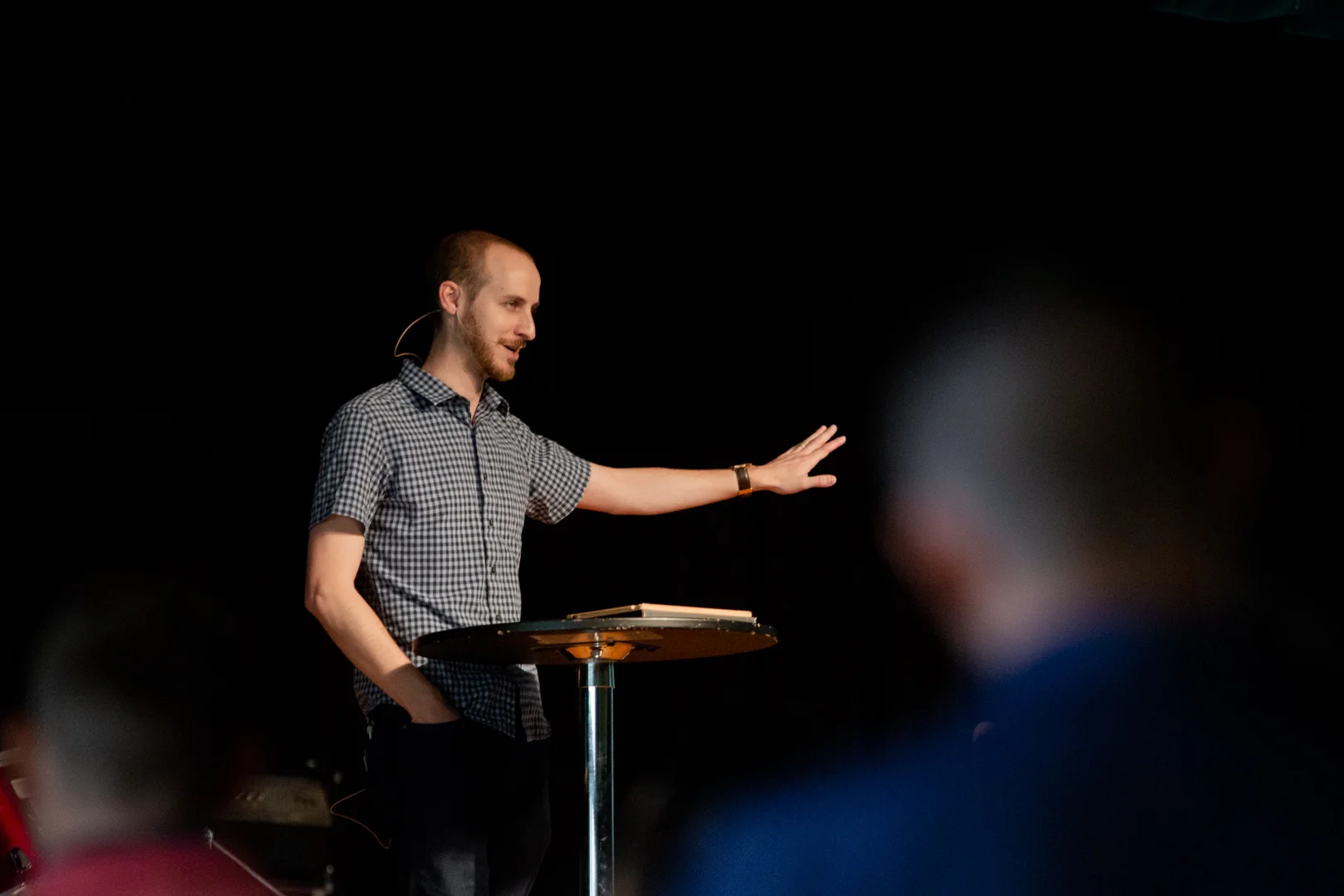

Resurrection Hope
1 Corinthians 15:12-26
The resurrection of Christ is the only hope for our own lives and for the whole world.
1 Corinthians 15:12-26
April 21st, 2019 | Easter Sunday
Main idea: The resurrection of Christ is the only hope for our own lives and for the whole world.
I. THE RESURRECTION & OUR HOPE (15:12-19)
The church in Corinth is struggling with doubt related to issues of resurrection. We often get the idea that people in the 1st century were simply more prone to believe in a previously dead person being raised, but this doesn’t seem to be the case.
Greco-Roman Worldview:
Death was viewed as an “escape” or “liberation” from the body. The physical world was viewed as fallen and evil, so death was leaving this realm for the preferred spiritual realm.
This made the claim of the bodily resurrection of Christ not only unthinkable, but undesirable.
Jewish Worldview:
They had more of a concept of resurrection, but they believed this would happen for all of the righteous of God at one time at the end of human history.
For an individual to be raised in the middle of human history, without the rest of the world being renewed, did not fit in their thinking or expectations.
Paul argues that a denial of the resurrection has at least 7 implications: If there is no resurrection from the dead, then...
1. Christ has not been raised (15:13, 16)
2. Our preaching is in vain (15:14a)
3. Our faith is in vain & futile (15:14b, 17a)
4. We are misrepresenting God (15:15)
5. We are still in our sins (15:17b)
6. Death is the end (15:18)
7. We have no real hope (15:19a)
If the Christian faith is based on an empty gospel and a fraudulent savior, “anybody is better off than the Christian” (Leon Morris). Everything hinges on whether or not Jesus was really raised from the dead.
“We cannot be saved by a dead Christ, who undertook but could not perform, and who still lies under the Syrian sky, another martyr of impotent love. To save, he must not merely pass to but through death. If the penalty was fully paid, it cannot have broken him, it must need to have been broken upon him. The resurrection of Christ is thus the indispensable evidence of his completed work, of his accomplished redemption.” ~ B.B. Warfield
When we flip all of these statements around (since Paul is indeed fully convinced of the resurrection), we see the hope of the resurrection. We can look forward to our own resurrection one day, our faith has power, the stranglehold of sin in our lives has been broken, and we can have a real, tangible hope in the here and now. Rather than pity, joy is offered to us.
II. THE RESURRECTION & THE HOPE OF THE WORLD (15:20-26)
Christ as the “firstfruits” was a powerful imagery for an agricultural society. The “firstfruits” were the initial haul of the season. It indicated that the harvest was coming, while also illustrating the quality of the rest of the crop to come. Paul is contending that Christ’s resurrected body gives a foretaste of what is to come for the believer.
“The New Testament writers speak as if Christ’s achievement in rising from the dead was the first event of its kind in the whole history of the universe. He is the ‘firstfruits, the pioneer of life,’ He has forced open a door that has been locked since the death of the first man. He has met, fought, and beaten the King of Death. Everything is different because he has done so” ~ C.S. Lewis
Paul draws a comparison between Adam and the “second Adam” (Christ); everywhere that Adam failed, Christ succeeded, and now his people experience union in Christ. Everything that is Christ’s is ours: his death was our death, and his life is now our life.
15:23-26 is steeped in military and kingdom language. Christ, as the commander and chief, goes first and will fully and finally destroy “every rule and every power and authority.” Their defeat has already begun at the resurrection.
The last enemy to be destroyed is death itself. This means:
Death is still our enemy
Death is a defeated enemy
Death will soon be “swallowed up in victory” (cf. 1 Cor. 15:54)
“The message of the resurrection is that this world matters! That the injustices and pains of this present world must now be addressed with the news that healing, justice, and love have won. If Jesus Christ is truly risen from the dead, Christianity becomes good news for the whole world – new which warms our hearts precisely because it isn’t just about warming hearts. Easter means that in a world where injustice, violence, and degradation are endemic, God is not prepared to tolerate such things – and that we will work and plan, with all the energy of God, to implement the victory of Jesus over them all.” ~ N.T. Wright
So what’s the big deal about the resurrection? Paul has answered this in 2 ways:
If Christ has been raised, there is real hope for our lives right now.
“If Jesus rose from the dead, then you have to accept all that he said; if he didn’t rise from the dead, then why worry about any of what he said? The issue on which everything hangs is not whether or not you like his teaching, but whether or not he rose from the dead. That is how the first hearers felt who heard reports of the resurrection. They knew that if it was true it meant we can’t live our lives anyway we want. It also means we don’t have to be afraid of anything, not Roman swords, not cancer, nothing. If Jesus rose from the dead, it changes everything.” ~ Tim Keller
If Christ has been raised, there is real hope not only for us, but for the whole world

The Death of Christ
Isaiah 52:13-53:12
The crucifixion of Christ was a sin-bearing death in the place of a guilty humanity.
Isaiah 52:13-53:12
April 19th, 2019 | Good Friday
Main idea: The crucifixion of Christ was a sin-bearing death in the place of a guilty humanity.
I. THE SUFFERING SURROUNDING HIS DEATH (52:13-53:3, 7-9)
Isaiah describes this servant as “a man of sorrows and acquainted with grief” (53:3). We see various levels and types of suffering sprinkled throughout this passage.
Physical (52:14): his appearance is “marred beyond human semblance,” to the extent that many were “astonished” or “appalled” at his physical state.
Social (53:1-3): he was “rejected by men” and did not fit the expectations of the Jewish people for the coming Messiah.
Injustice (53:7-9): although he “had done no violence” and “there was no deceit in his mouth,” he was oppressed, judged, and “cut off out of the land of the living.”
Cosmic: the most significant of the suffering Jesus faced, which explains the significance of his death.
II. THE SIGNIFICANCE OF HIS DEATH (53:4-6)
The chiastic structure of these verses indicate that 53:4-6 is the heart of the passage. It’s also the heart of the gospel message and the good news that we remember on Good Friday.
The pronouns are key to understanding the significance of his death. Though Jesus is bearing grief, iniquity, and transgressions, they were not his own. They were our griefs, sorrows, iniquities, and sins. Isaiah writes as if we were there at the cross, because we were.
The issue here is sin which cannot simply be “swept under the rug.” Someone must absorb the cost and the debt that sin creates. The cross tells us that God himself will absorb this cost, as he voluntarily takes our sins and iniquities off of us and upon himself.
“That is the mystery which is rich in divine grace to sinners: wherein by a wonderful exchange our sins are no longer ours but Christ’s, and the righteousness of Christ not Christ’s but ours. He has emptied himself of his righteousness that he might clothe us with it and fill us with it. He has taken our evils upon himself that he might deliver us from them… in the same manner as he grieved and suffered in our sins and was confounded, in the same manner we rejoice and glory in his righteousness.. ” ~ Martin Luther
The Jews also viewed the cross with great disdain, because Deuteronomy states, “cursed is anyone who is hanged on a tree.” On the cross, “Christ redeemed us from the curse of the law by becoming a curse for us” (Gal. 3:13). The cross was his death, but it is our life.
III. The Success of His Death (53:10-12)
This last stanza tells us that the cross is not the end of the story, and the death described here is not the final note. Even though this servant is “crushed,” the prophecy indicates he will “see his offspring” and that his soul will be “satisfied.”
This is all because it was the “will of the Lord to crush him” (53:10); this was all in the divine strategy and plan of God. What looks like defeat to the world is actually victory in Christ.
“For the word of the cross is folly to those who are perishing, but to us who are being saved it is the power of God.” ~ 1 Corinthians 1:18
Jesus does not want us to look at the cross and have pity on him. This is an invitation to worship and participate in this new way of life as he divides the spoils of victory with us (53:12), interceding on our behalf.
What does all of this mean for us? We are a people who are shaped by the cross. We must keep the cross at the center of everything, both we we are and how we act. It is a reminder of our sin and our salvation.
“While the Calvary-event happened one weekend in Jerusalem, we are to deny our own desires and pick up our cross daily and follow Jesus. Crucifixion happened for us and to us. And now we view our lives, our identities- the totality of all that we are – as being ‘in Christ.’ Now, our greatest accomplishment is something we didn’t do, but rather something that’s been done for us and in us. We boast in Jesus’ cross. What is most significant about our lives is that we have been crucified with Christ” ~ J.A. Medders

The Last Supper
Matthew 26:17-29
Jesus’ substitutionary and sacrificial death is the fulfillment of Passover remembered in The Lord’s Supper until he returns

Matthew 26:17-29
April 14th, 2019
Main idea: Jesus’ substitutionary and sacrificial death is the fulfillment of Passover remembered in The Lord’s Supper until he returns
I. THE SHADOW OF PASSOVER (26:17-19)
The familiar story of the “Last Supper” is set in the context of two Old Testament feasts and festivals: Passover and the Festival of Unleavened Bread. Both are loaded with meaning and symbolism related to the Exodus from Egypt.
The “Passover” specifically is in view here, remembering when the Lord instructed the people of Israel to sacrifice a lamb and to spread its blood over the doorposts of their homes so that death would not visit them. The Lord would “pass over” their homes on the basis of the blood of the lamb.
Passover was ultimately a “shadow,” because Jesus has come to fulfill all that was “written” before him. Therefore, it is crucial for us to understand the meaning and the significance behind what God has always been doing in and for his people.
Application: Passover and the events surrounding the crucifixion and the resurrection of Jesus are a reminder that we can’t save ourselves. Where are being drawn to self-salvation projects?
II. THE SUBSTANCE OF CHRIST (26:20-28)
The betrayal of Judas (and very soon, the abandonment of the other 11 disciples) is heightened by the intimacy of this dinner scene. Judas’ refusal to refer to Jesus as “Lord” ultimately reveals the posture of his heart.
There is a tension here between Judas’ betrayal, the disciples choice to abandon Jesus, and the sovereign, divine plan of God “as it is written.” But there is something in this tension for us to learn.
“It is essential to keep together these two complementary ways of looking at the cross. On the human level, Judas gave him up to the priests, who gave him up to Pilate, who gave him up to the soldiers, who crucified him. But on the divine level, the Father gave him up, and he gave himself up, to die for us. As we face the cross, then, we can say to ourselves both, “I did it, my sins sent him there,” and “He did it, his love took him there… the cross, which is an exposure of human evil, is at the same time a revelation of the divine purpose to overcome the human evil thus exposed. ” ~ John Stott
This should cause us to soberly consider our own participation in the crucifixion of Christ, but also find comfort in the fact that our Savior knows intimately what it’s like to be abandoned and betrayed, and can sympathize with us.
“All the history of the people of God has been moving toward this moment. Every return from exile. Every deliverance from any tyrant. Every substitutionary sacrifice of an animal. Everything. Everything that has ever happened in the whole history of redemption, in the whole history of God’s work with his people, everything is moving toward this. This is the climactic moment in the history of redemption, in the history of the world.” ~ Tim Keller
Jesus is drawing attention to meaning of his death in two ways.
1. His death is substitutionary
He indicates that his body is broken and his blood is poured out “for many for the forgiveness of sins.” This “for” means “in the place of “ or “on behalf of.”
“The concept of substitution may be said, then, to lie at the heart of both sin and salvation. For the essence of sin is man substituting himself for God, while the essence of salvation is God substituting himself for man. Man asserts himself against God and puts himself where only God deserves to be; God sacrifices himself for man and puts himself where only man deserves to be. Man claims prerogatives that belong to God alone; God accepts penalties that belong to man alone.” ~ John Stott
2. His death is sacrificial
There is a huge missing element of the Passover meal Jesus is sharing with his disciples: the main course, the lamb, is missing. Jesus is clearly proclaiming here: “I am the substitute. I take the judgment you deserve. And - I am the sacrifice. I am the lamb who was slain so that you are not.”
III. The Sustaining Meal (26:29)
Jesus’ final words had to be confusing for the disciples. He has just set up his death and its significance and meaning, but now he is talking about drinking with them again in the future.
Jesus is indicating here that his death is not the end of the story but is actually the beginning of something new and greater. Jesus is hinting that his death is actually the beginning of the death of death itself.
Until the day comes when we will see death itself defeated fully and finally, Jesus has given us a sustaining meal to observe regularly until he returns.
“When Jesus first shared the Supper with his disciples, he was giving them something firm to hold on to—like a beam set in concrete. Jesus would soon be betrayed and crucified in their place. He wanted them not only to remember the sacrifice, but also to grasp its significance. Jesus was leaving, and other people, priorities, and persecutions would soon threaten the devotion of their hearts. But the Lord’s Supper was a handle they could grasp through it all. Doubts would come, but they would remember. Dangers would come, but they would remember. Dissenters would abandon them, but they would remember that indelible moment when Jesus broke the bread and served the cup. It was a simple act, a common meal, but it would soon become their sustaining grace.” ~ Daryl Crouch
Communion is a sustaining meal that helps us look in two directions: we look backward to the sacrificial and subtitutionary death of Jesus, while we simultaneously look forward to the marriage supper of the Lamb (Rev. 19).

Learning to Lament
Psalm 77
We are invited to pray in honest, painful lament while fighting to trust the promises of God’s goodness.
Psalm 77
April 7th, 2019
God has graciously given us the biblical category of “lament,” which helps us put to words our feelings of grief and sorrow, instructing us how to speak honestly to God in our pain.
Main idea: We are invited to pray in honest, painful lament while fighting to trust the promises of God’s goodness.
Lament is a posture of honest prayer in the midst of pain that leads to trust.
I. LEARNING TO CRY OUT (77:1-4)
Lament is a prayer with a particular direction: it is a crying out to the Lord in our distress.
We are often tempted to some unhelpful responses to our sorrow and suffering:
We can try to ignore what is happening
We can turn and remain inward in anger and frustration
The Psalmist here does not ignore his feelings nor allow himself to stay inward; he “meditates” on what he is truly feeling and then cries out directly to the Lord in raw honesty. It is ok to grieve and to feel heartache in the face of sorrow. This is modeled within these divinely inspired words.
“To cry is human, but to lament is Christian…. Belief in God’s mercy, redemption, and sovereignty create lament. Without hope in God’s deliverance and the conviction that he is all-powerful, there would be no reason to lament when pain invaded our lives… to learn how to lament, we must resolve to talk to God – to keep praying. Lament begins with an invitation to turn to God while in pain.” ~ Mark Vroegop
To remain silent in the face of this kind of disappointment and sorrow is a form of unbelief in some way; when we do this we are communicating that God doesn’t care or that he is indifferent. The Psalmist reminds us that “he will hear me.”
“The historic song of lament gives you permission to vocalize your pain as it moves you toward God-centered worship and trust. Lament is how you live between the poles of a hard life and trusting in God’s sovereignty. Lament is how we bring our sorrow to God. Without lament we won’t know how to process pain. Silence, bitterness, and even anger can dominate our spiritual lives instead.” ~ Mark Vroegop
II. LEARNING TO ASK HONEST QUESTIONS (77:5-9)
The Psalmist does a “diligent search” of his spirit and meditates on what he is feeling in his heart. This is a painful and a necessary work in the lament process.
“The all hiding-places and retreats, however obscure, are explored, and affections before unknown are brought into the light… he searched for the causes on account of which he was so severely afflicted, and also into what his calamities would ultimately issue. It is surely highly profitable to meditate on these subjects, and it is the design of God to stir us up to do this when any adversity presses upon us.” ~ John Calvin
As he reflects on the Lord’s past faithfulness and the struggle of not feeling it in the midst of his pain, he fires off a series of 6 questions that probably make us uncomfortable.
“A lament honestly and specifically names a situation or circumstance that is painful, wrong, or unjust – a circumstance that does not align with God’s character and therefore does not make sense within God’s kingdom.” ~ Stacey Gleddiesmith
The Psalmist is not just venting here; he is taking the promises of God (his favor for his people, steadfast love, grace, compassion, etc.) and throwing them back at God. He is putting language to the tension of who he knows God to be and what he is feeling in the moment.
III. LEARNING TO ARGUE WITH OURSELVES (77:10-20)
The Psalmist kept praying and eventually a shift takes place. Lament leads us somewhere, and it ultimately calls us into a greater trust in the Lord. There are 3 things that the Psalmist “remembers” that leads him to trust despite his circumstances being unchanged.
He remembers the Lord’s past faithfulness (77:10-12)
He remembers the Lord’s character & nature (77:13-14)
He remembers the Lord’s saving activity (77:15-20)
“The Psalmist is not just being a stoic and gritting his teeth till the storm passes. Nor is he simply venting his feelings. He redirects his thoughts and feelings toward the truth about God… The psalmist is arguing against his own heart, which had ruled that things were hopeless” ~ Tim Keller
As the Psalm progresses, all of the first person references drop out. Asaph doesn’t mention himself once in the final 8 verses, while he mentions the Lord 21 times. This does not negate the hard work he did in meditating and mining the depths of his own soul, but it reminds us that lament ends with greater trust in the Lord.
The exodus was the greatest saving activity the Psalmist could reference at this point in time of redemptive history; Christians today have an even greater redemption story when we look to Jesus Christ.
Jesus himself cried out a lament Psalm on the cross (Ps. 22); he knows deeply and intimately what it is like to experience the pain and suffering of a fallen world. But Jesus ultimately reminds us that though we might not see it, God has a purpose for our pain.
All of our “why” questions in the midst of Lament are always eventually answered with a “who” in Jesus Christ.
“The once-crucified and abandoned Jesus, who is exceedingly able to sympathize with our weaknesses, who submitted to sickness, sorrow, pain and death voluntarily, rose from death. His resurrection assures us that we, too, along with our other friends and loved ones in Christ, will rise in victory over death… God sees our every tear. And yet, he does not merely see our tears; he shares them, and he stores them in a sacred bottle as his treasure (Psalm 56:8). God, of all Beings, knows what it is like to be separated from a loved one by death. God, of all Beings, knows first-hand the gut-wrenching nature of this horrible thing called death. It is not the end…not for God and not for us.” ~ Scott Sauls
Righteousness, Reward, and Hypocrisy
Matthew 6:1-6
Jesus warns that our motivation for righteousness and reward should come from our Father in Heaven and not others
Matthew 6:1-6
March 31st, 2019
Main Idea: Jesus warns that our motivation for righteousness and reward should come from our Father in Heaven and not others
I. RIGHTEOUSNESS & REWARD (6:1)
Jesus warns not to “practice your righteousness before other people in order to be seen by them.” How does this fit with what he has already said in 5:16 (that others are to see our good deeds as we live as the light of the world)?
Jesus is getting down to the level of the motivations and the intentions of our hearts. Do we have a desire for God and his glory to be esteemed or for my own glory to be lifted up?
“If we are honest, our hearts are desperate for the praise of people. We desire to be insiders. We work hard to construct and maintain an image that we believe will impress others, earn their approval, and give us a sense of significance. We want to escape shame and shine with glory… this hunger for the glory that comes from man is so insidious that it makes its way into even the most sacred of activities, and taints the motivations of nearly every action… Jesus knows that our temptation is to see life as a stage and the watching world as our audience. Even the most religious acts can be done with one eye on God and the other eye on people, hoping they see that one eye on God and admire us for it.” ~ J.R. Vassar
“We are to show when tempted to hide and hide when tempted to show” ~ A.B. Bruce.
Jesus warns that what might seem commendable and honorable from a human vantage point may be worthy of disapproval from a divine perspective. And what might seem insignificant from a human vantage point might be honorable and worthy of reward from a divine perspective.
II. GIVING FOR REPUTATION (6:2-4)
To be a “hypocrite” in the 1st century meant to be an actor performing in a play. The “hypocrite” would lay aside their true identity for a false one while they are acting and performing. Jesus says this is the religious posture of the Scribes and Pharisees.
Isaiah 29:13: “This people honors me with their lips, but their heart is far from me; in vain do they worship me, teaching as doctrines the commandments of men.”
What they are craving is to be “praised by others” (lit. “glorified”). But, at the end of the day, this praise is not really about other people; it’s about themselves.
“The ultimate choice is always the choice between pleasing self and pleasing God… ultimately our only reason for pleasing men around us is that we may please ourselves. Our real desire is not to please others as such; we want to please them because we know that, if we do, they will think better of us. In other words, we are pleasing ourselves and are merely concerned about self-gratification… it comes to this: man by nature desires the praise of man more than the praise of God. In desiring the praise of man, what he is really concerned about is his good opinion of himself.” ~ D. Martyn Lloyd-Jones
Jesus says there are 3 different ways to give:
You can give in order to be seen and praised by others (6:2)
You can give in secret while being filled with self-congratulations (6:3)
You can give to please our Father in Heaven (6:4)
The only way we can give in this 3rd way (the only truly righteous way) is if we understand the gospel and that our reward is the riches of eternity spent with our Father in heaven because of grace.
III. PRAYING FOR RECOGNITION (6:5-6)
Matthew 23:5-7: They do all their deeds to be seen by others. For they make their phylacteries broad and their fringes long, and they love the place of honor at feasts and the best seats in the synagogues and greetings in the marketplaces and being called rabbi by others.
Instead of this public spectacle, Jesus says we are to go into a room where we can’t be seen and to pray in private. This is how Jesus himself prayed, constantly retreating from the masses to commune with his Father.
Our Father sees us in secret when no one else does. And our reward is communion and friendship with him; we get the ear of the creator and sustainer of the universe. When we twist this, we lose the only reward that really matters.
But: how do we actually have the power to actually live in the way Jesus commends? W must know deeply that we have a “Father in heaven.” We don’t need the approval and praise of others because we have the approval of God the Father on the basis of Jesus Christ.
“If you are persuaded in your own soul that what you believe and what you do are acceptable to God, whether they are acceptable to man or not is of very small consequence. You are not man's servant, you do not look to man for your reward, and, therefore, you need not care what man's opinion may be in this matter. Be just and fear not. Tread in the footsteps of Christ, follow what may. Live not on the breath of men. Let not their applause make you feel great, for perhaps then their silence will make you faint. Let no man in this respect domineer over you, but let Christ be your Master, and look to his smile.” ~ Charles Spurgeon
A Kingdom Devoid of Self-Interest
Matthew 5:38-42
The Sermon on the Mount is the most quoted section of Scripture; the magnum opus of Jesus’ teaching, revealing and defining what Jesus’ Kingdom is like.
*For more information on Pastor Aaron Proffitt & Aletheia Church, visit their website here: www.aletheiatampa.com
Matthew 5:38-42
March 17th, 2019
Introduction: The Sermon on the Mount is the most quoted section of Scripture; the magnum opus of Jesus’ teaching, revealing and defining what Jesus’ Kingdom is like. The goal is not for us to see his words as principles. His kingdom is one that is upside down when compared to the kingdoms of this earth. Ultimately, hearers more than anything must see Jesus as the fulfillment of his words.
Twisting Words (v38-39a)
“You heard that is was said, ‘An eye for an eye and a tooth for a tooth.’ But I say to you, Do not resist the one who is evil.”
Jesus is speaking to a Jewish audience who would have been familiar with his first reference (i.e. Ex 21:24, Lev 24:20).
Moses wrote this principle with the intent of protecting those who suffered physical violence.
If an eye or tooth was damaged by another individual, equal legal punishment should be enforced.
It meant equal justice without respect of persons, in order to protect people from severe violence.
This precept took punishment out of the arena of private vengeance and put it in the public; the judicial realm.
In Jewish culture especially, this idea had become distorted to accommodate self-interest and protection to mean individuals could personally and privately inflict physical harm on another if they themselves had been harmed.
But this was never the spirit of the law (Prov 24:29 “Do not say I will do to him as he has done to me.”).
Jesus’ second statement clarifies his first.
Jesus is pleading with the individual to deny self-interest and the “rights” we feel we are owed, especially when physically harmed.
We tend to become experts at taking what Jesus says and turning it around to serve ourselves, instead of coming to grips that Jesus’ words are chiefly about him.
Turning Cheeks (v39b-41)
“But if anyone slaps you on the right cheek, turn to him the other also. And if anyone would sue you and take your tunic, let him have your cloak as well. And if anyone forces you to go one mile, go with him two miles.”
Jesus then moves on to give three hypothetical examples to support and clarify his words.
The first has a direct tie to his previous statements.
Jesus seemingly isn’t requiring a further incurrence of violence inflicted upon us.
The example given describes a lesser sort; the right cheek is being smacked with an open hand, the back of the dominant right hand.
Additionally, Jesus himself didn’t turn the other cheek when he was illegally struck by an officer at his trial cf Jn 18:22-23.
Jesus seems to be saying it would be better to take another smack to the face than to act out in any sort of retaliation.
The second example has to do with an entirely different scenario.
An impoverished follower of Jesus is being oppressed where their final remaining belongings are at risk of being lost.
This is taking place in a court of law, making the process leading up to this one that is legal.
The one suing has achieved legal means by which they can now literally take the last shirt off this person’s back.
Everything else would have been sued for before a person’s used article of clothing.
Not only should the oppressed not retaliate, but rather he should give his most expensive article of clothing.
The third example has to do with a compulsory, meaning obligatory act of public service.
The precedent was one where a government authority would solicit the help of a civilian unprompted and unpaid.
The requirement usually had to do with running an errand that would be about a mile in length.
Jesus presents a situation where the person asked is to do twice as much as what is asked.
It comes down to loving your neighbor as yourself (the second greatest commandment).
Loving your neighbor even if he is an enemy back handing your face; even if you lose the clothes on your body; and even if you have to do something you have no interest in.
Treasuring Nothing (v42)
“Give to the one who begs from you, and do not refuse the one who would borrow from you.”
Jesus changes up his pattern of hypotheticals to throw out two commands in verse 42: “Give” and “Do not refuse.”
The given is that we will be asked because people have needs all around us.
Jesus is asking us to be ready to meet them abundantly (not perfectly).
If we treasure nothing (meaning, we treasure Christ above all), and remember everything is his, we don’t “need” anything, and we can hold on to loosely the things we have for the sake of his glory and the good of others.
The goal here is neighbor love which Jesus represented and fulfilled perfectly.
Citizens of the Kingdom
Matthew 5:33-37
Our speech reveals the kingdom we are citizens of and the king we are serving.
Matthew 5:33-37
March 10th, 2019
Summary: Our speech reveals the kingdom we are citizens of and the king we are serving.
“But what exactly is an ‘oath’? In an oath a person calls upon a thing, a power or other person greater than himself, usually God, to bear witness to the truth of what he says and to punish him if he breaks his word or if what he says proves to be false.” ~ Sam Storms
I. OLD TESTAMENT BACKDROP
Leviticus 19:12
“You shall not swear by my name falsely, and so profane the name of your God: I am the Lord.”
“To take His name in vain means to invoke His name emptily, lightly, or profanely – to use it without humbly acknowledging the holy character of the One whose name you are invoking. To invoke the name of God in an oath or vow when your statement is false or when you do not intend to honor your words is a direct violation of the third commandment. And to invoke the name of God over a trivial or inconsequential matter is also a violation of the third commandment, because taking the name of the Lord in vain includes taking it lightly – treating it as common or trivial.” ~ N.T. Wright
Matthew 12:34b, 36-37
“For out of the abundance of the heart the mouth speaks… I tell you on the day of judgment people will give account for every careless word they speak, for by your words you will be justified, and by your words you will be condemned”
II. IMMEDIATE CONTEXT
Matthew 23:16-22
“Woe to you, blind guides, who say, ‘If anyone swears by the temple, it is nothing, but if anyone swears by the gold of the temple, he is bound by his oath.’ You blind fools! For which is greater, the gold or the temple that has made the gold sacred? And you say, ‘If anyone swears by the altar, it is nothing, but if anyone swears by the gift that is on the altar, he is bound by his oath.’ You blind men! For which is greater, the gift or the altar that makes the gift sacred? So whoever swears by the altar swears by it and by everything on it. And whoever swears by the temple swears by it and by him who dwells in it. And whoever swears by heaven swears by the throne of God and by him who sits upon it.”
III. IMPLICATIONS FOR TODAY
“[The Jewish Leaders] had trouble telling the truth consistently, just like you and I do, so in order to guard themselves against being found guilty of swearing falsely by the name of God, it seems that they had firmly established the habit of swearing by everything EXCEPT God. They wanted to add some kind of force to their promises to make their words more credible, but they didn’t want to incur the judgment of God by swearing something in His name when they didn’t fully intend to make it good or when it was not entirely true. They wanted to have their moldy cake and eat it, too. So they created what was in effect a lesser class of oaths – oaths that were bound to various parts of God’s creation rather than to God Himself.” ~ N.T. Wright
“A man who cannot be believed upon his word certainly cannot be believed upon his oath.” ~ Charles Spurgeon
The Sanctity of Sex and Marriage
Matthew 5:27-32
God’s people are to maintain sexual integrity and marital faithfulness because they have been transformed by the gospel
Matthew 5:27-32
March 3rd, 2019
“The Bible speaks often of sexual immorality not because the Bible disregards the goodness of sexuality but because it affirms it. The Christian vision of sexuality is so high and positive that those forces that would twist it apart do great harm, both to human flourishing and to the grasp of the good news of the gospel.” ~ Russell Moore
Main idea: God’s people are to maintain sexual integrity and marital faithfulness because they have been transformed by the gospel
I. Sexual Integrity (5:27-30)
Jesus here is not saying that any and all sexual thoughts or impulses are automatically sinful; rather he is warning against looking at another “with lustful intent.” This is to look at someone else “with the desire to desire.”
Lust is ultimately using someone in a self-serving way. It is a theft of sorts, as it is entertaining what is not yours and what is forbidden. Lust is, at its core, dehumanizing.
“Sin is this terrible thing which so deludes and fools us as to make us feel quite happy and contented so long as we have not committed the act.” ~ D. Martyn Lloyd-Jones
The danger of lust and adultery is that it detaches sex from its good purpose and design. There are essentially 2 ways to view & treat sex:
Sex as self-serving, which comes from a posture of lust.
Sex as self-giving, which comes from a posture of love.
“Lust is a cheap thrill at the expense of another human being, but without any personal accountability or commitment to that human being.” ~ Scott Saul
“A Christian vision of life is one of genuine living sacrifice, not a series of self-absorbed transactions. In order to gain one’s life, one must really lay it down. That is the word of the cross, and the cross is to shape our sex lives as much as anything else.” ~ Russell Moore
Jesus calls us to fight lust not by a literal self-mutilation (5:29-30), but rather an extreme self-denial. This is the idea of “mortifying” sin.
“We are to deal drastically with sin. We must not pamper it, flirt with it, enjoy nibbling a little of it around the edges. We are to hate it, crush it, dig it out.” ~ D.A. Carson
“The issue isn’t whether sexual immorality is damnable- it is. The question is whether damnation can be turned back, and the cross says it can, by Skull-Hill crucifixion and Garden-Tomb resurrection. The first marriage was between two virgins; that is true. But the original one-flesh union reflected something else, something unveiled only ages later in the preaching of Christ. Jesus was a virgin; his bride wasn’t. Yet- he loved us anyway... The search for sexual excitement is not really men & women looking for biochemical sensations. We are not, ultimately, even looking for each other. We are looking for that to which sex points- something we know exists but just can’t identify. We are looking, whether we know it or not, for a Christ and for a church.” ~ Russell Moore (153)
II. Marital Fidelity (5:31-32)
The Scribes, Pharisees, and Rabbis in this time period frequently cited Deuteronomy 24 as the basis for pursuing a divorce. They used the language here in this obscure passage to justify ridiculous reasons for divorcing a wife.
Matthew 19:3-12 helps shed light to Jesus’ challenge. The Pharisees are asking if they can divorce a wife “for any cause” and later claim that Moses “commands” them to pursue divorce. Jesus continually draws them back to see God’s good design and to charge them with being self-serving.
Jesus continually draws them back to God’s good design for marriage. Divorce is never a “divine commandment” but a “divine concession” because of our "hardness of heart." Sexual immorality (and also “abandonment” - 1 Cor. 7) are the two “exception clauses” in Scripture. Reconciliation and restoration should always be the posture and desire of the church.
The husband “makes” the wife commit adultery in this scenario because women had little to no options besides remarriage in this culture to find protection & financial provision.
Why does Jesus come down so strongly on this issue? Marriage, according to Paul in Ephesians 5, is a “mega-mystery” but then says that the mystery “refers to Christ and the church.” Marriage is meant to point us to the heart of the gospel, which is why Jesus takes it so seriously.
The only hope that we have for earthly marriage is to be transformed by God’s covenantal love toward us. Even if we are not married, God relates to us as a faithful spouse who will not leave us or forsake us. This is the only place our hope is found, regardless of our marital status or situation.
Deconstructing Anger
Matthew 5:43-48
Deconstructing anger.
Matthew 5:43-48
February 24th, 2019