
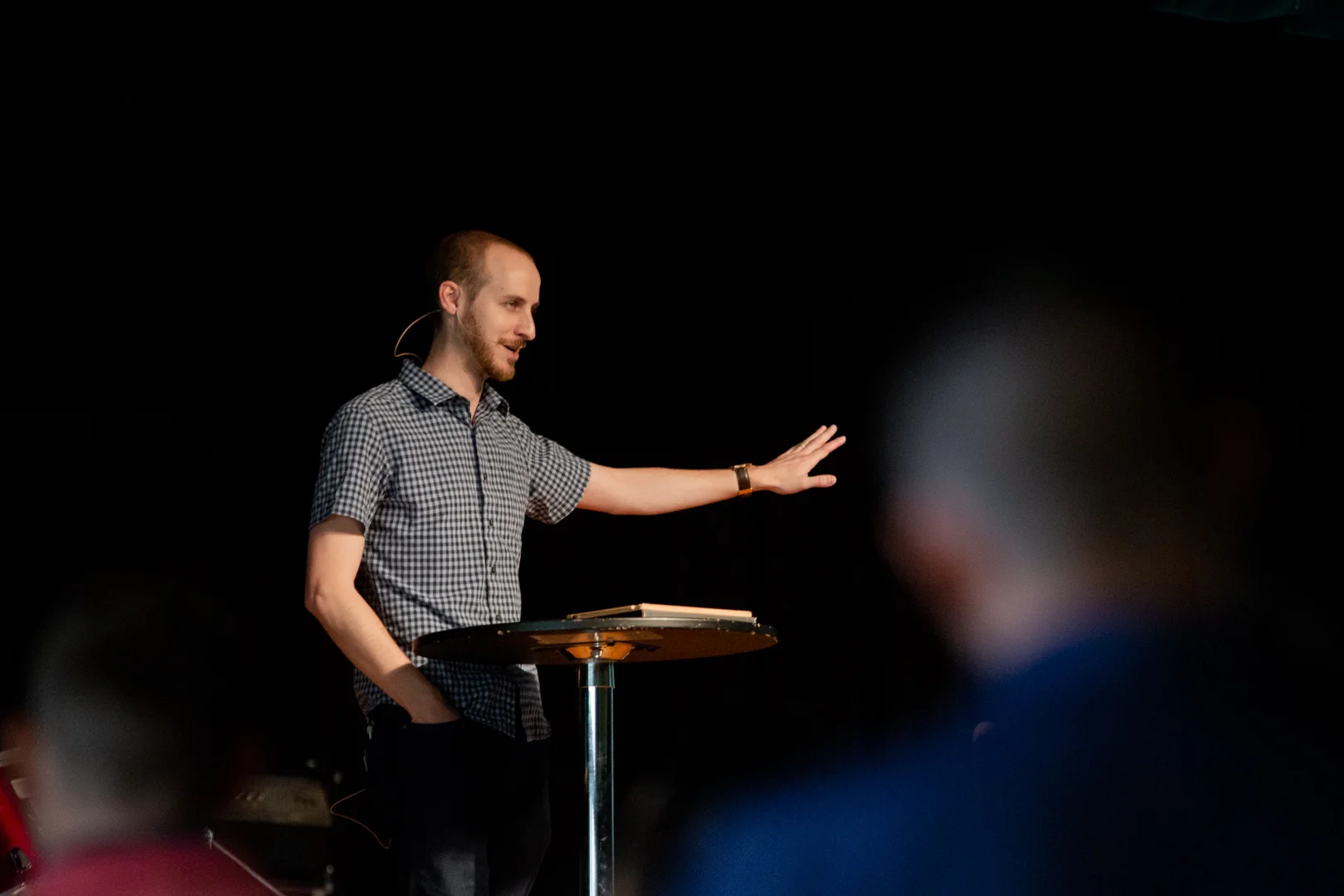

Waiting in the Silence
Malachi 3:1-6, 4:1-6
When God feels silent, we must remember his character, his word, and his coming, as we await his return.
Malachi 3:1-6, 4:1-6
Main Idea: When God feels silent, we must remember his character, his word, and his coming, as we await his return.
I. Waiting & God’s Silence
Malachi, the last of the Old Testament prophets, delivered the messages in this book in the mid-5th century BC. The people of Israel have been home for around 100 years after the Edict of Cyrus allowed them to return, but things are not the same. There is a spiritual stagnancy and emptiness in Israel, and the Lord wants to prepare them for the silence that is coming.
When we are confronted with the silence, absence, or “hiddenness” of God, we can respond in two different ways. The first is to respond as the Israelites in Malachi:
They began to doubt God’s love & justice (1:2-5, 2:17-3:5)
They began to simply “go through the motions” of worship, in a half-hearted, disingenuous way (1:6-2:9)
They began to view obedience as optional (2:10-16, 3:7-12)
They began to view serving and loving God as being “in vain” (3:13-15)
The other way to respond in the face of God’s silence is to exercise faith. Part of this faith is crying out in honesty to God when we feel his silence or absence. The Biblical authors themselves wrestled with God in this way, asking him direct questions in the midst of their pain or confusion and we are invited to do the same thing (Job 30:20, Ps. 28:1-2).
This is the kind of faith described in Hebrews 11:1: “Now faith is the assurance of things hoped for, the conviction of things not seen.” How is it possible to have assurance and conviction in this way?
II. Waiting & God’s Witness (3:1, 6, 4:4-6)
Though God may seem silent, this does not mean he is absent. In this passage, God bears witness in 4 ways to why we can have this kind of assurance & conviction in faith:
1. God’s Character & Nature (3:6): God “does not change” (“immutable”) unlike everyone and everything else around us.
Numbers 23:19: God is not man, that he should lie, Or a son of man, that he should change his mind. Has he said, and will he not do it? Or has he spoken, and will he not fulfill it?
2. God’s Word (4:4): Even when God feels silent, we must remember that he has already spoken to us in his Word.
“You do not need another special revelation from God outside the Bible. You can listen to the voice of God every day. Christ still speaks, because the Spirit has already spoken. If you want to hear from God, go to the book that records only what he has said. Immerse yourself in the word of God. You will not find anything more sure.” ~ Kevin DeYoung
3. God’s Coming (3:1, 4:5): God promises to send a messenger in the spirit of Elijah to “prepare the way” for the Lord’s coming. This is precisely what happens when John the Baptist comes on the scene in the New Testament, as he clears the way for Jesus with his message of the Kingdom & repentance (cf. Matt. 3:1-3)
For those of us living this side of Christmas, we must remember that God has already come when we feel his silence. We can’t say that God does not care about us or that he is uninvolved, because he cared enough to enter into our mess in the incarnation, and he cared enough that he shed his own blood on the cross on our behalf.
4. God’s People (4:6): The result of God’s coming is captured in this promise that “hearts will be turned.” This happens first and foremost toward God and then to one another. Reconciliation within the church is meant to remind us of God’s presence, as his people are the “new temple” of God.
“In spite of God’s apparent hiddenness, the memory of what God has done in the past continues to activate hope for what he will do in the future. This is the movement of the Advent season. The God who hides himself is still the God of the covenant. He is absent and present at the same time… He may hide himself, but it can never be forgotten that he was once present in power and that he will be again. That is Advent- the time between.” ~ Fleming Rutledge
III. Waiting & God’s Return (3:2-5, 4:1-3)
When the “Lord of hosts” comes, no one can simply “stand” before the commander of the heavenly army. He is coming as “fire,” and this fire will separate the pure from the impure, and the true from the false.
For evildoers and the wicked, this is a day of judgment (3:5, 4:1), where God will put an end once and for all to all that has gone wrong in this world. John the Baptist warns: “bear fruit in keeping with repentance… even now the axe is laid to the root of the trees. Every tree therefore that does not bear good fruit is cut down and thrown into the fire.” (cf. Matt. 3:1-12)
For God’s people, this is a day of hope and healing. God will act as a “refiner” of his people, burning away all impurities from our lives. He will “purify” his people like the “fuller’s soap” that removes stains from clothing. This is the only way we can stand before the Lord of hosts who has promised to return.
At his return, Jesus will bring:
Light where there is darkness (the “sun of righteousness shall rise”)
Healing where there is sickness (with “healing” in his wings)
Freedom where there is bondage (“you shall go out leaping like calves from the stall”)
Victory where there is defeat (the wicked will be “ashes under the soles of your feet.”)

Aching While we Wait
Psalm 130
The psalmist seems to be working through three inter-related questions.
Psalm 130
The psalmist seems to be working through three inter-related questions:
Why do I ache?
Is there hope for anything better than this? Or is this as good as it gets?
Can I be certain of hope?
The ACHE is REAL and we dare not ignore it - v. 1-3
Our HOPE is REAL and we must not forsake it - v. 4, 7-8
Our LORD is COMING though we must wait for it - v. 5-6

Waiting in Exile
Isaiah 40:1-11
God promises comfort in our waiting by inviting us to prepare for the once and coming King.
Isaiah 40:1-11
“In a very real sense, the Christian community lives in Advent all the time. It can well be called the Time Between, because the people of God live in the time between the first coming of Christ, incognito in the stable in Bethlehem, and his second coming, in glory, to judge the living and the dead… Advent contains within itself the crucial balance of the now and the not-yet that our faith requires… The disappointment, brokenness, and pain that characterizes life in this present world is held in dynamic tension with the promise of future glory that is yet to come. In that Advent tension, the church lives its life.” ~ Fleming Rutledge
Main Idea: God promises comfort in our waiting by inviting us to prepare for the once and coming King.
I. Waiting & God’s Comfort (40:1-2)
Isaiah 39 ends with the horrible news that Babylon is coming to take God’s people into exile. They have failed to heed his warnings of sin and idolatry, and they are being carried away from home. But in the face of this situation, the Lord meets them with a word of comfort in Isaiah 40.
The Lord reminds the Israelites in exile that though they are far from home, they are still “my people” and his is still “your God.” In his grace and kindness, he offers them a “double” pardoning for all of their sins. He has forgiven them and restored them back to himself.
In one sense, all of humanity has been in exile since the Garden of Eden. God’s people today live in a sort of “exile” as we await our true homeland (cf. 1 Pet. 1:17, 2:11-12). Are we acknowledging this, or have we made our ‘home’ and our ‘comfort’ in something that will not last and will not satisfy?
“We learn to forget our alienation and exile by letting ourselves be taken over by the distractions and entertainments and chatter of the world. We trade one sort of self-alienation for another that gives the illusion of homey comfort. ‘You belong here’ is the lie told to us by everyone from Disney to Vegas. We try to cover up not knowing who we are by letting everyone else sell us an identity, or at least a distraction from needing one… So much of our restlessness and disappointment is the result of trying to convince ourselves that we’re already home. The alternative is not escapism; it is a refugee spirituality – unsettled yet hopeful, tenuous but searching, eager to find the hometown we’ve never been to.” ~ James K.A. Smith
II. Waiting & God’s Coming (40:3-5a)
Comfort is to be found in the promise of God’s coming. Advent is a season to remember when this first happened (Christmas) while also anticipating his second coming and arrival. In his coming God’s glory, will be revealed, which was always a dangerous and deadly encounter before Jesus (cf. John 1:14)
There is a call in this passage for us to prepare for his coming, while simultaneously recognizing God will prepare his own way:
God’s Activity (40:4): A great “leveling” and upheaval is coming; all that seemingly stands in the way of God & his agenda will amount to nothing.
Our Preparation (40:3): We are to prepare the way & clear the path in our own lives for the coming King.
The word translated “prepare” means to clear out, like spring-cleaning… Glory and clutter don’t go together. So Isaiah is saying, “The King is coming with blessing in his hands for you. So, empty your hands. Clear away the obstacles to his glory entering your world.” God is not calling us to pedal faster; he is calling us to open up. He is calling us to repentance.” ~ Ray Ortlund
John the Baptist, the voice in the wilderness before Christ, clearly tells us that “preparing” means repentance and faith. Have you prepared the way in your own soul for God’s coming?
III. Waiting & God’s Promises (40:5b-8)
When we turn and put our ultimate hope and trust in something temporal and of this world, it will not last nor satisfy. This is in God’s good design, as we are meant to find our hope, security, and comfort in him and what is eternal.
The word of God (and the good news of the gospel it contains) is meant to draw our attention to what is lasting and trustworthy in a world full of false promises and empty assurances. In the face of uncertainty, skepticism, and scoffing, God invites us to trust in his Word and to keep from despairing.
When we see how far we have fallen and how broken the world is, it explains something. It explains why disappointment pervades our experience. As we see more and more of life, we are confronted with disappointment so persistently and so convincingly, hope starts to look just plain stupid. We become disappointed in our ideals, disappointed in romance, disappointed in our careers, disappointed in the people we trust, disappointed in ourselves. When all human hopes have let us down, we might be ready for the only real salvation that exists. ~ Ray Ortlund
God is warning the Israelites & warning us today: you have already tried this your own way... What if you trusted in my word and in my promises?
IV. Waiting & God’s Kingdom (40:9-11)
God now invites his people to lift their eyes above their current situation and to proclaim from the mountaintops the good news: “Behold your God!”
The picture of God’s coming King is two-fold:
He is a mighty Warrior-King (40:10)
He is a tender Shepherd-King (40:11)
This seeming “paradox” of the coming King is fully manifested in Jesus. In his first coming, we have experienced the tender grace and mercy of the “Good Shepherd” who is also the “lamb of God” who takes away our sins. In his second coming, he will fully consummate his kingdom, coming back on the clouds as the King of all Kings to gather his exiles from across the world.
We are all waiting in exile, but we are not left without hope. Are you in his flock? Are we heralding the good news of the once and coming King while we wait?

Two Lost Sons (Part II)
Luke 15:25-32
Self-righteousness is a dangerous, blinding, and suffocating sin that must be remedied through an encounter with the grace of God.
Luke 15:25-32
“You can leave without a bus ticket, of course. You can depart in your heart and take an existential journey to anywhere but the ‘here’ that’s stifling you. You can be sleeping in the same bed and be a million miles away from your partner. You can still be living in your childhood bedroom and have departed for a distant country. You can play the role of the ‘good son’ with a heart that roams in a twilight beyond good and evil. You can even show up to church every week with a voracious appetite for idols. Not all prodigals need a passport.” ~ James K.A. Smith
Main Idea: Self-righteousness is a dangerous, blinding, and suffocating sin that must be remedied through an encounter with the grace of God.
I. The Evidences of Self-Righteousness (15:25-30)
The older brother’s attitude & actions reveal 4 evidences of self-righteousness:
Instead of joy, there is skepticism (15:26). The son does not trust his father’s judgment and refuses to enter into the party until further investigation.
Instead of celebration, there is anger (15:28a). His younger brother has graciously been welcomed home “safe and sound” (‘clean’), and he is enraged by this perceived injustice.
Instead of assurance, there is insecurity (15:29). Rather than being confident in his father’s love, he feels slighted and is jealous.
Instead of love, there is distance (15:30). Self-righteousness inevitably leads to tribalism, as we stand over others in judgment and superiority.
Jesus is trying to show that even though the older brother never leaves home, he is lost too. Where are we seeing these evidences in our own life? Might we be lost, even though we’ve never left “home?”
II. The Danger of Self-Righteousness (15:28-29)
While both the younger and the older son are lost, only one of them realizes it. This is the great danger of self-righteousness: it blinds us from our true spiritual state and leaves us more lost than those who know their more obvious need for grace.
“It may be that Jesus is trying to say that while both forms of the self-salvation project are equally wrong, each one is not equally dangerous. One of the ironies of the parable is now revealed. The younger son’s flight from the father was crashingly obvious. He left the father literally, physically, and morally. Though the older son stayed at home, he was actually more distant and alienated from the father than his brother, because he was blind to his true condition… If anything, the idolatry and slavery of religion is more dangerous than the idolatry and slavery of irreligion, because it is less obvious. The irreligious person knows he is far away from God, but the religious person does not.” ~ Tim Keller
The younger brother knows his lostness, but the older brother can’t recognize this in his own life. He is blind to his own sin and need for mercy while simultaneously being praised by others for his morality. His “goodness” causes him to have a warped view of his Father, and his words betray him: “all these years I have served (lit. “slaved”) you…
“The obedient and dutiful life of which I am proud or for which I am praised feels, sometimes, like a burden that was laid on my shoulders and continues to oppress me, even when I have accepted it to such a degree that I cannot throw it off. I have no difficulty identifying with the elder son of the parable who complained: ‘All these years I have slaved for you and never once disobeyed any orders of yours, yet you never offered me so much as a young goat for me to celebrate with my friends.’ In this complaint, obedience and duty have become a burden, and service has become slavery… With all of that, there came a seriousness, a moralistic intensity - and even a touch of fanaticism- that made it increasingly difficult to feel at home in my Father’s house. I became less free, less spontaneous, less playful, and others came to see me more and more as a somewhat ‘heavy’ person.” ~ Henri Nouwen
These feelings cause the older son to weaponize his obedience and his goodness against his Father. He thinks that the father owes him for his service. Similar to the younger brother, he ultimately just wanted the Father’s stuff, but not the Father himself.
The most haunting part of the whole passage is that the younger son never enters the party. The ending is a cliffhanger. This is intentional from Jesus, as he tells this story to a group of older-brother types (Pharisees & Scribes - 15:1-3), inviting them to consider their own response to the celebration.
III. The Remedy for Self-Righteousness (15:28a, 31-32)
The remedy for both younger brother & older bother lostness is the same: it is an encounter with the love of the Father (cf. Rom. 2:4). Just as the Father bore the shame of running to meet his younger son, he embarrassingly left his own celebration to compassionately deal with his pouting sin.
He goes outside to “entreat” (lit. come alongside) the older brother (15:28b)
He reminds him of his status of son; he is not a servant or a slave but his very own heir (15:31a)
He reminds his son of his presence (“you are always with me”) and “all that is mine is yours”
He invites his son to see that it was “fitting” and necessary to celebrate his brother’s return; he was dead, but now alive; lost, but now found. How could we do anything else but celebrate?
There is a glaring difference between this parable and the two preceding. In the parables of the lost sheep and the lost coin, a diligent search is conducted to find that which was lost. In the case of the lost son, no one goes on a search. It’s a glaring and obvious omission from Jesus.
The older son refuses to go on a search for his younger brother and refuses to celebrate his homecoming because it was going to come at a great cost to himself. If his son is truly welcomed back into the family, his inheritance would be divided once more, and it would be costly relationally.
The good news of the gospel is that we have not been given a Pharisee for a brother, but instead we have a true and better older brother in Jesus! He was willing to cross from heaven to earth on a rescue mission to “seek and save the lost” (Lk. 19:10). He has “not come to call the righteous but sinners to repentance”

Two Lost Sons (Part I)
Luke 15:11-24
God joyfully runs with mercy to welcome his prodigal children home.
Luke 15:11-24
Main Idea: God joyfully runs with mercy to welcome his prodigal children home.
I. The Misery of Sin (15:11-16)
The younger son asking for his share of the inheritance is highly offensive; he is essentially asking for his father to liquidate his property (Gk. ousia & bios; “being” & “life”) and wishing he were dead. It is not only the younger son who breaks cultural customs; the Father in the story does the unthinkable by granting this wish to his son, at great cost to himself.
The younger son’s actions show us the essence of sin in story form. Sin is selfishly taking the good gifts of our Father for our own purposes while rejecting the Giver.
Romans 1:24–25: Therefore, God gave them up in the lusts of their hearts to impurity, to the dishonoring of their bodies among themselves, because they exchanged the truth about God for a lie and worshiped and served the creature rather than the Creator, who is blessed forever!
Just like the younger son, when we are confronted with disappointments, difficult circumstances, or the feeling of the “mundane” in our ordinary lives, we can begin to think there is something better for us “out there.”
The younger son’s actions teach us at least 3 things about sin.
Sin is addicting: the son “squandered” his money in reckless ways until “he had spent everything”
Sin is enslaving: after being “mastered” by his sin, he offers himself to be hired by the Gentiles in the faraway country (cf. Jn. 8:34)
Sin is unfulfilling: the son is “longing” to be fed - even by the food of an unclean animal - but he was left starving and empty-handed
“Insofar as I keep choosing to try to find that satisfaction in finite, created things—whether it’s sex or addiction or beauty or power—I’m going to be caught in a cycle where I’m more disappointed in those things and more and more dependent on those things. I keep choosing things with diminishing returns, and when that becomes habitual, and eventually necessary, then I forfeit my ability to choose. The thing has me now.” ~ James K. A. Smith
II. The Joy of Repentance (15:17-21)
Hitting rock bottom, the son “came to himself.” This is one of many examples of God’s sovereignty tracking him down, putting him on the path toward repentance. The son’s “repentance” is incomplete in this moment, as he offers to work his way back into his Father’s household, not thinking about his need for grace and mercy.
The beauty of the gospel is seen profoundly in v. 20:
The Father was looking for his son, seeing him “a long way off”
He is filled with compassion, and his heart goes out to his wayward & prodigal son
He runs to greet his son with mercy and kindness, something that would have been shameful for a father in this society
“The prodigal son was resolved to come, yet he was half afraid. But we read that his father ran. Slow are the steps of repentance but swift are the feet of forgiveness... Though the father was out of breath, he was not out of love.” ~ Charles Spurgeon
The son is completely taken aback by this surprising act of kindness by his father, and responds with repentance in 15:21. He doesn’t offer to work as a servant, instead simply acknowledging his sin and unworthiness in response to the love of his Father (cf. Rom. 2:4).
“The wayward son is not defined by his prodigality but by the welcome of a father who never stopped looking, who is ever scanning the distance, and who runs to gather him up in an embrace. God is not tapping his foot judgmentally inside the door as you sneak in, crawling over the threshold in shame. He’s the father running toward you, losing his sandals on the way, his robes spilling off his shoulders with a laughing smile whose joy says, “I can’t believe you came home!” This is what grace looks like.” ~ James K. A. Smith
III. The Celebration of Heaven (15:22-24)
The parable of the Prodigal Son is the third story that Jesus tells in Luke 15. There is an obvious theme that runs through each: there is to be rejoicing when something that was lost is now found. The stories escalate the nature of what is lost, beginning with a sheep, then a coin, and now, a son.
The son’s restoration doesn’t remain on the road, as the Father ensures that he will be welcomed home as a son, and nothing less. He throws a massive party and celebration to make his restoration complete.
The robe would be for a guest of honor, and likely was the Father’s
The ring was the signet ring with the family seal to conduct business
Shoes were to signify that he was a son, as being barefoot was a sign of shame or enslavement
“Not only does the father forgive without asking questions and joyfully welcome his lost son home, but he cannot wait to give him new life, life in abundance. So strongly does God desire to give life to his returning son that he seems almost impatient. Nothing is good enough. The very best must be given to him. While the son is prepared to be treated as a hired servant, the father calls for the robe reserved for a distinguished guest; and, although the son no longer feels worthy to be called son, the father gives him a ring for his finger and sandals for his feet to honor him as his beloved son and restore him as his heir.” ~ Henri Nouwen.
The “fattened calf” was reserved for special occasions, meant to feed a large number of people in celebration.
The Bible continually talks about heaven and what awaits us in the future in terms of a “feast” or a great celebration involving a meal. The very thing the Pharisees were grumbling about (“this man receives sinners and eats with them”) will be a foretaste of glory when we dine at the wedding feast of the Lamb.
If you are the prodigal… what if you came home?
If you are already home… are you celebrating?

Love in the Kingdom
Luke 10:25-37
The Good Samaritan is a subversive story meant to draw us into the ultimate act and person of love.
Luke 10:25-37
Main Idea: The Good Samaritan is a subversive story meant to draw us into the ultimate act and person of love.
“Though we call it the story of ‘The Good Samaritan,’ the story really isn’t about a Samaritan at all. The story is really about the lawyer. It’s about the one who stood up to ask the questions. And beyond that it’s about God, it’s about neighbor and it’s about the kinds of questions we ask to protect ourselves from God.” ~ Russell Moore
I. The Problem of Love (10:25-29)
A lawyer (expert in the OT & Jewish Law) attempts to “test” Jesus, likely skeptical of his reputation of being a “friend of sinners.” He is not asking a genuine question, but is deceptively trying to trap Jesus.
The lawyer correctly summarizes that all of the law is summarized by loving God (with all of your heart, soul, strength, and mind) and loving others as yourself. The problem is that none of us can fully and completely love God and love others in this way! The issue is not with the commandments, but with our inability to carry them out because of sin.
In feeling the weight of this reality, the lawyer seeks to “justify himself” by questioning the bare minimum: “Who is my neighbor?” This is the kind of question we ask to “protect ourselves from God” (Russell Moore) and to lessen the standard of God’s Word on our lives. The parable of the Good Samaritan is meant to blow this up altogether.
II. The Price of Love (10:30-35)
The rocky road from Jerusalem to Jericho was a 17-mile downhill stretch through the desert. It was known for robbers and bandits, making it dangerous to travel alone. In Jesus’ fictional story, the traveler was stripped, beaten and left “half-dead,” making the usual cultural markers for his identity inaccessible.
3 different people come near the dying man in the parable:
Priest: responsible for issues related to worship & the sacrifices in the temple in Jerusalem; had to be extremely concerned with “ritual cleanness” and would have become unclean by coming near the “half-dead” man.
Levite: assisted the priests with various tasks at the temple; after coming closer to the man, he decides to pass by, potentially fearing this may be a trap set by the robbers
Samaritan: the Jews and the Samaritans hated each other, going back ~700 years. There was an extreme racial & religious divide between the two groups that often incited violence. The Jews viewed them as “half-breed heretics.” The audience would have been outraged by the mention of a Samaritan, but Jesus goes further and makes him the hero of the story.
The Samaritan’s actions show he is willing to pay an immense cost to truly love this man:
He has “compassion” on the man (to be moved deeply internally - cf. Matt. 18:27)
He binds up his wounds (presumably with his own clothing) and pours oil and wine to heal him (terms used in temple worship)
He set him on his own animal and stays the night with him at an inn
He pays for nearly a month’s stay & offers to cover more if necessary
The Samaritan displays a radical generosity that is at the heart of true neighbor love; he is willing to risk his own life, pay an immense price, and be inconvenienced - all for the sake of a stranger & an enemy. The Samaritan teaches us that all true love is costly; it is never easy or convenient.
“Love is willing self-sacrifice for the good of another that does not require reciprocation or that the person being loved is deserving.” ~ Paul Tripp
If the interaction ended there, we would all have the exact same problem as when the parable began: how can we actually love in this way?
III. The Power of Love (10:36-37)
Jesus has masterfully flipped the man’s question around; rather than answering the question “who is my neighbor?” Jesus ends by asking the man “who proved to be a neighbor?” The right question to ask is not “who is my neighbor?” but instead “am I a neighbor?”
As a master story-teller, Jesus knows the religious, Jewish audience would never identify with the Samaritan man (see 10:37); instead, the way he tells the story invites them (and us) to identify with the man on the side of the road.
“Jesus puts the Israelite into the road, and he puts the hated Samaritan on the steed, in the saddle. Here’s the question he’s asking the man. “What if you were in the road? What if your life was ebbing out? What if you were bleeding to death? What if your only hope was an act of free grace to you from an enemy who doesn’t owe you any mercy, in fact, owes you the opposite? What if that was the situation? Would you want grace?” ~ Tim Keller
The Samaritan in the parable is a dramatic demonstration of the love of God to us in Christ Jesus. The gospel is the story of Jesus crossing not merely the road or ethnic boundaries, but crossing from heaven and earth to seek and save those who were enemies of God and lost.
What does this practically mean for us?
How are we trying to “justify ourselves,” just like this lawyer?
Who can we be a neighbor to?
1 John 3:18: “Little children, let us not love in word or talk but in deed and in truth.”
“The Christian church has often said that we need to see Jesus as the Samaritan, and indeed he is. But even more than that, Jesus is the beaten man. He will go to Jerusalem. He will go outside the camp. He will fall among thieves and be stripped and beaten, and the priests and the Levites and the businessmen and even the Samaritans will walk along the road. Many of them will point to their children as they see this man drowning in his own blood and will say simply, “You don’t want to end up like that. Let’s go over this way.” The crucified one shows up mysteriously, he tells us, “In the least of these, my brothers,” and the question is, when you encounter them, do you see his face?” ~ Russell Moore

The Rich Man and Lazarus
Luke 16:19-31
A life dedicated to the pursuit and enjoyment of wealth is a wasted life.
Luke 16:19-31
Jesus’ Main Point in Luke 16:
A life dedicated to the pursuit and enjoyment of wealth is a wasted life.
Jesus’ Main Point in the story of the rich man and Lazarus
The way your life is going now has little correlation to how your life shall be after dying, but what you love now makes all the difference.
Takeaways:
1. Be honest about what you are loving as it relates to wealth.
2. Never, never step over “the beggar” lying at your door.
3. Make every effort to hear “the Law and the Prophets”

Parables on Prayer
Luke 18:1-14
Our hardships in prayer are caused by having too high a view of ourselves and too low a view of God.
Luke 18:1-14
Main Idea: Our hardships in prayer are caused by having too high a view of ourselves and too low a view of God.
I. Persistent in Prayer
Luke 18:1-8
And he told them a parable to the effect that they ought always to pray and not lose heart. 2 He said, “In a certain city there was a judge who neither feared God nor respected man. 3 And there was a widow in that city who kept coming to him and saying, ‘Give me justice against my adversary.’ 4 For a while he refused, but afterward he said to himself, ‘Though I neither fear God nor respect man, 5 yet because this widow keeps bothering me, I will give her justice, so that she will not beat me down by her continual coming.’” 6 And the Lord said, “Hear what the unrighteous judge says. 7 And will not God give justice to his elect, who cry to him day and night? Will he delay long over them? 8 I tell you, he will give justice to them speedily. Nevertheless, when the Son of Man comes, will he find faith on earth?”
Revelation 21:1-5
Then I saw a new heaven and a new earth, for the first heaven and the first earth had passed away, and the sea was no more. 2 And I saw the holy city, new Jerusalem, coming down out of heaven from God, prepared as a bride adorned for her husband. 3 And I heard a loud voice from the throne saying, “Behold, the dwelling place of God is with man. He will dwell with them, and they will be his people, and God himself will be with them as their God. 4 He will wipe away every tear from their eyes, and death shall be no more, neither shall there be mourning, nor crying, nor pain anymore, for the former things have passed away.” 5 And he who was seated on the throne said, “Behold, I am making all things new.” Also he said, “Write this down, for these words are trustworthy and true.”
II. Proper Posture in Prayer
Luke 18:9-14
9 He also told this parable to some who trusted in themselves that they were righteous, and treated others with contempt: 10 “Two men went up into the temple to pray, one a Pharisee and the other a tax collector. 11 The Pharisee, standing by himself, prayed thus: ‘God, I thank you that I am not like other men, extortioners, unjust, adulterers, or even like this tax collector. 12 I fast twice a week; I give tithes of all that I get.’ 13 But the tax collector, standing far off, would not even lift up his eyes to heaven, but beat his breast, saying, ‘God, be merciful to me, a sinner!’ 14 I tell you, this man went down to his house justified, rather than the other. For everyone who exalts himself will be humbled, but the one who humbles himself will be exalted.”
“Everyone is praying without ceasing; the question is who are you praying to?”
-Russell Moore
III. Evaluating our Station
• Are you sailing?
• Are you rowing?
• Are you drifting?
• Are you sinking?
Here are a couple of helpful tools for you to utilize as you seek to always pray and not lose heart:
1. Just do it
2. Pray with others
3. Pray the Scriptures and Journal your prayers.
4. Read books on prayer and even prayers of others. Keller’s book on prayer, Valley of Vision.
5. Bookend your days with prayer. Martin Luther, famous reformer, once said,
“It is a good thing to let prayer be the first business of the morning and the last at night. Guard yourselves against those false, deluding ideas which tell you, ‘Wait a little while. I will pray in an hour; first I must attend to this or that.’”
-Martin Luther

Servants & Sheep of the Kingdom
Matthew 25:14-46
True disciples of Jesus are so transformed by the gospel that the King’s interests joyfully become their own.
Matthew 25:14-46
Main Idea: True disciples of Jesus are so transformed by the gospel that the King’s interests joyfully become their own.
I. The Economy of the Kingdom (25:15-30)
“Servants” (or ‘bondservants’) made up a huge portion of society in the Ancient world, serving in various roles. The parable tells us that the master, a very successful man, entrusted his servants with his “property” - literally his wealth and resources A single “talent” was the equivalent of 20 years wages, so the master entrusts a massive amount of his wealth to his servants, “each according to his ability.”
“There is not a square inch in the whole domain of our human existence over which Christ, who is Sovereign over all, does not cry, mine!” ~ Abraham Kuyper
Our relationship to everything in this world is one of stewardship. A ‘steward’ is entrusted to care for that which is not his own, and to manage in such a way that would honor the true owner’s desires and wishes.
When the master returns after a long delay to settle accounts, he is thrilled by the work of the first two servants, commending both their character and their activity, and inviting them to enter into the rest of his joy. This is a foretaste of heaven for the citizens of the Kingdom.
1 Peter 4:10–11: As each has received a gift, use it to serve one another, as good stewards of God’s varied grace: whoever speaks, as one who speaks oracles of God; whoever serves, as one who serves by the strength that God supplies—in order that in everything God may be glorified through Jesus Christ. To him belong glory and dominion forever and ever.
The third servant delivers back the one talent he was given, accusing his master of being a “hard” (‘harsh’) man who makes his wealth by unjust means and through the hard work of another. The difference between this servant and the others is in their view of the master; the first two viewed the master as a generous man who was trustworthy, while the third servant is afraid, perceiving him to be unrighteous.
“In the New Testament as a whole, human beings are either slaves to sin, or we’re free from that slavery and become slaves to Christ, but this slavery is a joyful slavery. It’s a slavery that we delight in, because this master is so good and fair and right, but make no mistake, it is a relationship of master and slave. The third slave’s rebellion is that he thinks he has the right to simply make his own judgments; but if he is a slave of the master and he has been entrusted to undertake a certain task, that is what he is supposed to do, and not undertaking that task and simply putting the money in the ground is, in fact, flagrant disobedience. After all, the slave belongs to the master, the gold belongs to the master, and the other two are delighted that it is so.” ~ D.A. Carson
The master says that the servant “ought to” have invested his money to yield an increase. The servant was not given a gift to spend however he saw fit; he was “entrusted” with his master’s property. This is the issue with the “wicked” and “slothful” servant. He wrongly esteems his master and completely misses the severity of his actions.
Hebrews 12:2: “…looking to Jesus, the founder and perfecter of our faith, who for the joy that was set before him endured the cross, despising the shame, and is seated at the right hand of the throne of God.”
The parable confronts us with this question: are we investing everything that we have been given to increase the assets and agenda of the King? Or are we acting like we are the owners of it all, and seeking to advance our own agenda?
Matthew 6:19–21: “Do not lay up for yourselves treasures on earth, where moth and rust destroy and where thieves break in and steal, but lay up for yourselves treasures in heaven, where neither moth nor rust destroys and where thieves do not break in and steal. For where your treasure is, there your heart will be also.”
II. The Evidences of Citizenship (25:31-46)
The “sheep and the goats” speaks clearly about what will happen when the King returns to “sit on his glorious throne.” Though similar, sheep and goats would need to be separated on various occasions (such as shearing, milking, and sleeping); Jesus here describes an “end-time sorting” between two groups when he returns to judge the nations.
On the surface, the parable of the talents and the sheep and the goats seem to contradict the message of grace that is central to the gospel; it seems like those who yield an increase and those who care for the “least of these” are the ones who get into the Kingdom. But we can’t miss two key things:
The “surprise” of the sheep (25:38-39)
The Kingdom is prepared “from the foundation of the world” (25:34)
Galatians 6:10: So then, as we have opportunity, let us do good to everyone, and especially to those who are of the household of faith.
On the other hand, the “goats” have not been transformed by the gospel. They failed to act when they had an opportunity to do so, and are equally as surprised as the “sheep” at the judgment from the King. Their lack of concern for the least of these showed their complete misunderstanding of the gospel of the Kingdom.
In Jesus’ final teaching in Matt. 24-25, he focuses on sins of omission (failing to do what we are supposed to do):
The foolish bridesmaids failed to prepare
The wicked servant failed to increase the talent entrusted to him
The goats failed to act when they saw those in need
“Hell is real and eternal because God’s holiness is real and eternal… the frightening thing is that, to enter hell, all one has to do is nothing… all you have to do to go to hell is not rock the boat. Accept the status quo. Hell is quite easy to enter. Because outside of Christ we stand condemned already (Jn. 3:18), we need simply do nothing.” ~ Jared Wilson
The sheep and the goats reminds us that Jesus identifies with his people (cf. Matt. 12:46-50, Acts 9:4). For the King to identify with the “least of these” is an incredible picture of the character of the King. This is his grace and kindness.
What is the difference between the sheep and the goats? How do you become so transformed by the gospel in this way? You see yourself in the least of these. Have you recognized yourself in this place of need?

Be Ready for the Kingdom
Matthew 25:1-13
While awaiting the promised return of Jesus, we must stay ready and prepared.
Matthew 25:1-13
Main Idea: While awaiting the promised return of Jesus, we must stay ready and prepared.
I. Awaiting the King (25:1-5)
Matthew 24-25 (known as “The Olivet Discourse”) is Jesus’ final teaching to his disciples about what will happen at the end of all things and when he will return. In this discourse, Jesus tells five parables in response to a question from the disciples:
Matt. 24:3: As he sat on the Mount of Olives, the disciples came to him privately, saying, “Tell us, when will these things be, and what will be the sign of your coming and of the end of the age?”
Some cultural context is needed to understand the story that Jesus is telling
The “10 virgins” = bridesmaids/attendants; those assisting with the wedding procession
The “lamps” were like torches with bundles of cloth wrapped at the end of a carrying stick; they would be lit by the rags being dipped/doused in olive oil.
Wedding festivities in the ancient world would often be drawn out over numerous days; the groom would begin at the bride’s house before a procession to his own home for the ceremony and celebration. They bridesmaids were to light the way for the wedding processional.
The only difference between the “wise” and the “foolish” bridesmaids is their preparedness for the job they are to fulfill. The issue is not that they fell asleep (since both groups do so); the issue is that the foolish slept to their shame, because they negligently do not realize they will not have enough oil.
One of the reasons we struggle with waiting is because we equate it with “inactivity” and as something that is keeping us from what we really should be doing. However, “waiting” in the Chrsitian life does not equal inactivity; there is meaningful work to be done in the waiting.
“Hoping does not mean doing nothing. It is not fatalistic resignation. It means going about our assigned tasks, confident that God will provide the meaning and the conclusions. It is not compelled to work away at keeping up appearances with a bogus spirituality. It is the opposite of desperate and panicky manipulations, of scurrying and worrying. And hoping is not dreaming. It is not spinning an illusion or fantasy to protect us from our boredom or our pain. It means a confident, alert expectation that God will do what he said he will do.” ~ Eugene Peterson
II. The Arrival of the King (25:6-12)
All of a sudden, there is a “cry” that the groom has finally arrived (cf. 1 Thess. 4:16). Jesus has promised his return, though delayed, will be sudden and unexpected (cf. Matt. 24:42-44).
All of the bridesmaids rise to begin to “trim” their lamps in preparation, but the foolish now realize they are in trouble. The wise refusing to share with the foolish is not an act of selfishness, as there is not enough oil to share. Jesus is warning that each individual is accountable to the King; preparation cannot be borrowed or transferred from another.
For the wise who were prepared for his coming, the arrival of the groom is an occasion for great celebration and joy. This is the moment that God’s people are anticipating and longing for. Titus 2:13: “…waiting for our blessed hope, the appearing of the glory of our great God and Savior Jesus Christ.”
“We accompany him, we enter his eternal wedding banquet with him, at his side, cleansed from all our accumulated misdoings, freed from our bondage to the power of sin, in fellowship with the Lord Jesus in all his splendor, the one who has loved us even unto death and hell, who comes again to receive those who belong to him.” ~ Fleming Rutledge
For the unprepared and foolish bridesmaids, the arrival of the groom is a sober reminder of judgment. While they were out scrambling for oil, the doors to the marriage celebration were shut. They are separated from the relational presence of the groom, who claims he doesn’t know them (cf. Matt. 7:22-23).
We will be prepared for what we value, and this parable forces us to ask the question: Do we value the things of the Kingdom? Does our preparation reveal a deep concern for the things of God?
III. Staying Alert for the King (25:13)
Jesus concludes this parable by urging: “Watch therefore, for you know neither the day nor the hour.” “Watch” has the connotation of staying alert, being awake, and being vigilant. Jesus is calling his disciples to be spiritually prepared as they await the King and the Kingdom in its fullness.
Jesus is warning that if we try and wait until his return (or when difficult seasons come) that it is too late. We must have a “storehouse of readiness” to withdraw from in our time of need.
How do we practically “stay alert” as we wait for the King to come?
1. We must abide in him
1 John 2:28: And now, little children, abide in him, so that when he appears we may have confidence and not shrink from him in shame at his coming.
The Groom remarks: “I do not know you” to the foolish bridesmaids who attempt to enter the feast after being unprepared. This is a bit of dramatic storytelling, but the warning is clear: we must prepare by spending time with Jesus.
We’ve been given the means of grace to abide (lit. “live with”) the King until he returns: the word of God, prayer, corporate worship, and the community of the saints.
2. We must prepare with endurance in mind
The foolish bridesmaids would have been fine if the groom arrived on time; it was the delay that revealed they were not ready. In the same way, disciples of Jesus must be more concerned about our lights burning long with endurance rather than hot and bright, but fizzling out quickly.
We need to embrace the daily habits and practices of the Christian life as preparing us for the long-haul and for perseverance in the faith, as we stay connected to the source of the flame. The means of grace are not always easy or enjoyable, but they are forming us more into Christ so we are prepared for his promised arrival.
“This is Christ, who continually with the oil of his grace, maintains the work already begun in the heart by the means of which… the souls of his people prove still gracious. You saw that the man stood behind the wall to maintain the fire. That is to teach you it is hard for the tempted to see how this work of grace is maintained in the soul.” ~ John Bunyan, The Pilgrim’s Progress
3. We must remember who we are
The foolish bridesmaids lost sight of the important job they had: they were servants who were to light the way for the procession of the groom.
We – like these bridesmaids- are called to light the way for the groom. We bring the light of the gospel into the dark world, pointing people to the King who is also the Groom who has made a covenant to never leave his people through a covenant purchased at the price of his own blood. Are you prepared and ready for the kingdom that is to come?